
Types of Galvanized Steel Sheets: Performance Characteristics and Industrial Application Guide
Introduction
Galvanized steel sheets have become a vital foundational material in construction, automotive, home appliances, and industrial manufacturing due to their outstanding corrosion resistance and stable structural properties. By coating the steel surface with a zinc layer, these sheets effectively withstand humid and corrosive environments, significantly extending service life and reducing maintenance costs. Variations in galvanizing processes, zinc coating structures, and substrate types result in significant differences in performance and applications. This article systematically introduces the primary types, performance characteristics, and selection criteria of galvanized steel sheets to assist in making more informed material choices for practical applications.
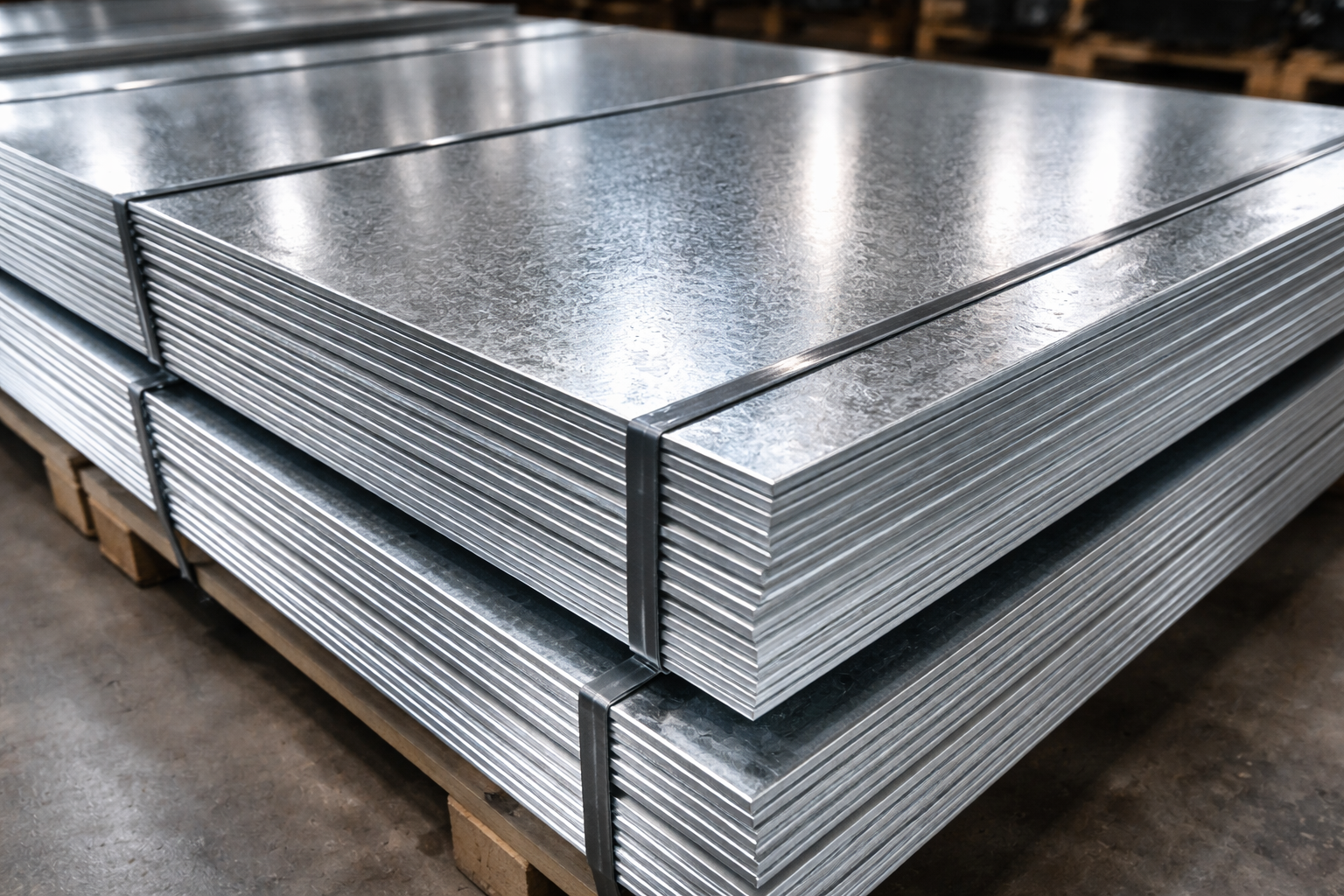
Galvanized steel sheet
Table of Contents
- What is Galvanized Steel Sheet?
- Core Performance Characteristics of Galvanized Steel Sheets
- Primary Types of Galvanized Steel Sheets
- Typical Application Fields for Galvanized Steel Sheets
- Selection Guide for Galvanized Steel Sheets
- Storage and Handling Recommendations
- Conclusion
- What is Galvanized Steel Sheet?
Galvanized steel sheet refers to a steel product where a zinc coating is applied to the surface of ordinary steel plate to enhance its corrosion resistance. The zinc coating not only blocks air and moisture but also provides continuous protection to the base material through “sacrificial anode” action when the surface is damaged, significantly extending the steel sheet’s service life.
Compared to ordinary hot-rolled or cold-rolled steel sheets, galvanized steel sheets offer distinct advantages in weather resistance, longevity, and maintenance costs. They are widely used in construction, automotive, home appliances, industrial manufacturing, and outdoor facilities.
2.Core Performance Characteristics of Galvanized Steel Sheets
A.Superior Corrosion Resistance
The zinc coating effectively prevents rusting in humid, acidic, alkaline, or outdoor environments, making it particularly suitable for long-term exposure applications.
B.Excellent Form-abilityand Process-ability
High-quality galvanized steel sheets maintain stable performance during stamping, bending, cutting, and welding, with minimal risk of coating peeling or cracking.
C.Extended Service Life and Cost-Effectiveness
Compared to ordinary steel sheets, galvanized steel offers lower maintenance costs throughout its life-cycle and superior overall economic performance.
3.Primary Types of Galvanized Steel Sheets
A.Classification by Galvanizing Process
a.Hot-Dip Galvanized Steel (HDG/GI)
Formed by immersing steel sheets in molten zinc to create a thick zinc layer, offering exceptional corrosion resistance.
Common Applications:
– Building steel structures
– Roof panels, fencing
– Automotive chassis and bridge components
b.Electrogalvanized Steel Sheets (EG)
Produced via electrolytic processes to form a uniform, thin zinc layer with high surface finish.
Common Applications:
Appliance housings
Electronic equipment
Precision stamped components
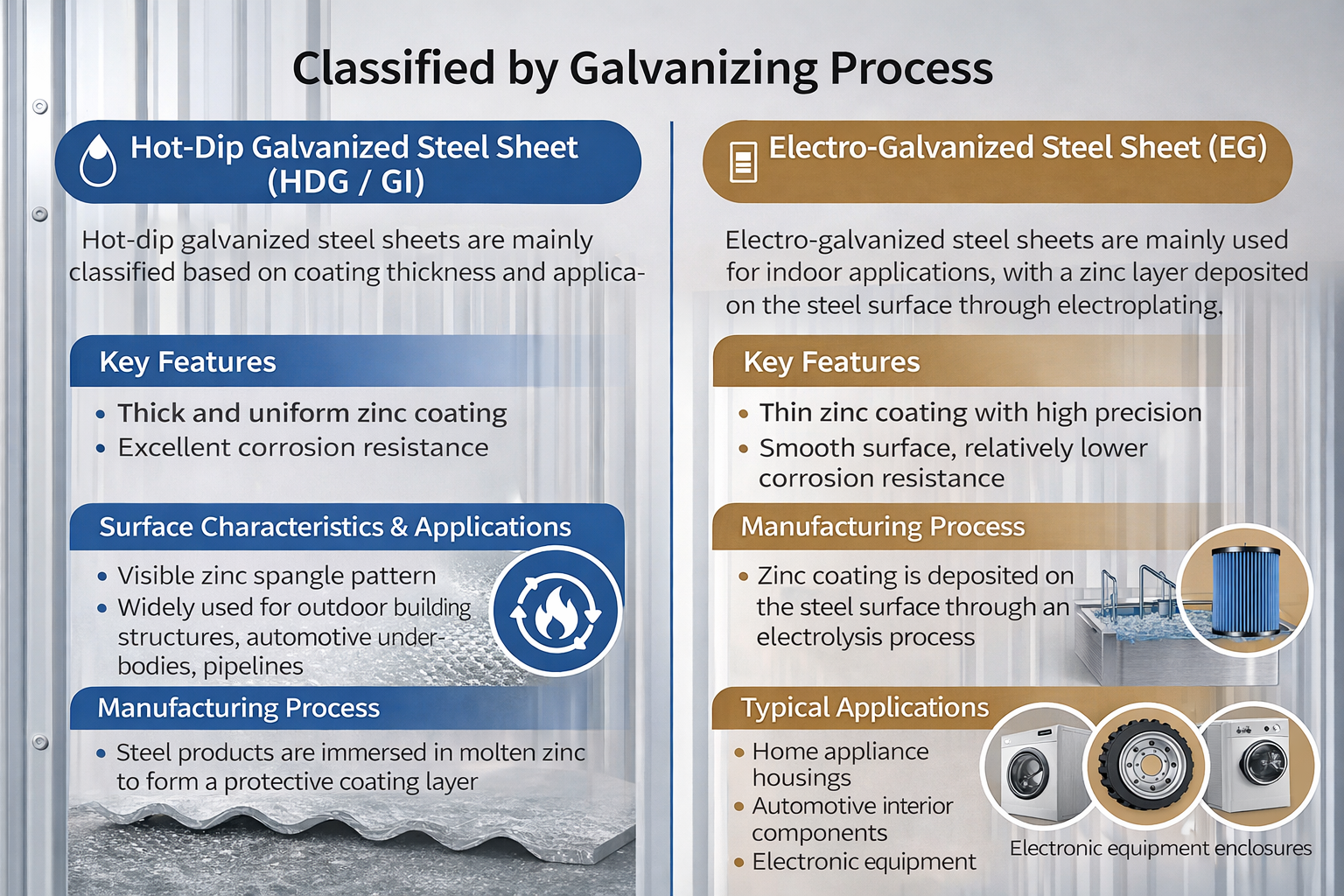
Comparison of Hot-Dip Galvanizing and Electrogalvanizing
B.Classification by Coating Structure
GI (Pure Zinc Coating): General corrosion protection, widely applicable
GL (Zinc-Aluminum Alloy Coating): Enhanced corrosion and heat resistance
C.Classification by Base Material
Hot-rolled substrate galvanized steel sheet
Cold-rolled substrate galvanized steel sheet
High-strength galvanized steel sheets
4.Typical Application Fields for Galvanized Steel Sheets
Construction & Infrastructure: Roofing systems, curtain walls, structural steel components, ventilation ducts
Automotive Industry: Body structural parts, chassis, protective components
Home Appliance Manufacturing: Refrigerator, washing machine, and air conditioner housings
Industrial & Logistics: Shelving systems, equipment enclosures, container components
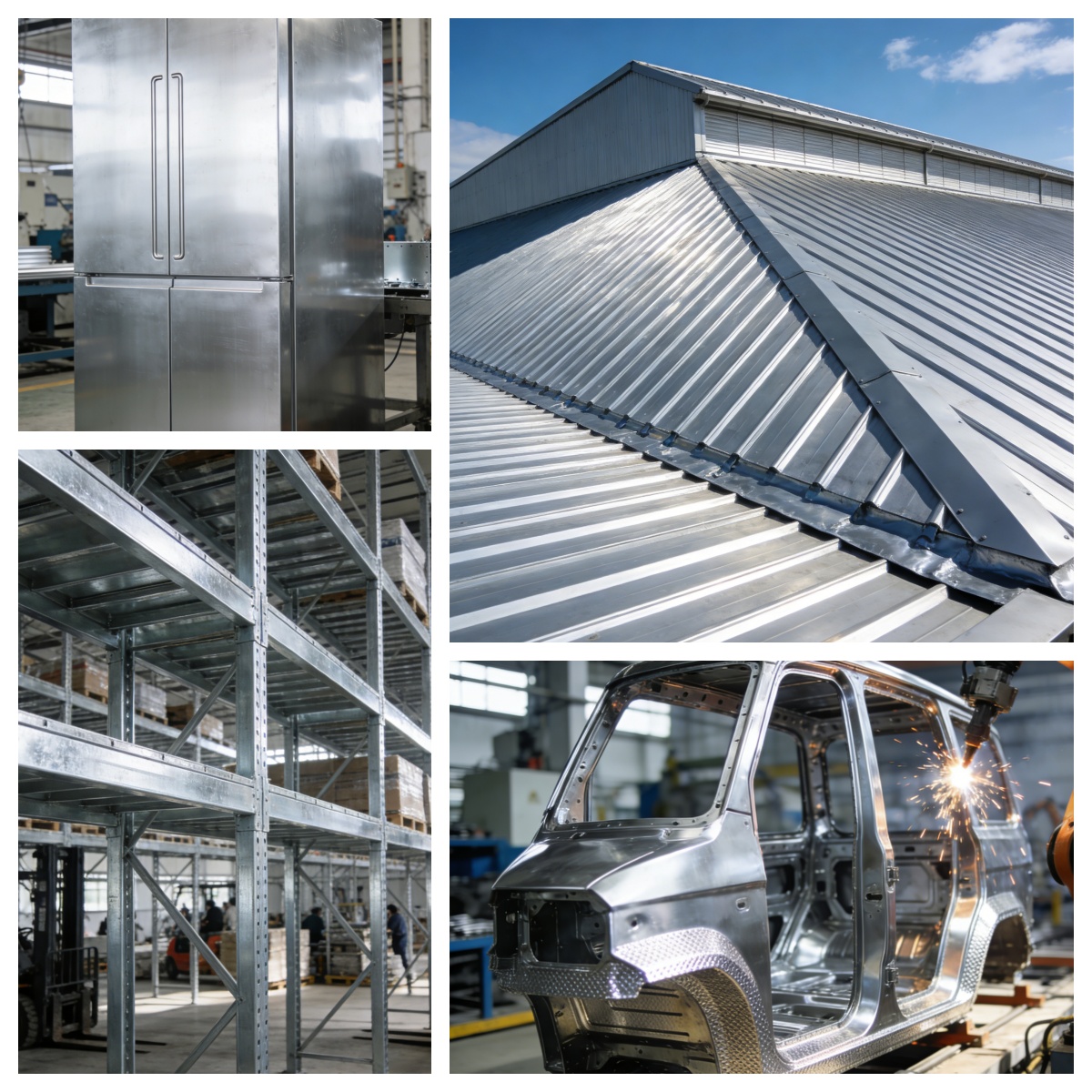
Applications of Galvanized Steel Sheets
5.Selection Guide for Galvanized Steel Sheets
Define usage environment (indoor/outdoor, humidity, corrosivity)
Select appropriate galvanizing method (hot-dip galvanizing preferred for high-corrosion environments)
Confirm zinc coating weight and applicable standards (ASTM, EN, JIS, etc.)
Choose suitable surface quality based on processing requirements
6.Storage and Handling Recommendations
Store in dry, well-ventilated areas to prevent prolonged moisture exposure
Use protective pads during handling to avoid zinc coating scratches
Regularly inspect surfaces for white rust or damage
7.Conclusion
Galvanized steel sheets have become an indispensable material in modern industrial and construction sectors due to their outstanding corrosion resistance, stable processing performance, and broad application scenarios. Proper selection not only ensures product quality but also effectively reduces long-term usage costs.