
Exploring Cold-Rolled Steel Sheet Types: Performance and Industrial Applications Guide
Introduction
Cold-rolled steel sheet is a cornerstone of industrial production, precision manufacturing, construction, and logistics across various sectors globally. Whether it’s automotive parts manufacturing, electronic device housings, building components, or mechanical parts, selecting the right cold-rolled steel sheet is crucial for ensuring product quality, structural integrity, and compliance with industry standards.
Unlike hot-rolled steel sheet, cold-rolled steel sheet undergoes secondary processing at room temperature after hot rolling, resulting in superior surface finish, tighter dimensional tolerances, and better mechanical properties.
Table of Contents
1.What is Cold-Rolled Steel Sheet?
2.Types of Cold-Rolled Steel Sheets
3.Key Factors to Consider When Selecting Cold-Rolled Steel Sheets
4.Cold-Rolled Steel Sheet Storage and Handling Recommendations
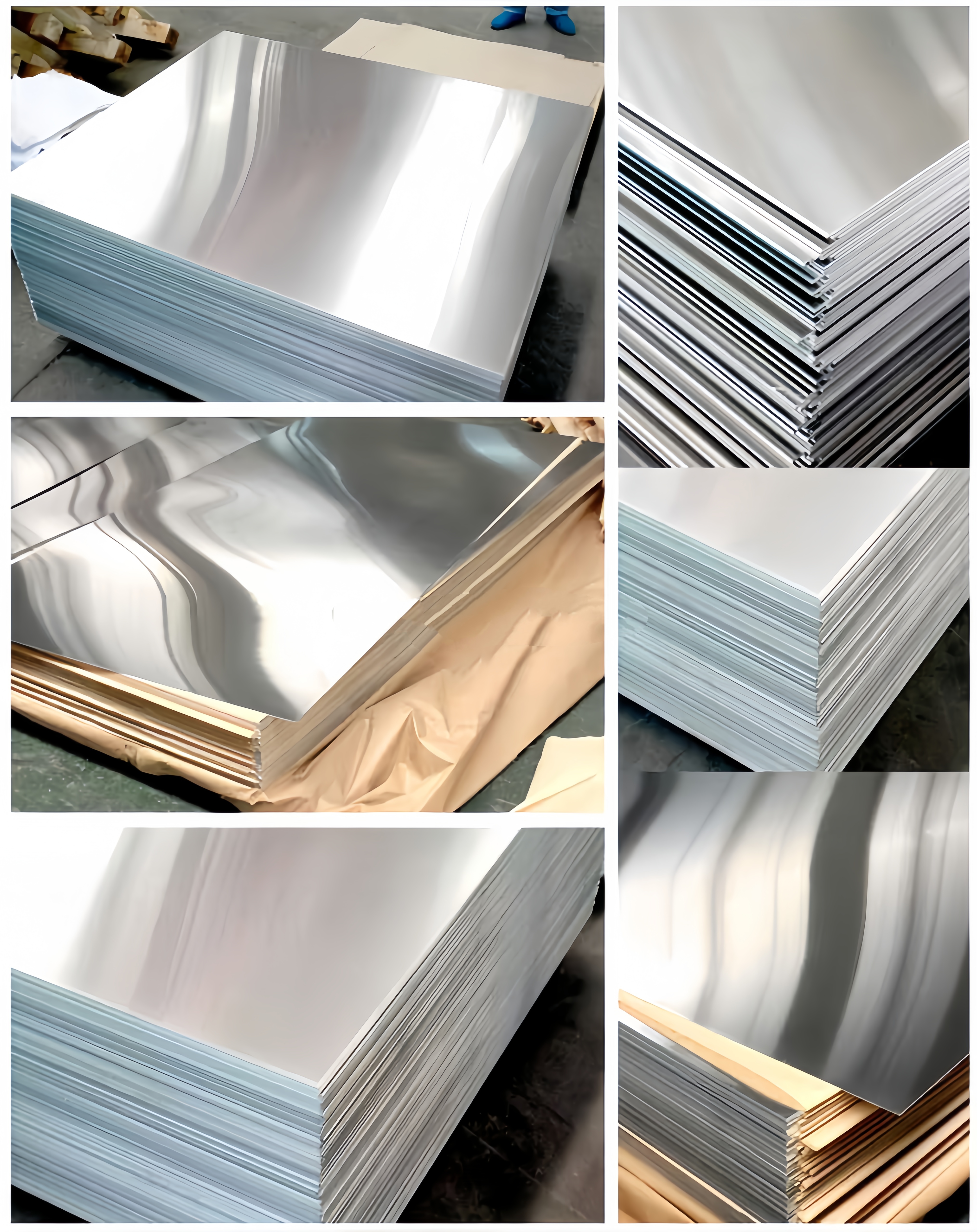
Cold-rolled steel sheet
1.What is Cold-Rolled Steel Sheet?
Cold-rolled steel sheet is a flat steel product produced by processing hot-rolled steel coils on a cold rolling mill at room temperature. Its production process typically includes pickling (removing surface oxides), cold rolling (achieving the desired thickness and flatness), annealing (improving ductility and reducing internal stress), and surface treatment (such as galvanizing or painting).
The core advantages of cold-rolled steel sheets are: precise thickness control with tolerances as low as ±0.01mm; a smooth and uniform surface, free of oxide scale or defects; and excellent mechanical properties, including high strength, good form-ability, and weld-ability.
2.Types of Cold-Rolled Steel Sheets
Cold-rolled steel sheets are classified according to key characteristics such as material grade, thickness, surface treatment, and application. The following detailed introduction will help you select the appropriate product.
A.Classification by Material Grade and Alloy Composition
| Grade Category | Main Alloy Composition | Mechanical Properties | Typical Applications |
| Low Carbon Alloy (DC01/DC03/DC06) | Carbon ≤ 0.12%, Manganese ≤ 0.50% | High ductility, excellent form-ability, easy welding | Automotive body panels, home appliances (refrigerators, washing machines), furniture, decorative parts |
| Medium Carbon Alloy (SPHC/1010/1020) | Carbon 0.15-0.25%, Manganese 0.30-0.60% | Balanced strength and form-ability | Mechanical parts, brackets, fasteners, structural parts |
| High Strength Low Alloy Steel (HSLA) | Added Si, Mn, P, Nb/V/Ti | Tensile strength 350-600MPa, good corrosion resistance | Automotive chassis parts, construction machinery, load-bearing structures |
| Stainless Steel (304/316/430) | Chromium ≥16%, Nickel (304/316), Molybdenum (316) | Excellent corrosion resistance, heat resistance, and aesthetically pleasing surface. | Suitable for food processing equipment, medical equipment, building facades, and ship components. |
| Alloy steel (4130/4340) | Chromium, molybdenum, nickel. | High strength, wear resistance, and toughness. | Suitable for precision machinery, aerospace parts, and high-performance tools. |
B.Classification by Thickness and Size
Thin gauges (0.1mm – 3.0mm): Lightweight, highly flexible, easy to stamp and bend.
Typical applications: Electronic device housings, battery housings, automotive interior parts, decorative panels.
Medium gauges (3.0mm – 10.0mm): Balanced strength and mach-inability, suitable for welding and machining.
Typical applications: Machinery housings, structural supports, automotive frames, furniture frames.
Thick gauges (10.0mm – 60.0mm): High load-bearing capacity and excellent impact resistance.
Typical applications: Building steel structures, heavy machinery bases, ship components, and industrial equipment platforms.
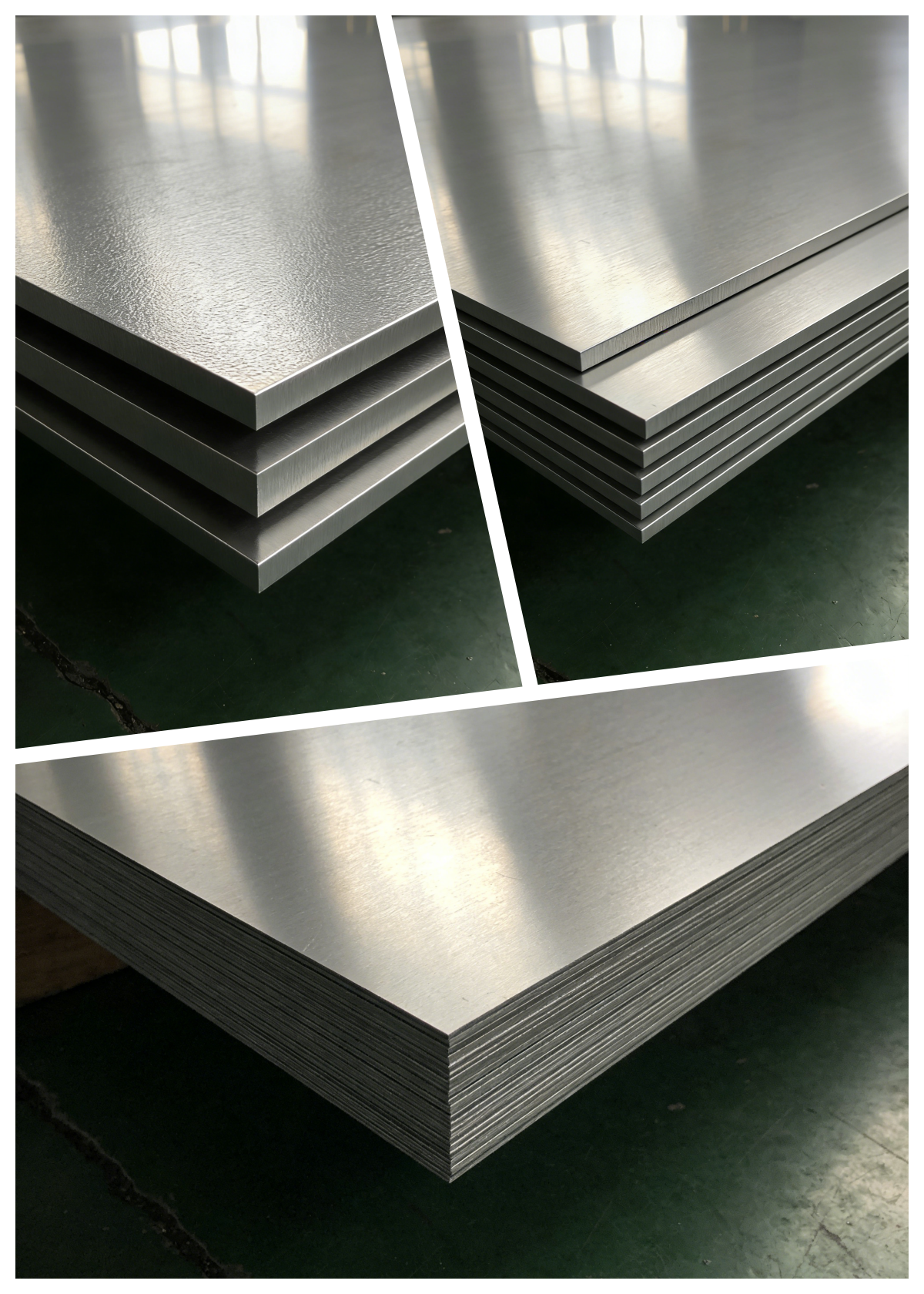
Steel plates of different thicknesses
C.Surface Treatment
Surface treatment enhances the corrosion resistance, aesthetics, and durability of steel plates, extending their service life.
Hot-dip galvanizing (HDG)
Galvanized using a hot-dip process, offering excellent corrosion resistance, suitable for outdoor applications, construction, and automotive chassis.
Electro-galvanizing (EG)
An electrolytic process forms a thin, uniform zinc layer, providing corrosion resistance and a smooth surface. Suitable for electronic components, home appliances, and decorative parts.
Painting/Coating
Polyester, epoxy, or polyurethane coatings enhance aesthetics and corrosion resistance. Widely used in building facades, furniture, and consumer goods.
Annealing: Heat treatment improves ductility and reduces hardness, facilitating forming and welding. Commonly used in precision stamping and bending processes.
Pickling and Oiling (P&O)
Oiling after oxide removal prevents rusting. Suitable for subsequent welding and machining.
D.Classification by Application:
Automotive Grade
High form-ability, strength, and corrosion resistance. Common grades include DC06 and HSLA. Used in body panels, chassis, and interior trim.
Electrical and Electronic Grade
Thin and smooth surface with good conductivity. Suitable for transformer cores, motor laminations, and electronic housings.
Architectural Grade
Aesthetically pleasing, corrosion-resistant, and structurally stable. Stainless steel and painted steel sheets are widely used in curtain walls, ceilings, and decoration.
Machinery and Industrial Grade
High strength, wear-resistant, and dimension-ally precise. Suitable for mechanical frames, gears, shafts, and industrial equipment parts.
Food and Medical Grade
Hygienic, corrosion-resistant, and non-toxic. Stainless steel (304/316) is widely used in food processing and medical equipment.
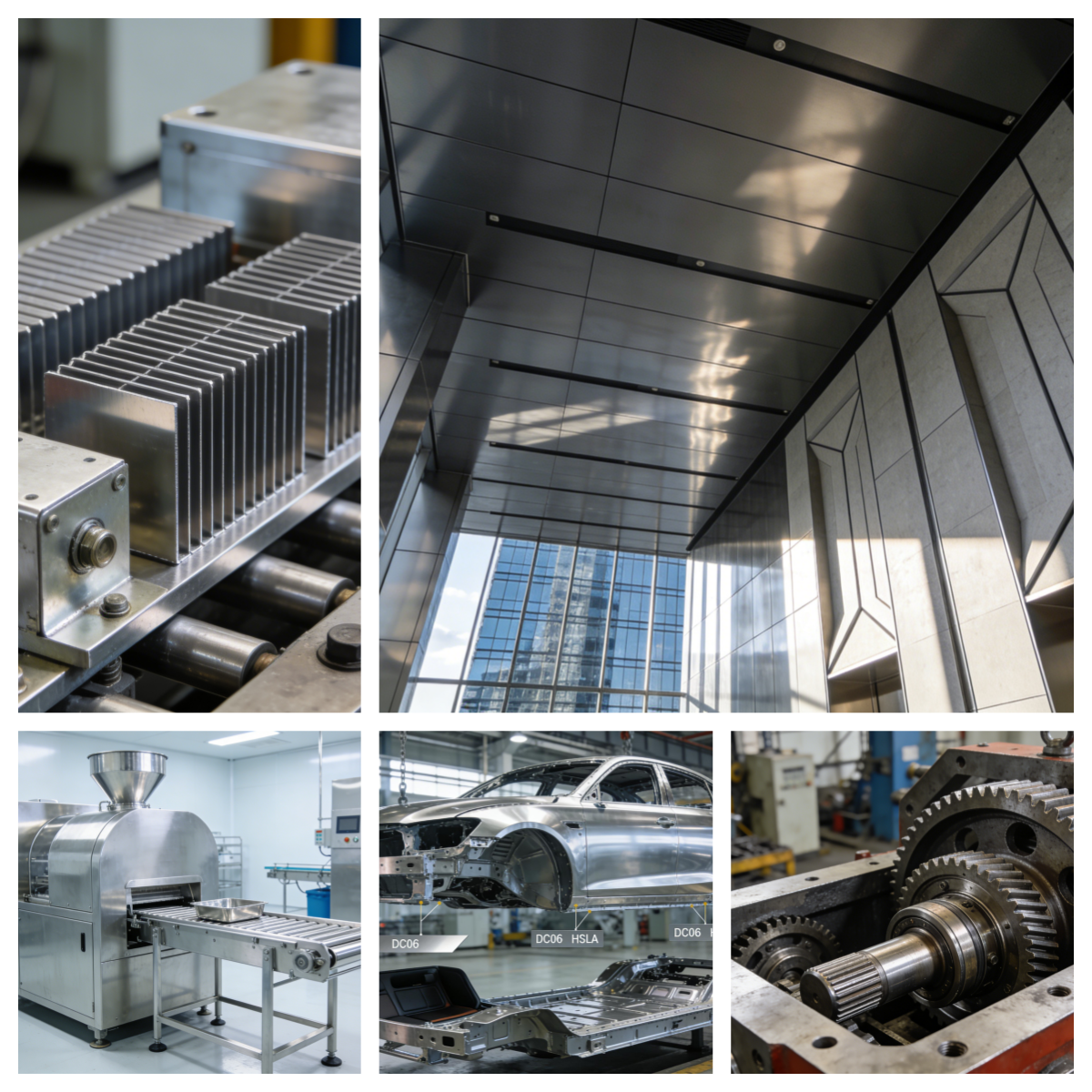
Applications of Steel Plates
3.Key Factors to Consider When Selecting Cold-Rolled Steel Sheets
Mechanical Properties
Select appropriate tensile strength, yield strength, and ductility based on load-bearing and forming requirements. Automotive stamping parts require high form-ability, while structural components require high tensile strength.
Dimensional Tolerances
Ensure thickness, width, and length tolerances meet production processes; precision machining requires even stricter standards.
Surface Quality
Select suitable surface treatments based on the operating environment (indoor/outdoor, corrosive) and aesthetic requirements.
Alloy Composition
Match applications based on corrosion resistance (stainless steel), strength (high-strength low-alloy steel), and form-ability (low-carbon steel).
Application Environment
Consider the effects of humidity, chemicals, extreme temperatures, and UV radiation. Galvanized or stainless steel sheets are recommended for outdoor use.
Compliance Requirements
Confirm compliance with industry standards (ASTM, DIN, GB) and regulations (food safety, medical standards).
Cost-Effectiveness
Balance performance requirements with budget. Low-carbon steel is suitable for non-corrosive environments, while stainless steel is preferred for corrosion-resistant applications.
4.Cold-Rolled Steel Sheet Storage and Handling Recommendations
Store in a dry, ventilated, and cool place, avoiding moisture, rust, and contact with corrosive chemicals.
Stack horizontally on a flat, raised surface (such as a wooden pallet), spacing the sheets with rubber pads to prevent friction damage.
Avoid scratching galvanized or painted surfaces with sharp or heavy objects.
Use lifting equipment with protective pads during handling to prevent dents and scratches.
Regularly inspect the steel sheet surface for rust, coating damage, or deformation, and maintain it promptly.
Cold-rolled steel sheet is a high-performance, versatile material, encompassing various types to meet the needs of different industries. From the high form-ability of low-carbon steel to the superior corrosion resistance of stainless steel, understanding the classification based on material grade, thickness, and surface treatment helps in accurately selecting the most suitable products and optimizing your production and application performance.