
90% of Overlooked Scaffolding Safety Inspection Details
At construction sites, scaffolding serves as a critical support system for elevated work. Improper management can easily lead to collapses, falls, and other safety incidents.
1.Why Must Scaffolding Safety Inspections Be Conducted?
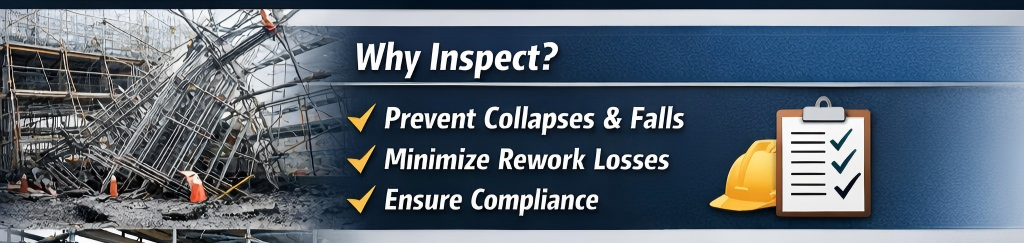
Why Inspect
Regular scaffolding inspections effectively achieve the following objectives:
Prevent major accidents such as collapses and falls from heights
Minimize economic losses from rework and shutdowns
Comply with regulations and acceptance requirements
Enhance corporate safety management reputation
2.Pre-Construction Scaffolding Inspection Checklist
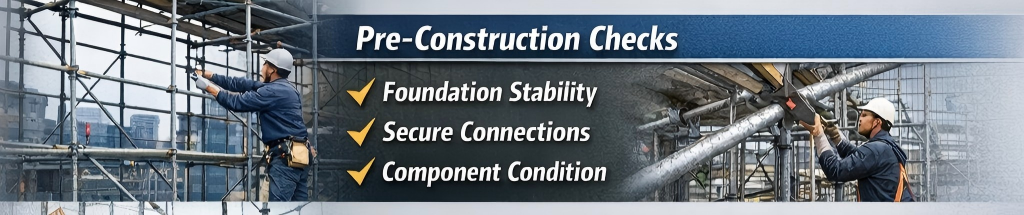
Pre-Construction Checks
Before scaffolding is put into use, complete these fundamental checks:
Foundation and Support System
Is the foundation level, solid, and free of standing water?
Are base plates or steel bases installed?
Are upright poles vertical and stable?
Are there signs of settlement or tilting?
Structural Stability
Are wall ties installed per specifications?
Are diagonal braces and cross-braces complete?
Are main node connections secure?
Are couplers and pins fully tightened?
Component Condition
Are there any bends, cracks, or corrosion?
Are welds intact?
Have scrap parts been removed?
Are specifications uniformly matched?
3.Key Points for Daily Safety Checks During Use
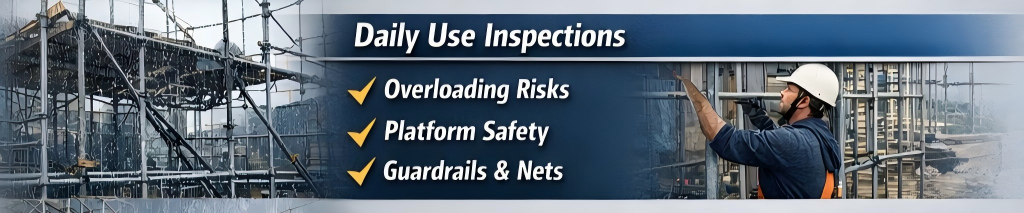
Daily Use Inspections
During construction, focus on the following aspects:
Load-bearing and Usage Standards
Is material stacked beyond capacity?
Is material concentrated in piles?
Are personnel counts exceeded?
Are heavy objects suspended improperly?
Work Platform Safety
Are scaffold boards fully laid and secured?
Are overhanging boards present?
Is the surface slip-resistant?
Is there visible damage?
Protective Facilities
Are guardrails complete?
Are toe boards secure?
Are safety nets intact?
Are entry/exit protections adequate?
4.Inspections During Adverse Weather and Special Conditions
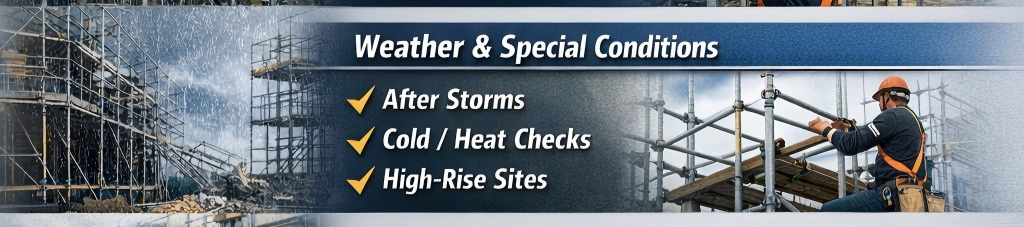
Daily Use Inspections
Special re-inspections must be conducted under the following circumstances:
After high winds or heavy rain
Check overall stability
Reinforce loose sections
Clear accumulated water and debris
Winter and high-temperature environments
Check for icing and slippery conditions
Check for thermal deformation of components
Check for peeling anti-corrosion coatings
High-rise and complex structural projects
Check if wall ties are densified
Check if load-bearing joints are deformed
Check for local buckling risks
5.Key Safety Inspection Points During Assembly/Disassembly

Assembly & Dismantiing
Assembly/disassembly operations are high-risk phases requiring stringent control:
Personnel Qualifications
Are workers certified?
Have they received safety training?
Are protective gear worn?
Work Procedures
Are operations conducted per plan?
Is work segmented by level/section?
Are restricted zones established?
Site Protection
Is there dedicated supervision?
Are warning signs posted?
Are measures in place to prevent component falls?
6.Safety inspections represent the most cost-effective risk control measure
The root cause of most scaffolding accidents stems from “inadequate inspections, incomplete rectifications, and unclear responsibilities.” By establishing systematic safety checklists and management processes:
Reduce accident rates
Minimize rework losses
Enhance construction efficiency
Strengthen client trust
Thorough inspections demonstrate responsibility for workers’ lives and safeguard the enterprise’s future.