
How to Choose Indoor Scaffolding? 90% of People Overlook These Points
During indoor renovation projects, whether installing ceilings, painting walls, mounting fixtures, maintaining pipes, or servicing equipment, working at heights is often necessary. Selecting the right scaffolding not only impacts construction efficiency but directly affects safety.
1.What factors should be considered when choosing indoor scaffolding?
Before selecting scaffolding, assess the construction environment and requirements.
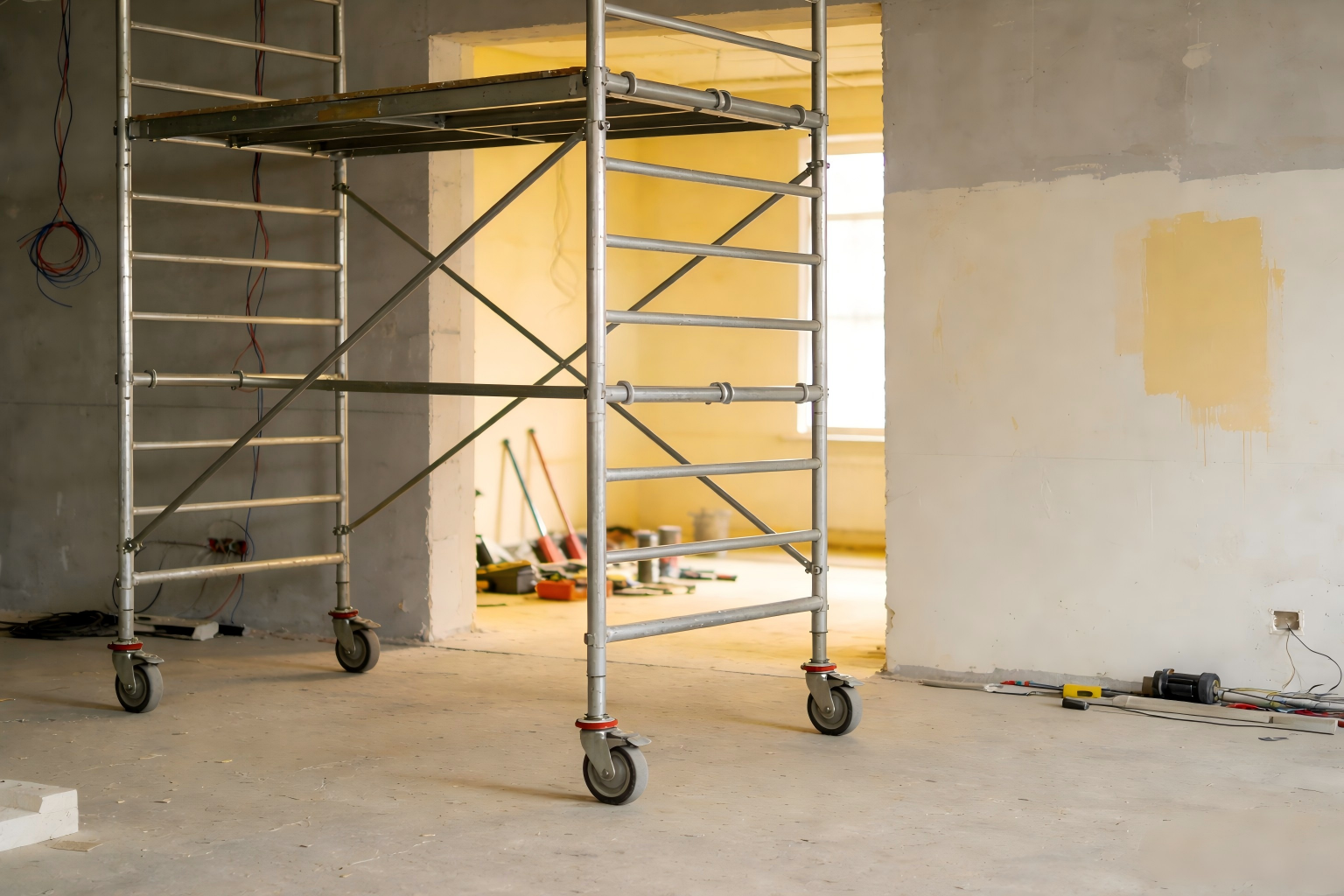
scaffolding
A.Working Height
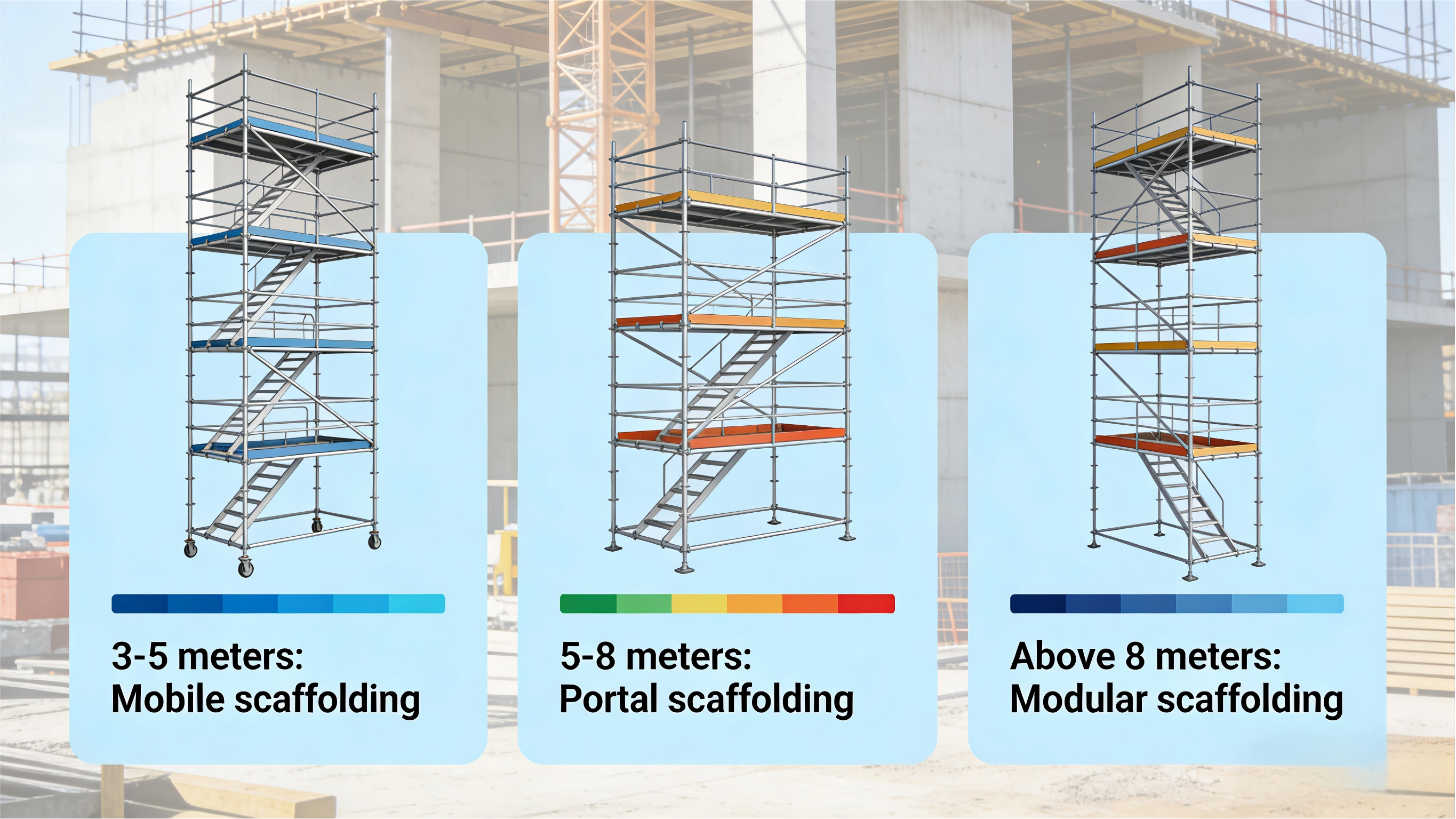
Indoor renovation heights typically range from 3–10 meters, with different heights requiring distinct scaffold types:
3–5 meters: Mobile scaffolding suffices
5–8 meters: Portal scaffolding offers greater stability
Above 8 meters: Modular or system scaffolding recommended
For elevated work, guardrails, diagonal braces, and stabilizing supports are mandatory.
scaffold types
B.Workspace Dimensions
Indoor construction spaces are often limited, e.g., residences, offices, shopping malls, hotels, exhibition halls.
Therefore, scaffolding must feature:
Compact structure
Minimal footprint
Easy assembly/disassembly
Portability
Otherwise, it will hinder construction progress and site management.
C.Floor Conditions
Common indoor flooring includes: tiles, wood flooring, marble, concrete surfaces.
To prevent floor damage, consider:
Mobile scaffolding with rubber wheels
Bases with anti-slip pads
Casters with locking mechanisms
This approach protects flooring while ensuring construction stability.
D.Frequency of Movement
Interior renovations often require constant movement between areas, such as:
Construction between rooms
Corridor construction
Large-scale mall construction
If frequent movement is needed, mobile scaffolding (with casters) is the optimal choice, significantly boosting construction efficiency.
2.Common Types of Scaffolding for Interior Renovation
A.Mobile Scaffolding
Mobile scaffolding is the most widely used type in interior renovation.
Key Features:
– Swivel casters on base
– Quick mobility
– Easy assembly/disassembly
– Compact footprint
Suitable for:
– Painting
– Lighting installation
– Ceiling work
– Electrical maintenance
Ideal for residential renovations and commercial space projects.
B.Aluminum Alloy Scaffolding
Aluminum alloy scaffolding has gained increasing popularity in recent years, especially for indoor projects.
Advantages:
Lightweight
High strength
Corrosion-resistant
Efficient installation
Applications:
Shopping malls
Office buildings
Airports
Hotels
Exhibition hall maintenance
Ideal for projects requiring frequent relocation.
C.Portal Scaffolding
Portal scaffolding offers structural stability and high load capacity, suitable for elevated construction.
Features:
Stable structure
Strong load-bearing capacity
Large platform area
High construction safety
Applications:
High-rise interior construction
Large-scale renovation projects
Multi-person simultaneous work environments
3.Mandatory Safety Configurations for Indoor Scaffolding
Regardless of the scaffolding type selected, comprehensive safety configurations must be ensured.
Critical safety components include:
Guardrails: Prevent personnel falls
Toe boards: Prevent tool drops
Anti-slip scaffolding boards: Ensure construction stability
Diagonal bracing: Enhance overall stability
Lockable casters: Prevent mobile scaffolding from slipping
Additionally, pr-construction safety inspections must verify secure connections and structural integrity.
4.Indoor Renovation Scaffolding Selection Recommendations
Overall, indoor renovation scaffolding choices should follow these principles:
Small-scale renovation projects
Recommended: Mobile scaffolding
Advantages: Flexible, easy to move, low cost
Commercial spaces or large-scale renovations
Recommended: Aluminum alloy scaffolding or portal scaffolding
Advantages: Stable structure, high construction efficiency
High-Altitude Indoor Construction
Recommended: Portal Scaffolding or System Scaffolding
Advantages: High safety, strong load-bearing capacity
In interior renovation projects, selecting appropriate scaffolding significantly enhances construction efficiency while ensuring worker safety. Contractors should comprehensively consider construction height, spatial constraints, ground conditions, and mobility requirements when choosing scaffolding types. Proper scaffolding selection not only reduces construction time but also effectively mitigates safety hazards, providing reliable assurance for project completion.