
What is a Portal Scaffold? A Comprehensive Guide to Types, Applications, and Selection
What is a Portal Scaffold? A Comprehensive Guide to Types, Applications, and Selection
In construction projects, factory renovations, and municipal infrastructure works, safety, efficiency, and practicality remain core priorities for construction management. As a standardized, modular core support system, portal scaffolds (also known as gate-type scaffolds) have become indispensable tools in construction, bridge building, and mechanical/electrical installations due to their easy assembly and exceptional stability.
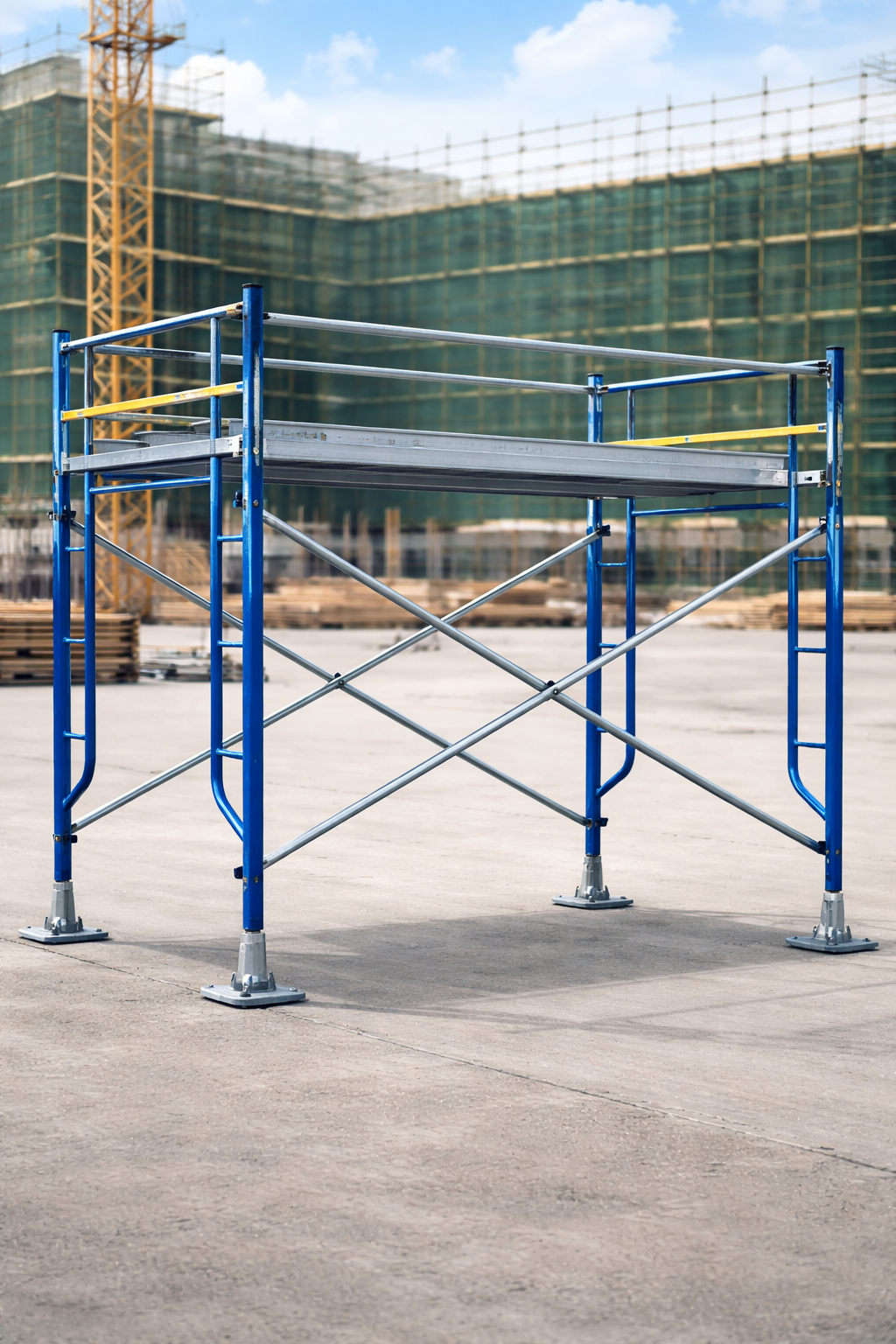
Portal Scaffold
1. Why Are Portal Scaffolds Indispensable?
Portal scaffolding is a modular system composed of portal frames, cross braces, decking, bases, and other components. Its overall “door-shaped” structure gives it its name. Designed around ‘stability’ and “efficiency,” it primarily consists of five core components that collectively form a robust construction platform:
Main Frames: The primary load-bearing components, welded from vertical and horizontal poles into a “door” shape, forming the foundational structure for the entire scaffold.
Cross braces: Vertically connecting two gate frames in an “X” pattern, primarily enhancing lateral stability to prevent tilting;
Connecting rods and locking pins: Used for vertically linking multiple main gate frames to extend scaffold height; locking pins ensure secure connections and prevent loosening;
Steel Decking: Laid across the crossbars of the frames to form the working platform for construction personnel. Features anti-slip surfaces and toe boards along edges, balancing practicality and safety.
Accessory Components: Include adjustable bases (for uneven ground and overall leveling), guardrails (for elevated work safety), wall ties (for anchoring to building structures and enhancing stability), and casters (exclusively for mobile scaffolding systems).
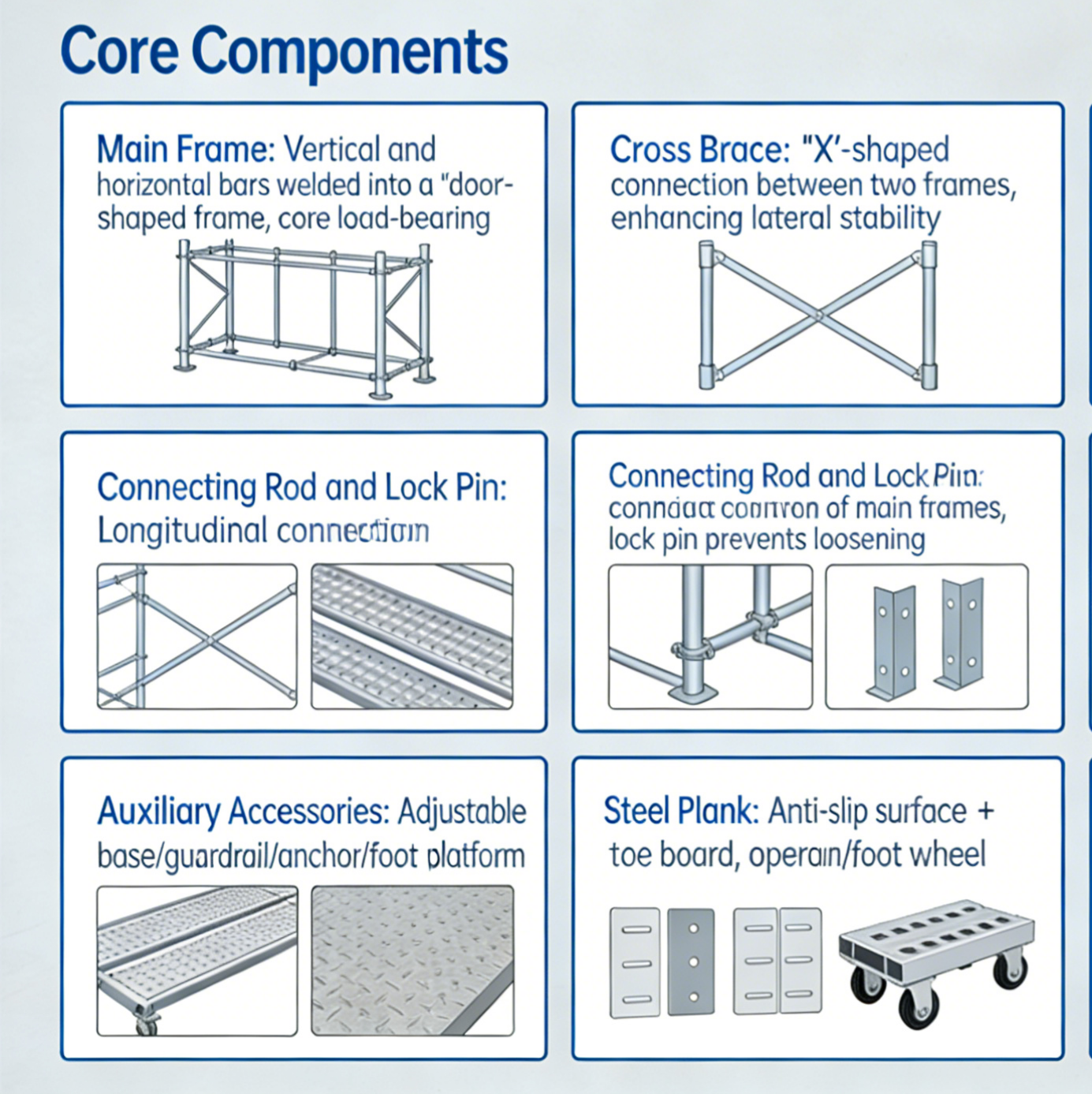
core components
Compared to traditional couple-type scaffolding, portal scaffolding offers distinct advantages in four key areas, making it particularly suitable for mid-to-low-rise construction and frequent re-usability.
High assembly efficiency: Prefabricated components require no complex joining; ordinary workers can operate them after minimal training, reducing assembly time by over 50% compared to couple-type scaffolding.
Exceptional stability: Modular design ensures even load distribution. Combined with wall ties and cross braces, it withstands strong winds and construction loads, significantly reducing high-altitude accident risks.
Wide versatility: Highly standardized components allow flexible height and span adjustments to accommodate diverse complex project requirements.
Cost-effectiveness: Reusable steel components with low wear rates reduce long-term material costs, aligning with green construction principles.
2. Primary Types of Portal Scaffolding
A. Standard Portal Scaffolding
The standard portal frame is the most common type, suitable for general construction, interior/exterior wall finishing, and equipment installation.
Features include:
Simple structure with high versatility
Flexible assembly methods
Ideal for mid-to-low-rise work platforms
Significant cost control advantages
Applicable to residential projects, commercial buildings, and factory construction.
B. Reinforced Portal Scaffolding
Features structural reinforcement over standard models, suitable for high-load or complex working conditions.
Key characteristics:
Thicker steel for enhanced load-bearing capacity
Superior seismic resistance and deformation control
Suitable for elevated and heavy-load construction
Commonly used in bridge engineering, large-scale industrial plants, and municipal projects.
C. Mobile Gantry Scaffolding
Equipped with swivel casters at the base for full mobility, enhancing operational flexibility.
Advantages include:
Easy relocation, reducing repetitive assembly/disassembly
Suitable for indoor work environments
Features a braking system for safety and reliability
Widely used in mall renovations, equipment maintenance, and indoor installation projects.
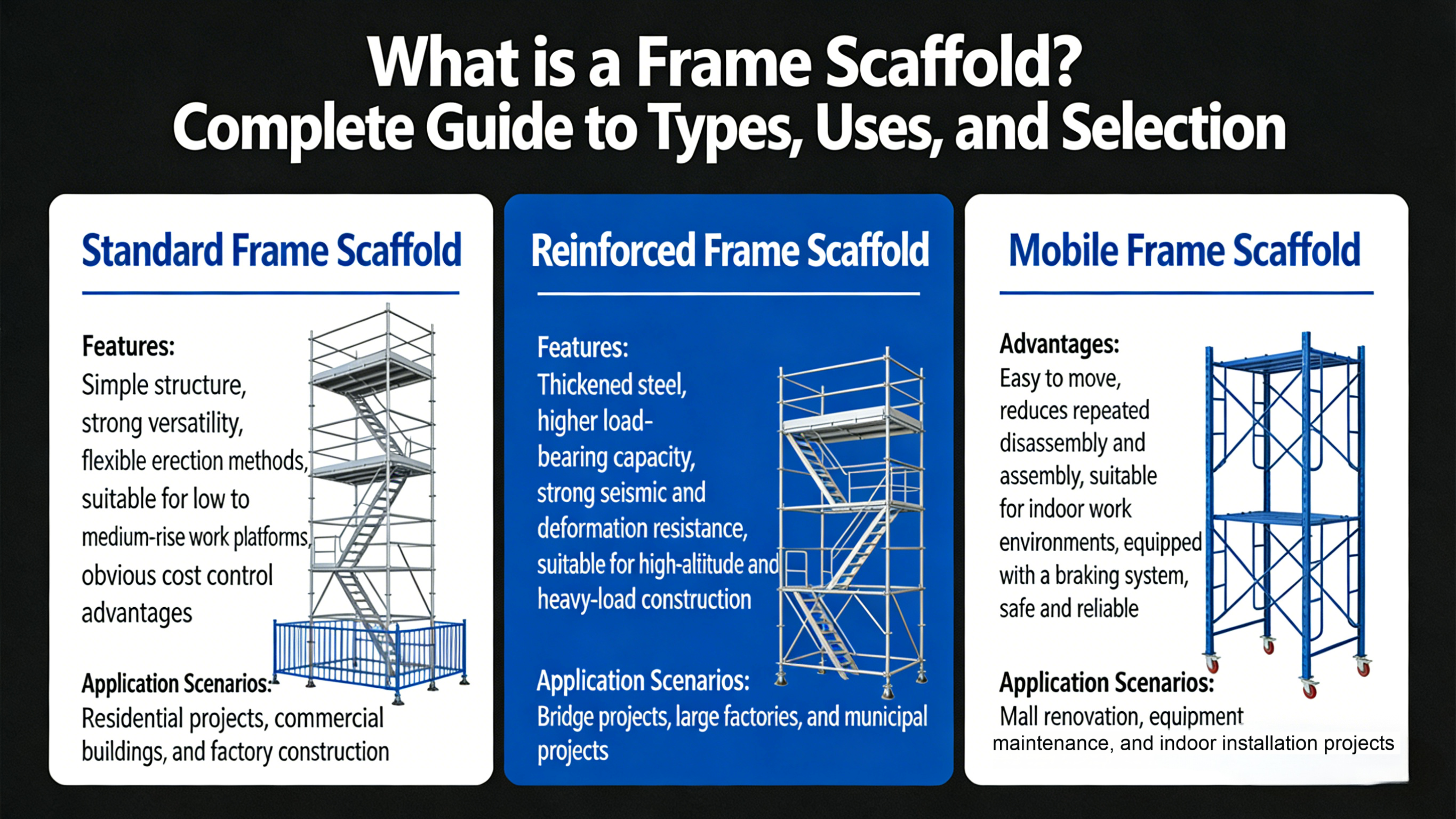
Types Of Portal Scaffold