
How to Properly Use Scaffolding for High-Altitude Work?
In scenarios such as construction, exterior wall maintenance, and advertising installation, scaffolding serves as one of the most common and critical work platforms. Proper scaffolding usage not only impacts construction efficiency but directly affects workers’ safety. Industry statistics indicate that numerous high-altitude accidents stem from improper scaffolding setup or misuse.
1.Common Scaffolding Types
Different scaffolding types are selected based on construction requirements and environmental conditions for elevated work.
A.Steel Pipe Scaffolding with Couples
This is the most prevalent scaffolding type in construction, utilizing steel pipes and couples for connections. It features structural stability, high load-bearing capacity, and adaptability to complex building structures.
Suitable Scenarios:
– Exterior wall construction
– High-rise structural work
– Large-scale engineering projects
B.Portal Scaffolding (Mobile Scaffolding)
Gate scaffolding features a simple structure and rapid installation. Typically equipped with swivel casters for mobility, it is suitable for indoor or short-term construction.
Applicable Scenarios:
Interior renovation
Ceiling construction
Equipment installation
C.Disc-CoupleScaffolding
Disc-couple scaffolding has seen increasing adoption in recent years. It offers high installation efficiency, strong stability, and excellent safety performance, making it commonly used in large-scale projects.
Applicable Scenarios:
Bridge engineering
Major construction projects
Industrial projects
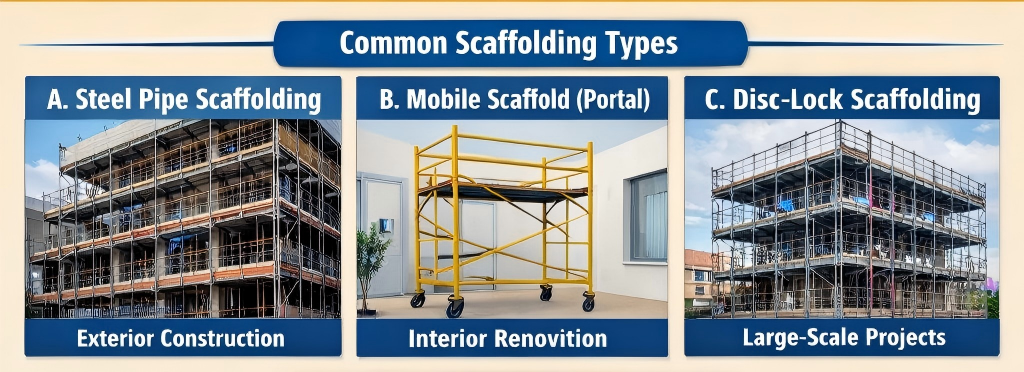
Common Scaffolding Types
2.Correct Steps for Scaffolding Assembly
Before elevated work, scaffolding must be assembled according to specifications.
A.Foundation Preparation
Scaffolding must be erected on solid, level ground. Base plates or pads should be installed when necessary to ensure overall stability.
Precautions:
Avoid direct assembly on soft soil
Implement drainage measures during rainy seasons
Level uneven ground surfaces first
B.Structural Assembly
Construction must strictly follow the project plan.
Key Requirements:
– Upright spacing meets specifications
– Crossbars and diagonal braces fully installed
– Couples must be securely tightened
– Guardrails installed on every platform level
C.Scaffold Board Installation
Boards must be laid flat and secured to prevent slippage during construction.
Recommended:
– Anti-slip steel scaffold boards
High-strength aluminum scaffolding boards
Wooden anti-slip scaffolding boards
3.Safety Regulations for Scaffold Use in Elevated Work
After scaffold erection, workers must strictly adhere to safety protocols during operation.
A.Pr-OperationInspection
Conduct safety checks before each work session, including:
– Secure scaffold connections
– Tightened couples
– Undamaged scaffolding boards
– Complete guardrails
Immediately rectify any issues.
B.Strictly Prohibit Overloading
Each scaffold has a clearly defined weight capacity limit. Overloading may cause structural deformation or collapse.
Safety Recommendations:
– Strictly control the quantity of construction materials stacked
– Avoid multiple personnel congregating in the same location
– Heavy equipment must be individually reinforced and supported
C.Mandatory Safety Protective Equipment
Personnel working at heights must wear complete safety gear, such as:
Safety helmets
Non-slip footwear
Safety harnesses
Fall arrest devices
Safety harnesses must be anchored to reliable structures, especially during work above 10 meters.
D.Suspend Operations During Severe Weather
Scaffolding work must cease under the following conditions:
Strong winds (Force 6 or higher)
Heavy rain
Thunderstorms
Dense fog impairing visibility
Severe weather increases the risk of scaffold instability or personnel falls.
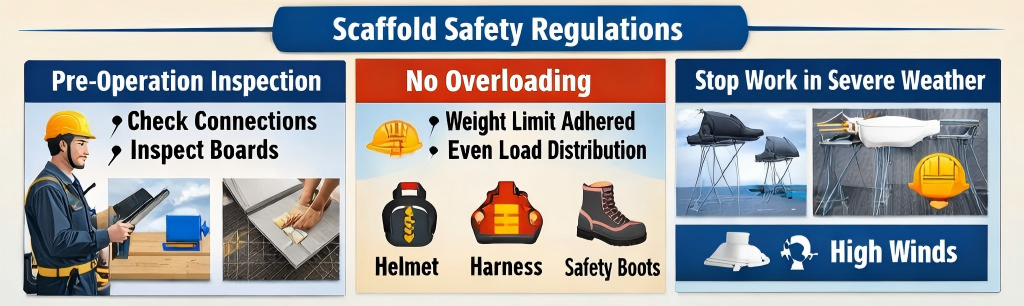
Scaffold Safety Regulations
4.Key Scaffolding Safety Management Points
Beyond standardized worker operations, corporate management is equally critical.
Regular Safety Inspections
Construction firms must schedule professionals to conduct:
Daily inspections
Weekly structural inspections
Major construction milestone inspections
Professional Training
All personnel performing elevated work must undergo safety training and obtain relevant certifications.
Training content includes:
Scaffolding erection knowledge
Elevated work safety protocols
Emergency incident response
Establish Safety Protocols
Companies must implement comprehensive:
High-Altitude Work Management Systems
Safety Responsibility Systems
Emergency Response Plans
5.Select High-Quality Scaffolding Equipment
Premium scaffolding equipment is vital for safe construction. When procuring, companies should prioritize:
Compliance with national standards
Use of high-strength steel materials
Stability of connection structures
Quality certification
Superior scaffolding not only enhances construction efficiency but also significantly reduces safety risks.