Steel Pipes for Fire Protection Systems: A Complete Guide to Safety, Standards, and Selection
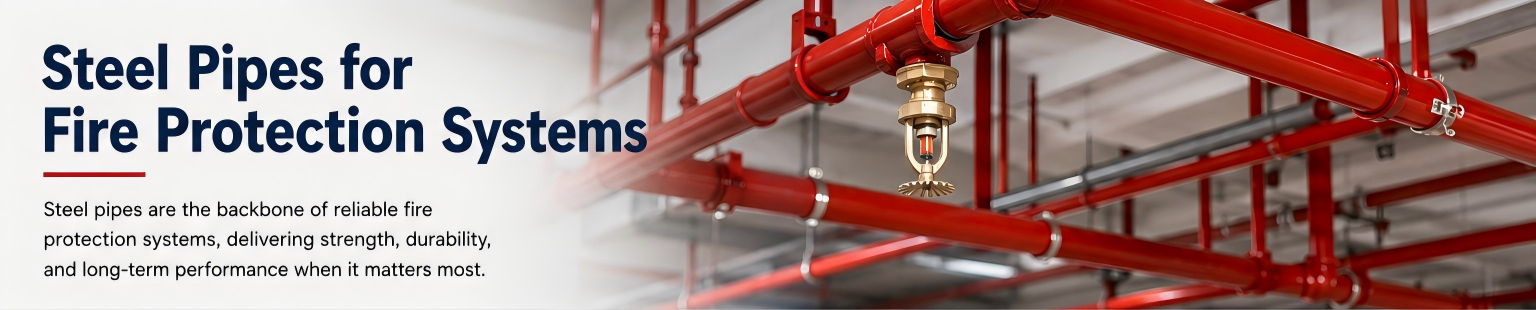 Fire protection systems are essential for safeguarding lives, commercial properties, industrial facilities, and public infrastructure. Whether installed in high-rise buildings, manufacturing plants, warehouses, hospitals, or airports, these systems rely on durable and reliable piping to deliver water or fire suppression agents efficiently during emergencies. Among the various piping materials available today, steel pipes for fire protection systems remain the preferred choice due to their exceptional strength, high-pressure resistance, long service life, and compliance with international fire safety standards.
This article explores the advantages, types, manufacturing standards, applications, and selection considerations of steel pipes used in fire protection systems.
Why Steel Pipes Are Preferred for Fire Protection Systems
Fire protection systems require piping that can perform reliably under extreme conditions. Steel pipes offer several advantages that make them ideal for fire suppression networks.
Outstanding Mechanical Strength
Steel pipes possess excellent tensile and yield strength, allowing them to withstand high internal water pressure without deformation. This ensures the stability and integrity of sprinkler systems, standpipes, and fire hydrant networks even during emergency operations.
Excellent Durability
Compared with plastic alternatives, steel pipes are more resistant to mechanical damage, impact, and external loads. Properly coated or galvanized steel pipes also provide excellent corrosion resistance, extending the service life of fire protection systems.
High Temperature Resistance
Unlike many non-metallic materials, steel maintains structural integrity under elevated temperatures, making it suitable for environments exposed to fire and heat.
Long Service Life
With proper installation and maintenance, steel fire protection pipes can provide reliable service for decades, reducing replacement costs and long-term maintenance expenses.
Types of Steel Pipes Used in Fire Protection Systems
Different fire protection projects require different pipe types depending on pressure ratings, installation environments, and corrosion conditions.
Black Steel Pipes
Black steel pipes are widely used in indoor fire sprinkler systems where corrosion risk is relatively low. They are economical and offer excellent pressure-bearing capacity.
Typical applications include:
- Automatic sprinkler systems
- Fire pump rooms
- Standpipe systems
- Internal fire water distribution
Galvanized Steel Pipes
Galvanized steel pipes feature a protective zinc coating that significantly improves corrosion resistance. They are commonly used in humid environments or installations where long-term durability is required.
Advantages include:
- Improved corrosion protection
- Longer service life
- Lower maintenance requirements
- Better appearance for exposed installations
Seamless Steel Pipes
Seamless steel pipes are manufactured without welded joints, resulting in superior pressure resistance and structural consistency. They are often selected for critical fire protection applications involving high pressure.
Applications include:
- Fire pump discharge lines
- High-pressure fire suppression systems
- Industrial fire protection
- Petrochemical facilities
Welded Steel Pipes
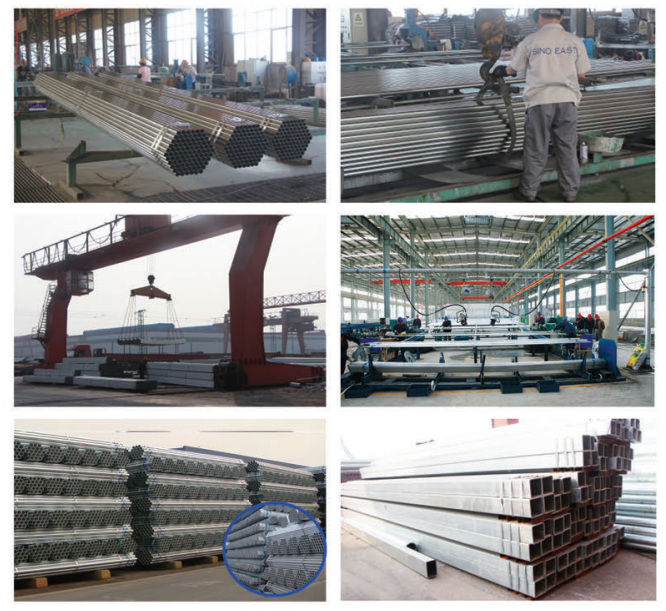
Electric Resistance Welded (ERW) steel pipes are widely used because they provide an excellent balance between cost and performance. Modern welding technology ensures high-quality joints that meet international fire protection standards.
Manufacturing Standards
High-quality fire protection steel pipes should comply with recognized international standards to ensure safety, reliability, and compatibility.
Common manufacturing standards include:
- ASTM A53
- ASTM A795
- ASTM A135
- EN 10255
- BS 1387
- ISO 65
- JIS G3452
- GB/T 3091
Compliance with these standards ensures consistent dimensions, mechanical properties, pressure performance, and coating quality.
Surface Coatings and Protection
Since fire protection systems often remain filled with water for extended periods, corrosion protection is essential.
Common surface treatments include:
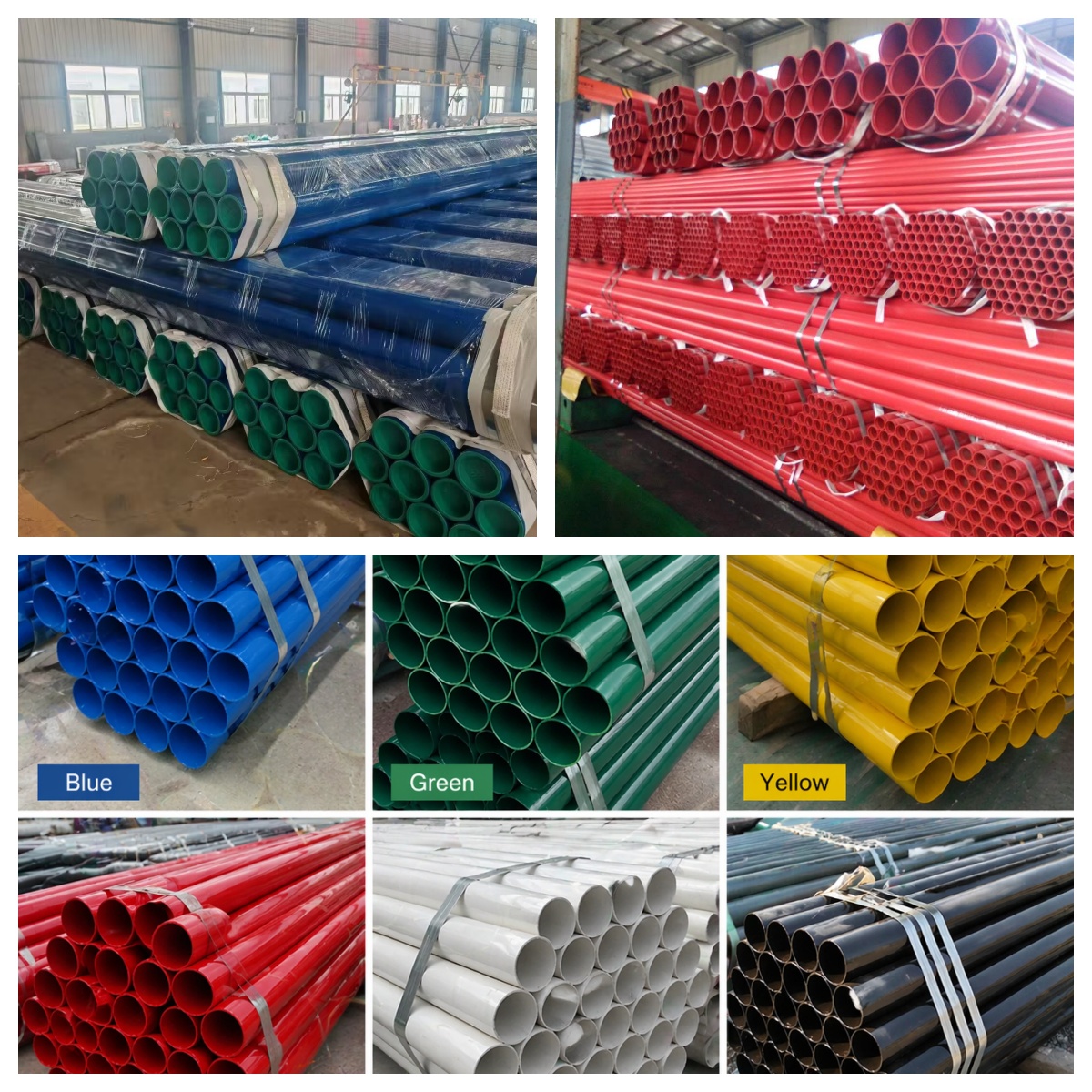
Hot-Dip Galvanizing
A thick zinc coating protects the steel from moisture and oxidation, making it suitable for both indoor and outdoor installations.
Red Epoxy Coating
Red epoxy-coated steel pipes are widely recognized in fire protection projects. The coating provides:
- Excellent corrosion resistance
- Strong chemical resistance
- Easy identification as fire protection piping
- Improved service life
Black Painted Finish
Black painted steel pipes offer basic surface protection during storage and transportation while maintaining cost efficiency.
Applications of Steel Pipes in Fire Protection Systems
Steel pipes are extensively used across numerous industries and building types.
Commercial Buildings
Shopping malls, office buildings, hotels, and retail centers rely on steel sprinkler piping systems to provide continuous fire protection.
Industrial Facilities
Factories, power plants, steel mills, and chemical plants require heavy-duty steel pipes capable of operating under demanding conditions.
Oil and Gas Industry
Fire protection is critical in refineries, offshore platforms, and storage terminals where high-pressure suppression systems depend on reliable steel piping.
Public Infrastructure
Airports, railway stations, hospitals, schools, and government buildings all utilize steel fire protection networks to meet stringent safety regulations.
Warehouses and Logistics Centers
Large storage facilities depend on extensive sprinkler systems connected through durable steel pipelines capable of delivering sufficient water flow during emergencies.
Factors to Consider When Selecting Steel Pipes
Choosing the appropriate steel pipe requires careful evaluation of several technical factors.
Pipe Size
Proper diameter selection directly affects water flow and hydraulic performance. Engineers typically determine pipe size according to system design calculations.
Pressure Rating
The pipe must safely withstand the maximum operating pressure and possible surge pressure generated during fire pump operation.
Corrosion Environment
Projects located in coastal regions, chemical plants, or humid environments generally require galvanized or epoxy-coated steel pipes for enhanced durability.
Installation Method
Underground installations, exposed outdoor piping, and concealed indoor systems may require different coating systems and connection methods.
Compliance Requirements
Always ensure the selected pipes satisfy local building regulations, insurance requirements, and international fire safety standards.
Benefits of Working with a Professional Steel Pipe Manufacturer
Partnering with an experienced manufacturer offers significant advantages beyond product quality.
Professional suppliers provide:
- Strict quality control procedures
- International certifications
- Customized dimensions
- Multiple coating options
- Fast production schedules
- Export packaging
- Technical engineering support
- Global logistics services
Many manufacturers also conduct hydrostatic testing, ultrasonic inspection, dimensional verification, and coating thickness measurement to guarantee product reliability.
Future Trends in Fire Protection Steel Pipes
As building technologies continue to evolve, steel pipe manufacturers are adopting advanced production methods to improve product performance.
Current industry trends include:
- Enhanced anti-corrosion coating technologies
- Digital quality traceability systems
- Environmentally friendly manufacturing processes
- Improved welding automation
- Higher precision dimensional control
- Increased compliance with international green building standards
These innovations help contractors and project owners achieve greater system reliability while reducing maintenance costs over the entire lifecycle of the installation.
Conclusion
Steel pipes continue to play a vital role in modern fire protection systems thanks to their exceptional strength, durability, pressure resistance, and long-term reliability. Whether used in commercial buildings, industrial facilities, public infrastructure, or energy projects, high-quality steel pipes ensure efficient water delivery when fire emergencies occur.
Selecting steel pipes that comply with recognized international standards, feature appropriate corrosion protection, and are manufactured by experienced suppliers is essential for building safe, efficient, and long-lasting fire protection systems. As global construction standards continue to rise, steel pipes will remain the preferred solution for dependable fire safety infrastructure, offering outstanding performance and peace of mind for engineers, contractors, and facility owners worldwide.