Black Steel Pipe vs Galvanized Steel Pipe: What’s the Difference and Which One Should You Choose?
When selecting steel pipes for industrial, commercial, or construction projects, one of the most common questions is black steel pipe vs galvanized steel pipe. Although both are manufactured from carbon steel and share similar mechanical properties, they differ significantly in surface treatment, corrosion resistance, appearance, cost, and applications.
Understanding these differences helps engineers, contractors, distributors, and project managers choose the right pipe for their specific requirements.
In this guide, we’ll compare black steel pipes and galvanized steel pipes in detail, covering their manufacturing process, advantages, disadvantages, typical applications, and key factors to consider before making a purchase.
What Is Black Steel Pipe?
Black steel pipe is a carbon steel pipe that has not undergone galvanization. During manufacturing, a dark iron oxide scale forms on the surface, giving the pipe its characteristic black appearance.
Unlike galvanized pipes, black steel pipes have no protective zinc coating. They are typically produced according to international standards such as ASTM A53, ASTM A106, API 5L, EN 10255, and EN 10219.
Main Characteristics
- Natural black oxide surface
- High mechanical strength
- Excellent pressure resistance
- Easy to weld and fabricate
- Lower production cost
- Suitable for indoor or protected environments
Because there is no zinc layer, black steel pipes are commonly coated with paint, epoxy, or anti-corrosion oil if they are intended for outdoor use.
What Is Galvanized Steel Pipe?
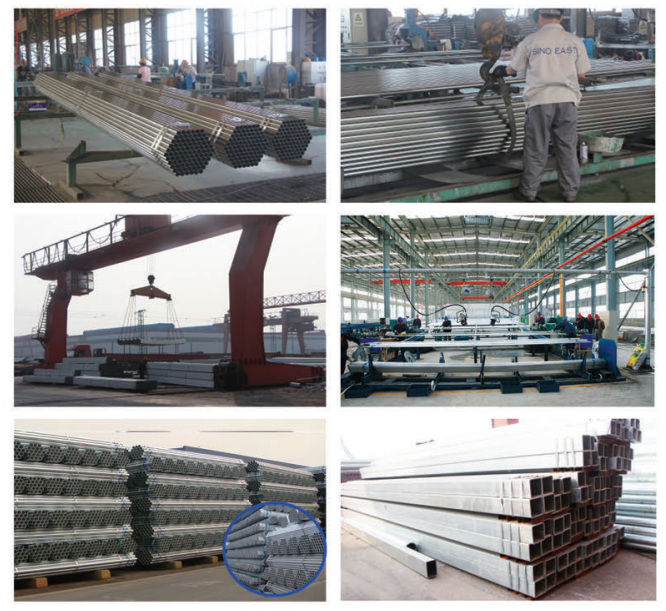
Galvanized steel pipe is a carbon steel pipe coated with a layer of zinc to protect it from rust and corrosion.
The zinc coating acts as a sacrificial layer. Even if the surface is scratched, the zinc corrodes before the underlying steel, significantly extending the service life of the pipe.
There are two common galvanizing methods:
Hot-Dip Galvanizing
The steel pipe is immersed in molten zinc at approximately 450°C, forming a thick, durable zinc coating.
Advantages include:
- Thick zinc layer
- Excellent corrosion resistance
- Long service life
- Ideal for outdoor environments
Electro-Galvanizing
The zinc coating is applied through electroplating.
Compared with hot-dip galvanizing, electro-galvanized pipes feature:
- Thinner coating
- Smoother appearance
- Lower corrosion resistance
- Lower production cost
Hot-dip galvanized steel pipes are the most widely used in industrial and construction applications.
Black Steel Pipe vs Galvanized Steel Pipe: Key Differences
| Feature | Black Steel Pipe | Galvanized Steel Pipe |
|---|---|---|
| Surface | Black oxide finish | Zinc-coated silver finish |
| Corrosion Resistance | Low | Excellent |
| Cost | Lower | Higher |
| Welding | Easy | Requires coating removal before welding |
| Appearance | Dark matte | Bright silver |
| Outdoor Use | Requires coating | Suitable without additional coating |
| Lifespan | Shorter in humid environments | Much longer |
| Maintenance | More frequent | Minimal |
Corrosion Resistance
One of the biggest differences between black steel pipe and galvanized steel pipe is corrosion protection.
Black Steel Pipe
Without zinc protection, black steel pipes begin to rust once exposed to moisture and oxygen.
If installed outdoors or underground without protective coatings, corrosion can occur relatively quickly.
Therefore, black steel pipes are generally recommended for:
- Indoor installations
- Dry environments
- Systems protected by insulation or coatings
Galvanized Steel Pipe
The zinc coating dramatically improves corrosion resistance.
Even under rain, humidity, or outdoor exposure, galvanized pipes can last decades with minimal maintenance.
For projects involving:
- Water systems
- Outdoor structures
- Agricultural facilities
- Coastal environments
galvanized steel pipe is usually the better choice.
Strength and Mechanical Properties
Many buyers assume galvanized pipes are stronger because of the zinc coating.
In reality, both black steel pipes and galvanized steel pipes have nearly identical mechanical strength because they are manufactured from the same base steel.
Properties such as:
- Tensile strength
- Yield strength
- Pressure resistance
- Structural performance
depend primarily on the steel grade rather than the surface finish.
The zinc coating mainly improves corrosion resistance rather than structural strength.
Welding and Fabrication
Black Steel Pipe
Black steel pipe is widely preferred for welding.
Advantages include:
- Clean welds
- No zinc fumes
- Lower preparation costs
- Better fabrication efficiency
This makes black steel pipe popular in:
- Structural fabrication
- Machinery manufacturing
- Industrial piping
Galvanized Steel Pipe
Welding galvanized steel pipe requires extra precautions.
The zinc coating must be removed from the weld area to:
- Improve weld quality
- Reduce porosity
- Prevent toxic zinc oxide fumes
After welding, the exposed area should be repaired using zinc-rich paint or other corrosion protection methods.
Cost Comparison
Price is another major factor when choosing between black and galvanized steel pipes.
Generally speaking:
Black steel pipe is less expensive because it does not require the galvanizing process.
Galvanized steel pipe costs more due to:
- Zinc consumption
- Additional manufacturing steps
- Quality inspection
- Longer production time
However, the higher initial investment can often be offset by reduced maintenance and longer service life.
For long-term outdoor projects, galvanized pipe often provides a lower total lifecycle cost.
Typical Applications
Common Uses of Black Steel Pipe
Black steel pipes are widely used in:
- Natural gas distribution
- Fire sprinkler systems
- Structural steel frameworks
- Machinery manufacturing
- Industrial equipment
- Oil and gas transportation
- High-pressure piping
Because black steel pipe offers excellent heat resistance, it is also suitable for steam systems.
Common Uses of Galvanized Steel Pipe
Galvanized steel pipes are commonly found in:
- Water supply systems
- Fence posts
- Greenhouses
- Agricultural irrigation
- Outdoor scaffolding
- Solar mounting systems
- HVAC supports
- Building construction
- Utility poles
Their corrosion resistance makes them ideal for environments exposed to moisture.
Maintenance Requirements
Black steel pipe requires regular inspection and protective coatings if exposed to corrosive environments.
Maintenance may include:
- Painting
- Rust removal
- Anti-corrosion coating
- Periodic inspection
Galvanized steel pipe requires much less maintenance because the zinc layer continuously protects the steel.
This makes galvanized pipe particularly attractive for projects where maintenance access is difficult.
Environmental Considerations
Both black steel pipes and galvanized steel pipes are recyclable.
Modern galvanizing technology also minimizes environmental impact by improving product longevity and reducing replacement frequency.
Selecting the right pipe based on application can reduce material waste and lower lifecycle emissions.
Which Pipe Should You Choose?
Choosing between black steel pipe and galvanized steel pipe depends on your project requirements.
Choose black steel pipe if you need:
- Lower material costs
- Easy welding
- Indoor installation
- High-temperature service
- Oil or gas transportation
Choose galvanized steel pipe if you need:
- Excellent corrosion resistance
- Outdoor installation
- Water transportation
- Low maintenance
- Long service life
There is no universal “better” option. The right choice depends on balancing budget, environment, maintenance requirements, and expected service life.
Frequently Asked Questions
Is galvanized steel pipe stronger than black steel pipe?
No. Both pipes have similar mechanical strength because they are made from the same carbon steel. The primary difference is the zinc coating that improves corrosion resistance.
Can black steel pipe be used outdoors?
Yes, but it should be protected with paint, epoxy coating, or other anti-corrosion treatments to prevent rust.
Why is galvanized steel pipe more expensive?
The galvanizing process requires additional materials, equipment, and quality control, increasing manufacturing costs.
Can galvanized steel pipe be welded?
Yes, but the zinc coating should be removed near the weld area, and appropriate ventilation is required to avoid inhaling zinc oxide fumes.
Which pipe lasts longer?
In corrosive environments, galvanized steel pipe generally has a much longer service life than black steel pipe due to its protective zinc coating.
Conclusion
The debate over black steel pipe vs galvanized steel pipe ultimately comes down to application requirements rather than which product is universally superior.
Black steel pipe offers affordability, excellent weldability, and reliable mechanical performance, making it ideal for indoor industrial systems, structural fabrication, and gas transportation.
Galvanized steel pipe provides superior corrosion resistance, lower maintenance, and longer service life, making it the preferred choice for outdoor construction, water supply, agricultural infrastructure, and humid environments.
By understanding the strengths and limitations of each option, buyers can select the most cost-effective solution while ensuring long-term performance and reliability.
Whether your project requires black steel pipes, hot-dip galvanized steel pipes, or customized steel piping solutions, partnering with an experienced manufacturer can help ensure consistent quality, international standard compliance, and dependable supply for projects worldwide.