Steel Pipe Applications in Agricultural Irrigation
Modern agriculture depends heavily on efficient irrigation systems to ensure stable crop production while conserving water resources. As global demand for food continues to grow, farmers are increasingly investing in durable and high-performance irrigation infrastructure. Among the many materials available for irrigation pipelines, steel pipes have become a preferred choice due to their exceptional strength, long service life, and ability to withstand challenging environmental conditions.
Whether used in large-scale farmland irrigation, pumping stations, water transmission networks, or sprinkler systems, steel pipes provide reliable performance that supports sustainable agricultural development. This article explores the major applications, benefits, types, and selection considerations of steel pipes in agricultural irrigation systems.
Why Steel Pipes Are Used in Agricultural Irrigation
Agricultural irrigation systems require pipelines that can transport large volumes of water efficiently over long distances. These pipelines are often exposed to varying temperatures, soil pressure, mechanical loads, and corrosive environments.
Steel pipes offer several advantages that make them ideal for these demanding applications:
- High mechanical strength
- Excellent pressure resistance
- Long service life
- Superior impact resistance
- Low maintenance requirements
- Compatibility with different irrigation technologies
Compared with plastic or concrete pipes, steel pipes can handle higher operating pressures and are less susceptible to cracking or deformation under heavy loads.
Common Types of Steel Pipes for Irrigation Systems
Different irrigation projects require different pipe specifications depending on water pressure, terrain, and installation conditions.
1. Galvanized Steel Pipes
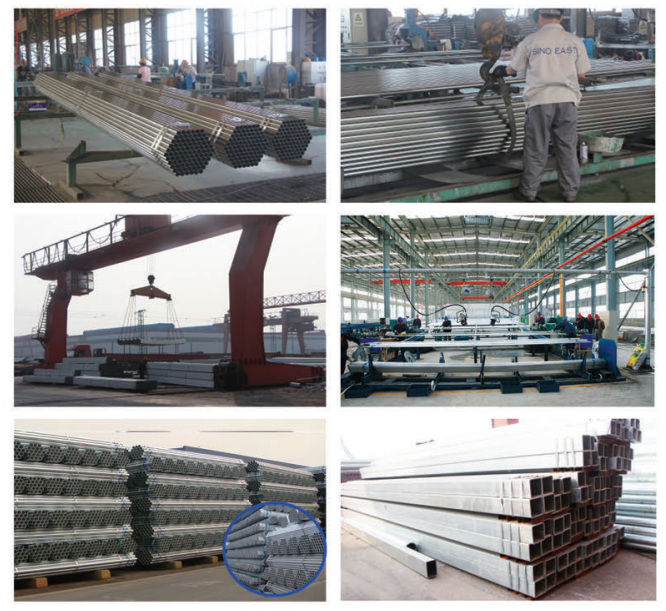
Galvanized steel pipes feature a protective zinc coating that significantly improves corrosion resistance. They are widely used for surface irrigation systems, farm water supply networks, and sprinkler installations.
Advantages include:
- Excellent rust protection
- Longer outdoor service life
- Easy installation
- Cost-effective for medium-sized projects
2. Carbon Steel Pipes
Carbon steel pipes are commonly selected for high-pressure water transmission lines and pumping stations.
Key benefits include:
- High tensile strength
- Excellent load-bearing capacity
- Suitable for large-diameter pipelines
- Competitive material cost
Protective coatings are often applied to improve corrosion resistance when installed underground.
3. Welded Steel Pipes
Electric Resistance Welded (ERW) steel pipes are among the most popular choices for agricultural irrigation because they provide consistent quality and economical pricing.
Applications include:
- Main irrigation pipelines
- Water distribution systems
- Pump outlet connections
- Farm infrastructure projects
4. Seamless Steel Pipes
Seamless steel pipes offer superior pressure resistance and structural integrity.
They are ideal for:
- High-pressure irrigation systems
- Deep well pumping
- Industrial agriculture
- Long-distance water transportation
Major Applications of Steel Pipes in Agricultural Irrigation
Main Water Transmission Pipelines
One of the most important applications of steel pipes is transporting water from reservoirs, rivers, or pumping stations to agricultural fields.
Because these pipelines often extend for several kilometers, durability and pressure resistance are essential. Steel pipes minimize the risk of leakage while maintaining stable water flow.
Sprinkler Irrigation Systems
Sprinkler irrigation requires consistent water pressure to ensure even water distribution across crops.
Steel pipes provide:
- Stable pressure performance
- Minimal deformation
- Reliable long-term operation
- Easy integration with valves and fittings
Their structural strength also allows above-ground installations without excessive support structures.
Drip Irrigation Infrastructure
Although drip irrigation primarily uses polyethylene tubing near plants, steel pipes frequently serve as the main distribution pipelines delivering water to multiple drip irrigation zones.
Steel pipelines help maintain efficient water delivery while reducing pressure losses over long distances.
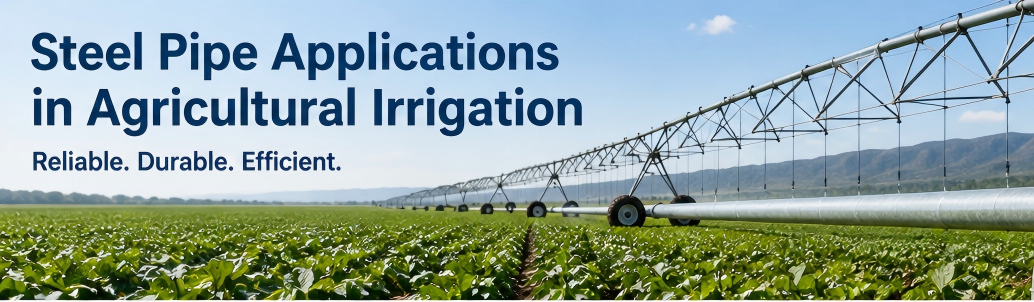
Center Pivot Irrigation Systems
Large commercial farms often utilize center pivot irrigation systems that continuously rotate around a central point.
Steel pipes are commonly used in:
- Central supply lines
- Structural framework
- Water distribution arms
- Support columns
Their high strength ensures stable operation under continuous movement and varying weather conditions.
Pumping Stations
Agricultural pumping stations experience frequent pressure fluctuations and high water flow rates.
Steel pipes are preferred because they can withstand:
- High internal pressure
- Water hammer effects
- Mechanical vibration
- Heavy-duty operation
Advantages of Steel Pipes in Agricultural Irrigation
Outstanding Durability
Steel pipes are designed to perform reliably for decades. With proper corrosion protection and maintenance, many irrigation systems remain operational for more than 30 years.
This longevity significantly reduces replacement costs and minimizes operational interruptions.
Excellent Pressure Resistance
Modern irrigation systems often operate under medium to high pressures, especially when supplying water across uneven terrain.
Steel pipes maintain their structural integrity even under demanding hydraulic conditions.
Corrosion Protection
Today’s steel irrigation pipes can be protected through various surface treatments, including:
- Hot-dip galvanizing
- Epoxy coatings
- Fusion bonded epoxy (FBE)
- Polyethylene coatings
- Bituminous coatings
These protective layers greatly extend service life in wet and corrosive environments.
Environmental Sustainability
Steel is one of the world’s most recyclable construction materials.
After decades of service, steel pipes can be recycled into new products without significant loss of material quality, supporting sustainable agricultural development and reducing environmental impact.
Cost Efficiency Over the Long Term
Although the initial investment for steel pipes may be higher than some plastic alternatives, their longer lifespan, reduced maintenance, and lower failure rates often result in a lower total lifecycle cost.
Factors to Consider When Selecting Steel Pipes
Choosing the appropriate steel pipe depends on several project-specific factors.
Water Pressure
Higher operating pressures require thicker pipe walls or seamless steel pipes.
Soil Conditions
Corrosive soils may require additional external coatings or cathodic protection systems.
Climate
Regions with extreme temperature variations benefit from steel pipes due to their excellent dimensional stability.
Installation Method
Underground pipelines require different protective measures than above-ground systems.
Pipe Diameter
Large-scale irrigation projects often require steel pipes with diameters ranging from DN100 to DN1200 or even larger, depending on water demand.
Maintenance Recommendations
Proper maintenance helps maximize the service life of steel irrigation pipelines.
Recommended practices include:
- Regular inspection for corrosion
- Monitoring coating condition
- Checking welded joints
- Cleaning sediment buildup
- Inspecting valves and fittings
- Performing pressure testing periodically
Preventive maintenance reduces unexpected downtime and improves irrigation efficiency.
Future Trends in Steel Irrigation Systems
Agriculture is rapidly embracing smart technologies and sustainable practices. Steel pipe manufacturers are continuously improving product performance through advanced manufacturing techniques and protective coatings.
Emerging developments include:
- High-performance anti-corrosion coatings
- Smart monitoring systems
- Digital pressure management
- High-strength lightweight steel
- Energy-efficient water transportation networks
These innovations help farmers reduce water waste while increasing irrigation reliability and operational efficiency.
Conclusion
Steel pipes play a vital role in modern agricultural irrigation by providing reliable, durable, and efficient water transportation solutions. From large-scale transmission pipelines and pumping stations to sprinkler and center pivot irrigation systems, steel pipes deliver outstanding performance under demanding operating conditions.
With advantages such as high strength, corrosion resistance, long service life, and excellent pressure capacity, steel pipes continue to be one of the most trusted materials for agricultural infrastructure. As sustainable farming practices become increasingly important worldwide, investing in high-quality steel pipe solutions can help improve irrigation efficiency, reduce maintenance costs, and support long-term agricultural productivity.
If you are looking for premium steel pipes for agricultural irrigation projects, choosing a trusted manufacturer with strict quality control, international certifications, and customized production capabilities will ensure reliable performance for years to come.