
Is Square Steel Pipe Stronger Than Round Pipe Comparison
Introduction: Why Steel Pipe Strength Matters for Construction and Industrial Projects
When it comes to building strong, reliable structures or setting up durable pipelines, the strength of steel pipes is a critical factor. Whether you’re constructing a skyscraper, manufacturing heavy machinery, or installing fencing, choosing the right steel pipe shape can make a big difference in safety, longevity, and cost.
One common question that often comes up is: Is square steel pipe stronger than round pipe? Understanding the structural differences and load capacities of various steel pipe shapes helps ensure your project can withstand the stresses it will face over time.
From load-bearing frameworks to industrial pipelines, the durability and strength of steel pipe shapes—like square steel tubing versus round steel pipe—are key to successful, long-lasting applications. In this article, we’ll explore how steel pipe strength impacts your projects and what factors you should consider when selecting the best steel pipe for construction or industrial use.
Overview of Steel Pipe Shapes: Design Features and Structural Differences Between Square and Round Pipes
When comparing steel pipe shapes, the most common options are square and round pipes. Both have unique design features that influence their strength and how they’re used in construction and industrial projects.
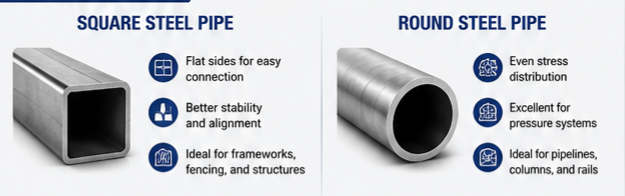
Round steel pipes are the most traditional shape. Their circular design helps evenly distribute stress and load, making them excellent for applications like pipelines and pressure systems. The smooth, curved surface reduces weak points, giving round steel pipe good durability and load capacity of steel pipes.
Square steel pipes, also called square steel tubing, have a boxy shape with flat sides. They’re popular for structural frameworks and fencing because they offer better stability and easier connection points. Their design provides increased torsional strength and bending resistance, especially in applications where shape matters.
Key differences:
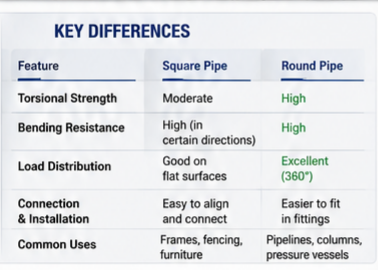
- Structural strength: Round pipes excel in handling torsional forces and pressure, thanks to their shape. Square pipes are stronger against bending and twisting in certain directions.
- Design features: The flat sides of square pipes make them easier to connect and align, which is useful in building frames.
- Applications: Round pipes are ideal for pipelines and load-bearing columns, while square pipes work well in fencing, frames, and architectural projects.
In , understanding the design features and structural differences between square and round steel pipes helps you pick the right shape for your specific needs. Both shapes have their strengths, but your choice depends on what kind of load or stress the pipe will face.
Material Properties and Manufacturing Processes: How They Influence Strength and Durability
When comparing square steel pipe strength to round steel pipe durability, understanding the material properties and manufacturing processes is key. Both shapes are made from high-quality steel, but slight differences in how they’re produced can impact their overall strength.
Most steel pipes are made through a process called seamless or welded manufacturing. Seamless pipes are stronger because they don’t have welds that can become weak spots. Welded pipes, including those for square and round shapes, are often more cost-effective but might have slightly lower load capacity if not properly manufactured.
Material properties like steel grade, wall thickness, and alloy composition directly influence the steel pipe’s strength. For example, high-grade steel with better tensile strength will resist bending and torsion better, making it more suitable for heavy-duty applications.
Design features also matter. Square steel tubing benefits from having flat sides that resist bending in certain directions, but this shape can sometimes be less flexible under torsional stress compared to round steel pipe. Round steel pipe, on the other hand, is naturally better at handling pressure and torsion because its shape distributes stress evenly.
In , the manufacturing process and material choice play a big role in determining the strength and durability of both square and round steel pipes. Picking the right combination ensures your project gets the load capacity and long-term performance it needs.
Structural strength analysis: Torsional strength, bending resistance, and load distribution comparisons
When comparing square steel pipe strength to round steel pipe durability, it’s important to look at how they handle different types of stress. Torsional strength, which is how well a pipe resists twisting, tends to be higher in round steel pipes. That’s because their circular shape evenly distributes stress, making them more resistant to twisting forces. Square steel pipes, on the other hand, are more prone to twisting at the corners, which can weaken their torsional strength.
Bending resistance is another key factor. Round steel pipe applications often favor their ability to bend without cracking, thanks to their uniform shape. Square steel pipe uses tend to resist bending in certain directions better due to their flat surfaces, which can be an advantage in specific structural setups.
Load distribution is also different. Round steel pipe pressure resistance is generally better because the load spreads evenly around the circumference. Square steel pipe strength, however, concentrates stress at the corners, which can create weak points under heavy loads.
Overall, if your project demands high torsional strength and even load distribution, round steel pipes usually perform better. But for applications needing flat surfaces or easier stacking, square steel pipes offer specific benefits.
Situational Strength Advantages: Best Applications for Square vs Round Steel Pipes
When choosing between square steel pipes and round steel pipes, understanding their strength advantages in different situations is key. Both shapes have their own strengths that make them ideal for specific applications.
Square steel pipes are great when you need stability and easy connection points. Their flat sides make them ideal for structures that require a lot of welding or bolting, like frames, fences, or furniture. They also handle load distribution well, especially when weight is spread evenly across the surface. That makes them a good choice for applications where steel pipe strength in bending and load capacity is important.
Round steel pipes, on the other hand, excel in situations where torsional strength and pressure resistance matter most. Because of their shape, they handle twisting forces better and are less likely to deform under pressure — making them perfect for pipelines, structural frameworks, and pressure vessels. Their steel pipe durability and pressure resistance are usually higher in these scenarios.
In :
- Use square steel pipes for structural frames, fencing, and applications where flat surfaces and load distribution are needed.
- Choose round steel pipes for pipelines, pressure systems, and projects requiring high torsional strength.
Knowing these situational strengths helps you pick the right pipe for your project, ensuring safety, durability, and cost-effectiveness.
Applications and Real-World Use Cases of Square vs Round Steel Pipes
Steel pipes are everywhere, and choosing the right shape depends on what you need them for. Both square steel pipe strength and round steel pipe durability play a role in their applications.
Structural Frameworks
Square steel pipes are popular in building frames, furniture, and architectural features. Their shape makes them easy to connect and provides good load distribution. They’re strong in bending resistance and torsional strength, making them reliable for load-bearing structures.
Pipelines
Round steel pipe applications shine in pipelines and fluid transport. Their pressure resistance and ability to handle internal stress make them ideal for carrying liquids and gases. The smooth surface also helps reduce friction, improving flow efficiency.
Fencing and Decorative Use
Square steel tubing benefits fencing, gates, and decorative projects because it looks neat and is easy to install. It offers good strength for supporting weight and resisting impacts.
Other Uses
- Industrial machinery: Both shapes are used depending on the load and design needs.
- Automotive parts: Round pipes are common due to their bending resistance.
- Furniture and fixtures: Square pipes are often chosen for their aesthetic and structural qualities.
In short, the best steel pipe for construction or industrial projects depends on the specific load, environment, and design requirements. Both square and round steel pipes have their strengths and ideal uses, making them versatile choices across many industries.

Pros and Cons of Square Steel Pipes: Strengths, Weaknesses, and Ideal Uses
Square steel pipes have gained popularity in construction and industrial projects for their unique shape and benefits. Here’s a quick look at their strengths and weaknesses, so you can decide if they’re right for your needs.
Strengths of Square Steel Pipes
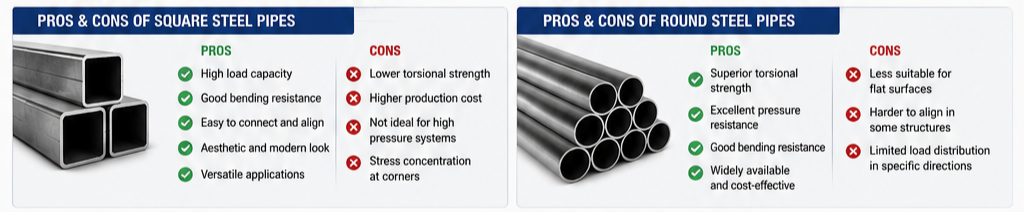
- High load capacity: Thanks to their shape, square steel pipes distribute weight evenly, making them great for frameworks and structural supports.
- Good for bending resistance: The flat sides help resist bending in certain directions, which is useful in building frames and fencing.
- Ease of installation: Square pipes fit together neatly, making assembly straightforward, especially in modular setups.
- Aesthetic appeal: Their clean, modern look is preferred in architectural projects where appearance matters.
- Versatile applications: Commonly used in fencing, furniture, and structural frameworks where strength and design are important.
Weaknesses of Square Steel Pipes
- Less torsional strength: Compared to round pipes, square pipes are weaker against twisting forces, which can be a concern in applications like pipelines.
- Cost: Usually, square steel pipes cost a bit more than round pipes due to manufacturing complexity.
- Limited flexibility: They are less suitable for projects requiring pipes to bend or curve, as their shape doesn’t lend itself well to bending.
- Potential for stress concentration: Sharp corners can create weak points under certain loads, which might impact long-term durability.
Ideal Uses for Square Steel Pipes
- Structural frameworks where load distribution and aesthetic are key
- Fencing and gates, thanks to their shape and strength
- Furniture and decorative projects
- Industrial applications needing precise, modular connections
In , square steel pipes offer great benefits in load-bearing and aesthetic applications but may fall short in torsional strength and flexibility. Choosing the right pipe depends on your specific project needs—consider these pros and cons carefully.
Pros and Cons of Round Steel Pipes: Strengths, Weaknesses, and Ideal Uses
When comparing steel pipe shapes, round steel pipes are often the go-to choice for many applications. They have their own set of strengths and weaknesses that make them suitable for specific uses.
Strengths of Round Steel Pipes
- High load capacity: Round steel pipes are excellent at evenly distributing loads, making them ideal for structural frameworks and pipelines.
- Great pressure resistance: Their shape helps resist internal pressure, making them a common choice for plumbing and fluid transport.
- Good bending resistance: Round pipes handle bending forces well, which is crucial in many construction projects.
- Ease of manufacturing: They are widely produced and readily available, often at a lower cost than custom shapes.
Weaknesses of Round Steel Pipes
- Less versatile for certain designs: Unlike square steel pipes, round pipes are less suitable for applications requiring flat surfaces or corners.
- Aesthetics: They may not fit some architectural or design needs where a more angular look is preferred.
- Limited load distribution in some directions: While good at load distribution overall, they may not perform as well as square pipes in applications needing specific load directions.
Ideal Uses for Round Steel Pipes
- Pipelines and fluid transport: Their pressure resistance and ability to handle internal stresses make them perfect for water, gas, and oil pipelines.
- Structural support: Used in frameworks where load distribution and bending resistance are important.
- Fencing and railings: Their rounded shape provides strength and durability, plus a smooth finish.
- Industrial applications: Suitable for manufacturing, machinery, and equipment where durability and strength are needed.
In , round steel pipes are strong, durable, and reliable for many applications, especially where pressure resistance and load-bearing capacity are priorities. However, they may fall short in projects that require flat surfaces or specific aesthetic features.
Factors Beyond Strength: Cost, Ease of Installation, Aesthetics, and Durability
When choosing between square steel pipe and round steel pipe, strength isn’t the only thing that matters. Other factors like cost, how easy they are to install, how they look, and how long they last also play a big role.
Cost
- Square steel pipes tend to be more expensive because of their manufacturing process and design complexity.
- Round steel pipes are usually cheaper and more widely available, making them a popular choice for many projects.
Ease of Installation
- Round pipes are generally easier to work with. They fit better in fittings and are easier to weld or connect.
- Square pipes can be trickier to install because of their shape, but they offer better stability in certain applications.
Aesthetics
- Square steel pipes look modern and clean, making them ideal for visible structures like fencing or decorative frameworks.
- Round pipes are more traditional and blend into many designs, especially in pipelines or structural supports.
Long-term Durability
- Both types are durable, but round steel pipes often resist bending and torsion better, which helps them last longer under stress.
- Square pipes are strong in bending resistance when loaded from the sides but may be more prone to deformation if hit hard.
In the end, your choice depends on your project needs. If you want a sleek look and easier installation, round steel pipes are a good pick. If you need a modern look and better load stability, square steel pipes might be better. Always consider your budget, design, and long-term use when making the call.
Why Choose Sino East Steel Group for Steel Pipe Solutions?
When it comes to selecting the best steel pipes for your project, Sino East Steel Group stands out for several reasons. We meet strict quality standards, ensuring every pipe we supply is durable and reliable, whether you need square steel pipe strength or round steel pipe durability.
Quality Standards and Certifications
At Sino East Steel Group, we follow international quality standards like ISO and CE certifications. This means our steel pipes—be it square steel tubing benefits or round steel pipe applications—are tested for strength, corrosion resistance, and long-term performance. You can trust our products to meet the demands of construction, industrial, or infrastructure projects worldwide.
Customization Options
Every project has unique needs. That’s why we offer customization options for both square and round steel pipes. Whether you need specific sizes, wall thicknesses, or special coatings, Sino East Steel Group can tailor solutions to fit your exact requirements. This flexibility helps optimize load capacity of steel pipes and ensures the best steel pipe for construction or pipeline use.
Competitive Pricing
We understand budget constraints, so we provide high-quality steel pipes at competitive prices. Our aim is to give you the best value—combining strength, durability, and affordability—without compromising on quality.
Reliable Customer Support
Our team is dedicated to providing expert advice and fast service. Whether you’re choosing between square steel pipe uses or round steel pipe pressure resistance, we’re here to help you make the right choice for your project needs.
Global Reach and Trust
With clients across the globe, Sino East Steel Group has built a reputation for delivering reliable steel pipe solutions that meet international standards. Our products are trusted for their strength, ease of installation, and long-term durability, making us a top choice for construction, fencing, pipelines, and more.
In short, choosing Sino East Steel Group means opting for quality, customization, and a partner you can rely on for all your steel pipe needs.
FAQs: Common Questions About Steel Pipe Strength, Applications, and Material Quality
Q1: Is square steel pipe stronger than round pipe?
In general, square steel pipes offer better load distribution and are more resistant to bending in certain directions, making them stronger for specific applications. However, round steel pipes tend to have higher torsional strength and pressure resistance. The choice depends on your project needs.
Q2: Which steel pipe shape is better for construction?
For building frameworks, round steel pipe durability and pressure resistance make them a popular choice. Square steel pipe benefits include easier installation and better load-bearing capacity in flat surfaces. Both have their place, so it’s about matching the shape to the task.
Q3: How does the material property affect steel pipe durability?
Material quality influences strength and long-term durability. High-grade steel with proper manufacturing processes will resist corrosion, bending, and torsion better. Whether square or round, choosing quality steel is key.
Q4: Are round steel pipes better for pipelines?
Yes, round steel pipe applications like pipelines benefit from their superior pressure resistance and torsional strength. They handle internal pressure well, making them ideal for fluid transport.
Q5: What are the main pros and cons of square steel pipes?
Pros:
- Better for structural frameworks
- Easier to connect and bolt
- Good load distribution on flat surfaces
Cons:
Less torsional strength
Can be more expensive to produce
Limited in applications requiring high pressure resistance
Q6: And what about round steel pipes?
Pros:
- Superior torsional and pressure resistance
- Better for pipelines and high-stress environments
- Usually more cost-effective for large-scale projects
Cons:
Less suitable for flat surfaces
Can be harder to connect in some applications
Q7: Beyond strength, what other factors should I consider?
Cost and availability
Ease of installation and welding
Aesthetics and design preferences
Long-term durability and corrosion resistance
Q8: Why should I choose Sino East Steel Group pipe solutions?
We meet strict quality standards, offer customization options, and hold relevant certifications. Our steel pipes are designed to match your specific needs, whether for construction, industrial use, or infrastructure projects.
Q9: How do I determine the best steel pipe for my project?
Assess your load requirements, environmental conditions, and installation needs. For high-pressure or torsion-heavy environments, round steel pipe is often better. For structural frameworks, square steel pipe might be the way to go.
Q10: Can I get a quote or expert advice?
Absolutely. Contact Sino East Steel Group for a tailored quote or expert consultation. We’re here to help you find the right steel pipe solution for your project needs.
Which Steel Pipe Is Stronger for Your Needs?
When it comes to choosing between square steel pipe and round steel pipe, the answer depends on your specific project needs. Generally, round steel pipes are known for their superior torsional strength and pressure resistance, making them ideal for pipelines and structures that face twisting forces. On the other hand, square steel pipes offer better bending resistance and load distribution, which makes them a good choice for frameworks and fencing.
If your project requires high load capacity of steel pipes and durability against bending, square steel tubing benefits might give you the edge. But for applications where pressure resistance and structural stability under torsion are critical, round steel pipe durability often outperforms.
Ultimately, the decision should be based on the specific application:
- For pipelines, pressure vessels, or structures exposed to twisting forces, round steel pipe is usually stronger.
- For building frames, fencing, or load-bearing structures, square steel pipe can be more advantageous.
Remember, factors like cost, ease of installation, and aesthetics also matter. At Sino East Steel Group, we offer high-quality, customizable steel pipe solutions suited to your project needs. Whether you need square steel pipe strength or round steel pipe durability, we can help you find the best fit.
Key takeaway: No single answer fits all. Match the pipe shape to your specific load, pressure, and structural requirements for the best results.
Contact and Next Steps: Request a Quote or Expert Consultation from Sino East Steel Group
If you’re considering which steel pipe shape—square or round—is best for your project, Sino East Steel Group is here to help. We offer high-quality steel pipe solutions tailored to your needs, whether for construction, industrial use, or custom applications.
Getting in touch is simple:
- Request a quote for our steel pipe products, including square steel pipe strength and round steel pipe durability.
- Consult with our experts to discuss your specific project requirements, load capacity needs, and application details.
Our team can guide you on the best steel pipe for construction, highlighting the structural differences and advantages of each shape. Plus, we ensure all our products meet strict quality standards, with certifications to back them up.
Don’t hesitate to reach out—let’s find the perfect steel pipe solution for your project today. Contact Sino East Steel Group for reliable, durable, and cost-effective steel pipe options.