Steel Tubing for Greenhouse Construction: What to Look For
Introduction
As greenhouse farming continues to expand worldwide, selecting the right structural materials has become more important than ever. Whether you’re building a commercial greenhouse, a backyard garden structure, or an agricultural tunnel, the quality of the steel tubing directly affects the greenhouse’s durability, safety, and long-term performance.
Steel tubing has become the preferred choice over wood and aluminum because of its superior strength, corrosion resistance, and cost-effectiveness. However, not all steel tubes are created equal. Understanding what to look for before purchasing can help you avoid premature failures, unnecessary maintenance costs, and structural issues.
In this guide, we’ll explore the key factors to consider when choosing steel tubing for greenhouse construction and explain why high-quality galvanized steel tubing is the best investment for modern agricultural projects.
Why Steel Tubing Is the Preferred Material for Greenhouses
Greenhouses operate in unique environments with constant exposure to moisture, humidity, temperature fluctuations, and sometimes harsh weather conditions. The structural frame must withstand these challenges year after year.
Compared with other materials, steel tubing offers several advantages:
- High load-bearing capacity
- Excellent resistance to wind and snow loads
- Long service life
- Minimal maintenance
- Easy fabrication and installation
- Cost-effective for both small and large projects
Modern greenhouse manufacturers increasingly use galvanized steel tubing because it combines structural strength with outstanding corrosion protection.
1. Corrosion Resistance Is the Top Priority
One of the biggest threats to greenhouse structures is corrosion.
The humid environment inside a greenhouse accelerates rust formation, especially when irrigation systems or fertilizers are used. Ordinary carbon steel may begin rusting within a few years if left untreated.
Hot-Dip Galvanized Steel
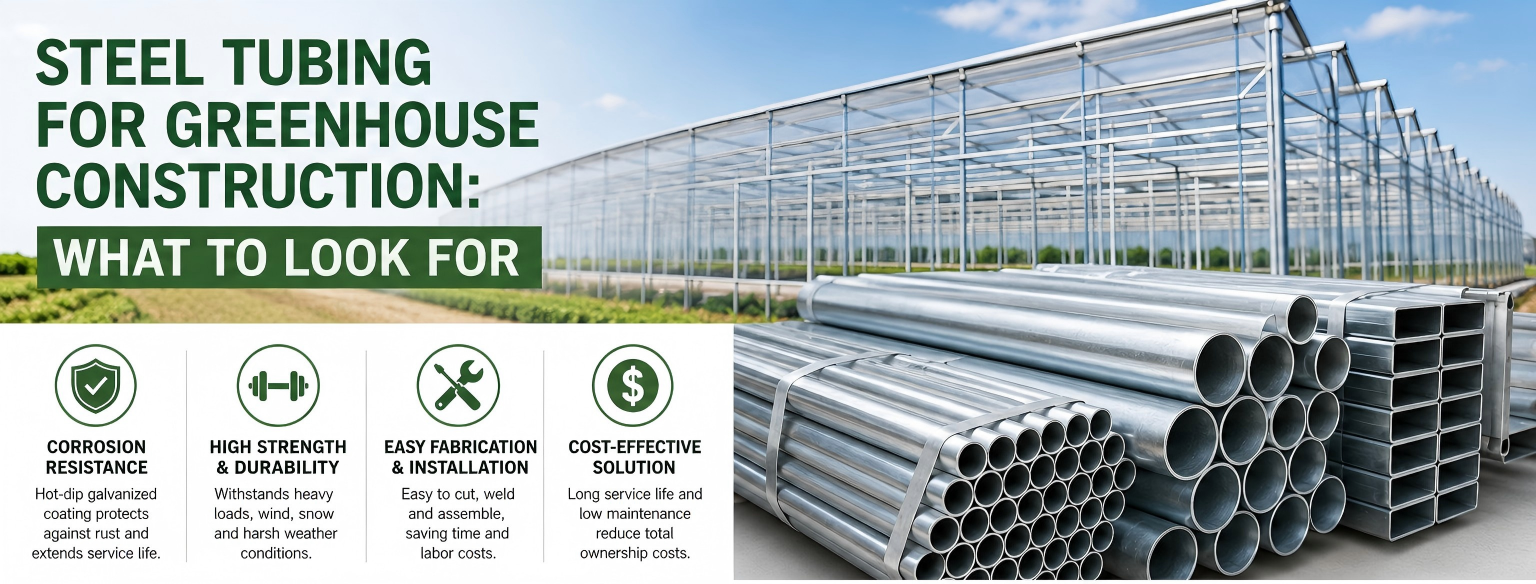
Hot-dip galvanized tubing is widely recognized as the best solution for greenhouse frames.
Its zinc coating creates a protective barrier that:
- Prevents oxidation
- Resists moisture damage
- Extends service life
- Reduces maintenance costs
For long-lasting greenhouse structures, look for tubing with a thick, uniform zinc coating that complies with international standards.
2. Choose the Right Steel Grade
The steel grade determines the tubing’s strength and durability.
Common materials include:
Q195
Suitable for light-duty greenhouse structures with lower load requirements.
Q235
One of the most popular choices for agricultural greenhouses, offering a good balance of strength and affordability.
Q355
Recommended for larger commercial greenhouses or regions with heavy snow and strong winds due to its higher yield strength.
Always verify the material certificate before purchasing.
3. Wall Thickness Matters
Many buyers focus only on tubing diameter, but wall thickness is equally important.
Thicker walls provide:
- Higher structural strength
- Better resistance to bending
- Longer service life
- Improved performance under heavy loads
Typical greenhouse tubing thickness ranges from:
| Application | Recommended Thickness |
|---|---|
| Small garden greenhouse | 1.2–1.5 mm |
| Standard agricultural greenhouse | 1.5–2.0 mm |
| Commercial greenhouse | 2.0–3.0 mm |
Selecting the correct thickness depends on local climate conditions and greenhouse size.
4. Tubing Shape: Round, Square, or Rectangular?
Different greenhouse designs require different tubing profiles.
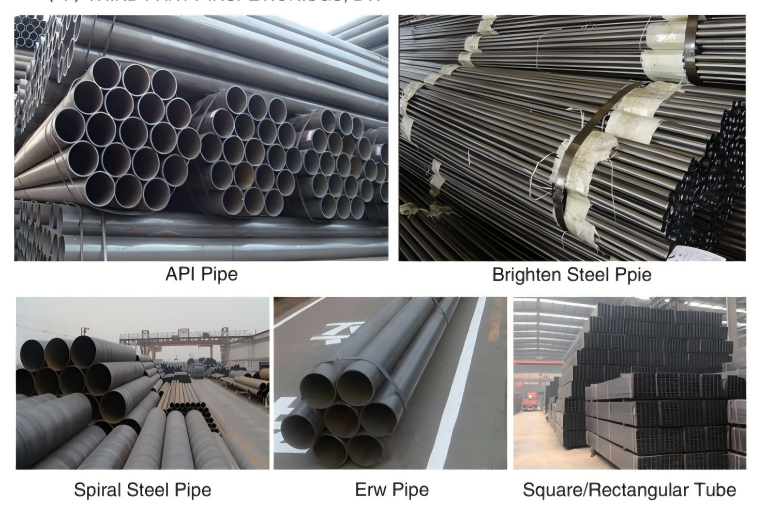
Round Steel Tubing
The most common option for hoop houses and tunnel greenhouses.
Advantages include:
- Better stress distribution
- Smooth bending
- Lower manufacturing cost
Square Steel Tubing
Frequently used in commercial greenhouse frames because it offers:
- Higher rigidity
- Easier connections
- Better appearance
Rectangular Steel Tubing
Ideal for beams, support columns, and structures requiring additional strength in one direction.
The best choice depends on your greenhouse design and engineering requirements.
5. Check Dimensional Accuracy
Precision manufacturing ensures faster installation and stronger connections.
Look for steel tubing with:
- Accurate outside diameter
- Uniform wall thickness
- Straight profile
- Smooth surface finish
- Minimal ovality
High dimensional accuracy reduces assembly time and minimizes fitting problems during construction.
6. Welding Quality Is Critical
If you’re purchasing welded steel tubing, inspect the weld seam carefully.
High-quality welded tubing should have:
- Smooth internal welds
- No visible cracks
- No excessive weld reinforcement
- Strong bonding between edges
Advanced production techniques such as high-frequency welding (ERW) produce stronger, cleaner welds suitable for greenhouse applications.
7. Consider Local Climate Conditions
Environmental factors significantly influence material selection.
Coastal Areas
Salt exposure accelerates corrosion.
Choose:
- Heavy galvanized tubing
- Additional protective coatings if necessary
Snowy Regions
Snow accumulation increases roof loads.
Use:
- Higher-strength steel
- Thicker wall tubing
- Larger diameter sections
High-Wind Areas
Strong winds require reinforced structures.
Look for:
- Stronger steel grades
- Additional cross-bracing
- Larger structural members
Selecting tubing based on climate improves safety and extends greenhouse lifespan.
8. Compliance with International Standards
Reliable steel tubing manufacturers should comply with internationally recognized standards.
Common standards include:
- ASTM
- EN
- JIS
- GB/T
- ISO quality management systems
Certification demonstrates consistent manufacturing quality and simplifies international procurement.
9. Surface Finish and Appearance
Although appearance may seem secondary, surface quality reflects manufacturing standards.
Quality greenhouse tubing should feature:
- Smooth galvanized coating
- No burrs
- No sharp edges
- Uniform zinc layer
- Clean surface without excessive oxidation
Better surface quality also makes installation safer and improves overall aesthetics.
10. Work with an Experienced Steel Tubing Supplier
Choosing the right supplier is just as important as choosing the right product.
A professional manufacturer can provide:
- Customized sizes
- Various zinc coating options
- Material certifications
- Quality inspection reports
- Fast delivery
- Technical support
- OEM & ODM services
Experienced suppliers also help optimize material selection, reducing project costs without compromising structural integrity.
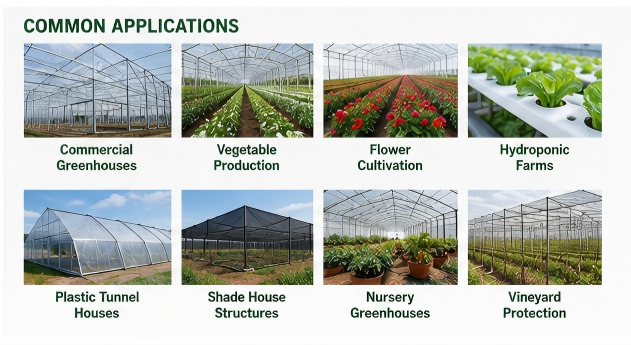
Common Applications of Greenhouse Steel Tubing
Steel tubing is widely used in various greenhouse systems, including:
- Commercial agricultural greenhouses
- Vegetable production facilities
- Flower cultivation greenhouses
- Hydroponic farms
- Plastic tunnel houses
- Shade house structures
- Nursery greenhouses
- Research greenhouses
- Vineyard protection systems
Its versatility makes steel tubing suitable for projects of nearly every size.
Maintenance Tips for Longer Service Life
Even galvanized steel benefits from regular inspection.
To maximize lifespan:
- Inspect joints annually.
- Remove accumulated dirt and chemicals.
- Repair damaged galvanized coatings promptly.
- Ensure proper drainage around the structure.
- Tighten loose bolts after severe weather.
Routine maintenance can significantly extend the service life of the greenhouse frame.
Conclusion
Selecting the right steel tubing is one of the most important decisions when building a greenhouse. Factors such as corrosion resistance, steel grade, wall thickness, tubing shape, manufacturing precision, and supplier reliability all contribute to the long-term success of your project.
Hot-dip galvanized steel tubing remains the industry standard because it delivers exceptional durability, structural strength, and low maintenance costs. By partnering with an experienced steel tubing manufacturer and choosing products that meet international quality standards, you can build a greenhouse capable of serving reliably for decades.
Whether you’re planning a small agricultural project or a large-scale commercial greenhouse, investing in high-quality steel tubing today will reduce maintenance expenses, improve structural safety, and maximize your return on investment in the years to come.