
Steel Pipe Applications in Oil & Gas Industry
The oil and gas industry relies on durable, high-performance materials to ensure safe and efficient exploration, production, transportation, and refining. Among these materials, steel pipes play a critical role throughout the entire value chain. From drilling deep underground wells to transporting crude oil and natural gas across thousands of kilometers, steel pipes provide the strength, pressure resistance, and corrosion protection required for demanding operating conditions.
As global energy demand continues to grow and oil and gas projects move into deeper waters and harsher environments, the need for premium-quality steel pipe solutions has become more important than ever. This article explores the major applications of steel pipes in the oil and gas industry, the different types of pipes used, key material standards, and the factors buyers should consider when selecting the right products.
Why Steel Pipes Are Essential in the Oil & Gas Industry
Oil and gas operations involve extreme temperatures, high pressures, corrosive fluids, and challenging geological conditions. Steel pipes are preferred because they offer several advantages:
- High mechanical strength and load-bearing capacity
- Excellent pressure resistance
- Superior corrosion resistance with appropriate coatings or alloys
- Long service life and low maintenance requirements
- Compatibility with international industry standards
- Cost-effective performance over long operating periods
These characteristics make steel pipes indispensable for upstream, midstream, and downstream applications.
Steel Pipe Applications Across the Oil & Gas Value Chain
1. Upstream: Oil & Gas Exploration and Drilling
The upstream sector includes exploration, drilling, and production activities. Steel pipes are widely used in drilling operations where reliability directly impacts safety and production efficiency.
Casing Pipes
Casing pipes stabilize the wellbore, prevent collapse, and isolate underground formations. They also protect groundwater from contamination and provide structural support throughout the well’s life.
Typical features include:
- High collapse resistance
- Excellent tensile strength
- Corrosion-resistant materials
- Compliance with API specifications
Tubing Pipes
Tubing transports crude oil, natural gas, or production fluids from the reservoir to the surface. Depending on the well conditions, tubing may require:
- High-pressure resistance
- Sour service capability
- Corrosion-resistant alloys
- Premium threaded connections
Drill Pipes
Drill pipes transmit drilling fluids and rotational force from the drilling rig to the drill bit. These pipes must withstand:
- High torque
- Cyclic fatigue
- Abrasive wear
- Extreme downhole pressure
2. Midstream: Oil & Gas Transportation
Once hydrocarbons are extracted, they must be transported safely to processing plants or storage facilities. Steel pipeline systems are the backbone of global energy transportation.
Common applications include:
- Long-distance crude oil pipelines
- Natural gas transmission pipelines
- Offshore subsea pipelines
- Gathering systems
- Distribution networks
For these applications, steel pipes provide:
- High internal pressure capacity
- Leak prevention
- Excellent weldability
- Long-distance reliability
- Reduced operating costs
Large-diameter welded steel pipes such as LSAW and SSAW are commonly selected for transmission pipelines because they combine strength with economic efficiency.
3. Downstream: Refining and Petrochemical Plants
Steel pipes are also extensively used in refineries and petrochemical facilities where process reliability is critical.
Typical applications include:
- Steam transportation
- Heat exchangers
- Pressure vessels
- Process piping
- Cooling systems
- Chemical transportation
- Fire protection systems
These environments often involve high temperatures and corrosive chemicals, making material selection especially important.
Types of Steel Pipes Used in Oil & Gas Industry
Different applications require different pipe manufacturing methods.
Seamless Steel Pipes
Seamless steel pipes are manufactured without a welded seam, providing superior strength and pressure resistance.
Applications:
- High-pressure drilling
- Boiler systems
- Well tubing
- High-temperature processing
Advantages:
- Uniform structure
- Better fatigue resistance
- Excellent mechanical performance
- Suitable for critical operations
ERW Steel Pipes
Electric Resistance Welded (ERW) pipes are manufactured by electrically welding steel strips.
Applications:
- Low and medium-pressure pipelines
- Water transportation
- Gas distribution
- Structural projects
Advantages:
- High dimensional accuracy
- Smooth internal surface
- Cost-effective production
- Excellent consistency
LSAW Steel Pipes
Longitudinal Submerged Arc Welded pipes are widely used for large-diameter pipeline projects.
Applications:
- Oil transmission
- Natural gas pipelines
- Offshore platforms
- Marine engineering
Advantages:
- Large diameter capability
- High strength
- Excellent weld quality
- Suitable for high-pressure transmission
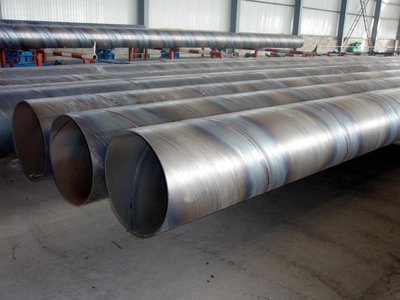
SSAW Steel Pipes
Spiral Submerged Arc Welded pipes are produced using spiral welding technology.
Applications:
- Water pipelines
- Oil pipelines
- Gas transportation
- Construction foundations
Advantages:
- Flexible diameter production
- Competitive cost
- Good structural performance
Common Steel Grades for Oil & Gas Pipes
Material selection depends on pressure, temperature, corrosion level, and project specifications.
Frequently used grades include:
- API 5L Grade B
- API 5L X42
- API 5L X52
- API 5L X60
- API 5L X65
- API 5L X70
- ASTM A53
- ASTM A106
- ASTM A333
- ASTM A335
Higher-grade materials provide improved yield strength and are commonly selected for long-distance transmission pipelines.
Corrosion Protection for Oil & Gas Steel Pipes
Corrosion is one of the biggest challenges in oil and gas infrastructure. Protective coatings significantly extend pipeline service life.
Popular external coatings include:
- 3LPE (Three-Layer Polyethylene)
- 3LPP (Three-Layer Polypropylene)
- Fusion Bonded Epoxy (FBE)
- Coal Tar Epoxy
- Bitumen Coating
- Zinc Coating
Internal coatings can also improve flow efficiency while reducing corrosion and scaling.
For highly corrosive environments containing hydrogen sulfide (H₂S) or carbon dioxide (CO₂), corrosion-resistant alloys (CRA) or special lining systems may be required.
International Standards and Certifications
Oil and gas projects require strict compliance with international quality standards.
Common standards include:
- API 5L
- API 5CT
- ASTM
- ASME
- ISO 3183
- EN Standards
- NACE MR0175 / ISO 15156 for sour service
Manufacturers should also maintain quality management certifications such as ISO 9001 to ensure consistent product quality.
Factors to Consider When Choosing Steel Pipes
Selecting the right steel pipe involves more than matching dimensions. Buyers should evaluate several critical factors:
Operating Pressure
Higher-pressure systems require thicker walls and higher-strength materials.
Corrosion Environment
Evaluate exposure to moisture, saltwater, chemicals, H₂S, or CO₂ before selecting materials and coatings.
Temperature Range
Both extremely high and low temperatures affect steel performance and should influence material selection.
Pipe Dimensions
Choose the appropriate:
- Outside diameter (OD)
- Wall thickness
- Pipe length
- Schedule
- End connection
Manufacturing Quality
Reliable suppliers should provide:
- Mill Test Certificates (MTC)
- Hydrostatic testing
- Ultrasonic testing (UT)
- X-ray inspection
- Third-party inspection reports
Benefits of Working with an Experienced Steel Pipe Supplier
An experienced supplier offers much more than manufacturing capability. Professional partners can provide:
- Complete product range
- International standard compliance
- Customized dimensions
- Protective coating solutions
- Fast delivery
- Export packaging
- Technical support
- Competitive pricing
- Stable global supply chain
These advantages help reduce procurement risks while improving project efficiency.
Future Trends in Oil & Gas Steel Pipe Technology
As the energy industry evolves, steel pipe technology continues to advance.
Emerging trends include:
- Higher-strength pipeline steels
- Improved anti-corrosion coatings
- Smart pipeline monitoring systems
- Hydrogen-compatible steel pipes
- Low-carbon manufacturing processes
- Enhanced welding technologies
- Digital quality inspection
These innovations improve operational safety while supporting more sustainable energy infrastructure.
Conclusion
Steel pipes are the foundation of modern oil and gas infrastructure, serving every stage from exploration and drilling to transportation, refining, and distribution. Whether using seamless pipes for high-pressure wells or large-diameter welded pipes for long-distance transmission, selecting the appropriate material, manufacturing process, and protective coating is essential for ensuring long-term reliability and operational safety.
For project owners, EPC contractors, distributors, and industrial buyers, partnering with a trusted steel pipe manufacturer ensures access to high-quality products that comply with international standards and meet the demanding requirements of today’s oil and gas industry.
As global energy projects become increasingly complex, investing in premium steel pipe solutions remains one of the most effective ways to improve efficiency, reduce maintenance costs, and maximize the lifespan of critical infrastructure.
Looking for a supplier? Our API 5L line pipe for oil & gas service page covers Grade B-X60 specifications, MOQ and quotation.
⚡ Quick RFQ & Instant CIF Quotation
Inquiring about Steel Pipe Applications in Oil 038 Gas Industry? Contact our export engineering team for 2026 FOB/CIF pricing, MTC 3.1 certificates, and 20GP container loading calculations.
