
Steel Pipe Surface Treatments Explained
Steel Pipe Surface Treatments Explained
Steel pipes are widely used in construction, oil and gas, water transportation, manufacturing, and infrastructure projects due to their high strength, durability, and versatility. However, untreated steel surfaces are vulnerable to corrosion, oxidation, and environmental damage. To improve service life and performance, various steel pipe surface treatments are applied during manufacturing and fabrication.
Understanding different steel pipe surface treatment methods helps engineers, contractors, and buyers choose the right solution for specific applications. This article explains the most common steel pipe surface treatments, their benefits, applications, and how to select the appropriate treatment for your project.
Why Steel Pipe Surface Treatment Matters
Steel is a strong and reliable material, but its main weakness is corrosion. When exposed to moisture, oxygen, chemicals, salt, or extreme temperatures, steel surfaces can gradually deteriorate. Corrosion not only reduces the lifespan of steel pipes but can also affect safety and operational efficiency.
Surface treatments provide a protective barrier between the steel substrate and external environments. The main purposes of steel pipe surface treatments include:
- Preventing rust and corrosion
- Improving wear resistance
- Enhancing surface appearance
- Increasing coating adhesion
- Extending service life
- Reducing maintenance costs
For industries such as oil pipelines, offshore structures, and water systems, proper surface treatment is often essential for long-term reliability.
Common Types of Steel Pipe Surface Treatments
1. Shot Blasting and Sand Blasting
Shot blasting and sand blasting are mechanical surface preparation methods commonly used before painting or coating.
During the process, abrasive materials are projected onto the steel pipe surface at high speed. The impact removes rust, mill scale, oil, and other contaminants.
Advantages of blasting treatment:
- Creates a clean and rough surface
- Improves coating adhesion
- Removes surface imperfections
- Provides uniform surface preparation
Shot blasting usually uses steel shots or steel grit, while sand blasting uses abrasive particles such as mineral sand or other blasting media.
This treatment is widely used for structural steel pipes, pressure pipes, and pipes requiring epoxy or paint coatings.
Surface cleanliness standards
Many steel pipe manufacturers follow international standards such as Sa 2.5 or Sa 3 levels, which define the degree of surface cleanliness after blasting. A properly prepared surface ensures coatings bond effectively and remain durable.
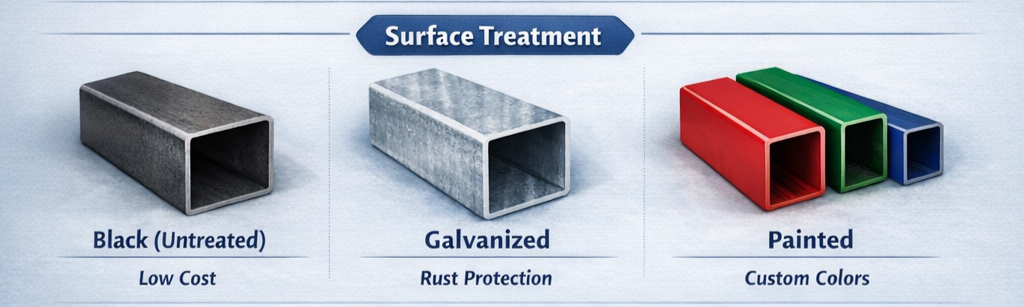
2. Galvanizing
Galvanizing is one of the most popular corrosion protection methods for steel pipes. The most common process is hot-dip galvanizing, where steel pipes are immersed in molten zinc.
The zinc layer forms a protective coating that prevents steel from contacting moisture and oxygen.
Benefits of galvanized steel pipes:
- Excellent corrosion resistance
- Long outdoor service life
- Low maintenance requirements
- Cost-effective protection
Galvanized steel pipes are commonly used in:
- Water supply systems
- Fire sprinkler systems
- Construction frameworks
- Agricultural equipment
- Outdoor structures
The zinc coating also provides sacrificial protection. Even if the surface is scratched, zinc continues protecting the exposed steel area.
3. Painting and Coating
Painting is a flexible surface treatment method suitable for many environments. Different coating materials provide different levels of protection.
Common steel pipe coatings include:
Epoxy Coating
Epoxy coatings offer strong chemical resistance and excellent adhesion. They are frequently used for:
- Oil and gas pipelines
- Water transmission pipes
- Industrial equipment
Polyurethane Coating
Polyurethane coatings provide excellent weather resistance and UV protection. They are suitable for outdoor applications where appearance and durability are important.
Alkyd and Acrylic Coatings
These coatings are often used for general-purpose applications where moderate protection is required.
Advantages of coated steel pipes:
- Wide range of color options
- Customizable protection levels
- Suitable for various environments
- Easy inspection and maintenance
The correct coating system depends on factors such as temperature, humidity, chemical exposure, and expected service life.
4. 3PE and 3LPE Coating
Three-layer polyethylene (3PE) and three-layer polypropylene (3LPP) coatings are advanced anti-corrosion solutions mainly used for underground and offshore pipelines.
A typical 3PE coating system includes:
- Fusion bonded epoxy (FBE) layer
- Adhesive layer
- Polyethylene protective layer
Each layer provides a specific function:
- FBE offers corrosion resistance
- Adhesive improves bonding
- Polyethylene protects against mechanical damage
Applications of 3PE coated steel pipes:
- Natural gas pipelines
- Crude oil transportation
- Water pipelines
- Underground infrastructure
3PE coatings provide excellent durability and are widely recognized as a reliable solution for long-distance pipeline projects.
5. FBE (Fusion Bonded Epoxy) Coating
Fusion bonded epoxy coating is a powder-based coating applied using electrostatic spraying and heat curing.
When heated, epoxy powder melts and forms a strong protective layer on the steel surface.
Key advantages:
- Strong adhesion
- Excellent corrosion resistance
- Good chemical resistance
- Suitable for buried pipelines
FBE coating is commonly used in pipeline systems where long-term underground protection is required.
6. Pickling and Phosphating
Pickling is a chemical cleaning process that removes rust, oxide layers, and impurities from steel surfaces using acidic solutions.
After pickling, phosphating may be applied to create a protective phosphate layer.
Benefits include:
- Cleaner steel surface
- Improved paint adhesion
- Better corrosion resistance
- Enhanced manufacturing quality
These treatments are often used before painting, powder coating, or other finishing processes.
7. Powder Coating
Powder coating uses dry powder materials applied electrostatically and cured under heat.
Unlike traditional liquid paint, powder coating creates a thick and uniform protective layer.
Advantages:
- Strong durability
- Attractive appearance
- High impact resistance
- Environmentally friendly process
Powder-coated steel pipes are frequently used in:
- Furniture manufacturing
- Handrails
- Decorative structures
- Indoor and outdoor equipment
How to Choose the Right Steel Pipe Surface Treatment
Selecting the correct surface treatment depends on several factors.
1. Operating Environment
Environmental conditions are the most important consideration.
For example:
- Indoor applications may only require painting.
- Outdoor structures may need galvanizing or polyurethane coatings.
- Marine environments require advanced anti-corrosion systems.
2. Pipe Application
Different industries have different requirements.
- Oil and gas pipelines often use FBE or 3PE coatings.
- Water pipes commonly use epoxy coatings.
- Construction pipes may use galvanizing.
3. Expected Service Life
Projects designed for decades of operation usually require higher-performance treatments. Although advanced coatings may have higher initial costs, they can significantly reduce maintenance expenses.
4. Budget Considerations
The most expensive treatment is not always necessary. A balanced choice should consider:
- Installation costs
- Maintenance frequency
- Environmental risks
- Replacement costs
Surface Treatment Standards for Steel Pipes
Professional steel pipe manufacturers usually follow international standards to ensure quality and consistency.
Common standards include:
- ISO surface preparation standards
- NACE corrosion protection guidelines
- SSPC coating preparation standards
- DIN and ASTM specifications
These standards help define:
- Surface cleanliness
- Coating thickness
- Adhesion requirements
- Inspection methods
Working with suppliers who understand these standards ensures reliable product performance.
Final Thoughts
Steel pipe surface treatment plays a critical role in improving corrosion resistance, durability, and overall performance. From simple blasting preparation to advanced 3PE pipeline coatings, each treatment method serves different industrial needs.
When selecting a surface treatment, buyers should consider the working environment, application requirements, expected service life, and maintenance costs. Choosing the right protection system not only extends the lifespan of steel pipes but also improves safety and reduces long-term operational expenses.
For construction, energy, and industrial projects, properly treated steel pipes provide a reliable foundation for long-lasting infrastructure.

