
2026 Galvanized Product Selection Guide: Efficient Material Selection to Ensure Industrial Quality and Safety
In numerous fields such as industrial manufacturing, construction, and warehousing logistics, selecting the right galvanized products directly impacts the corrosion resistance, service life, and overall safety compliance of components and projects.
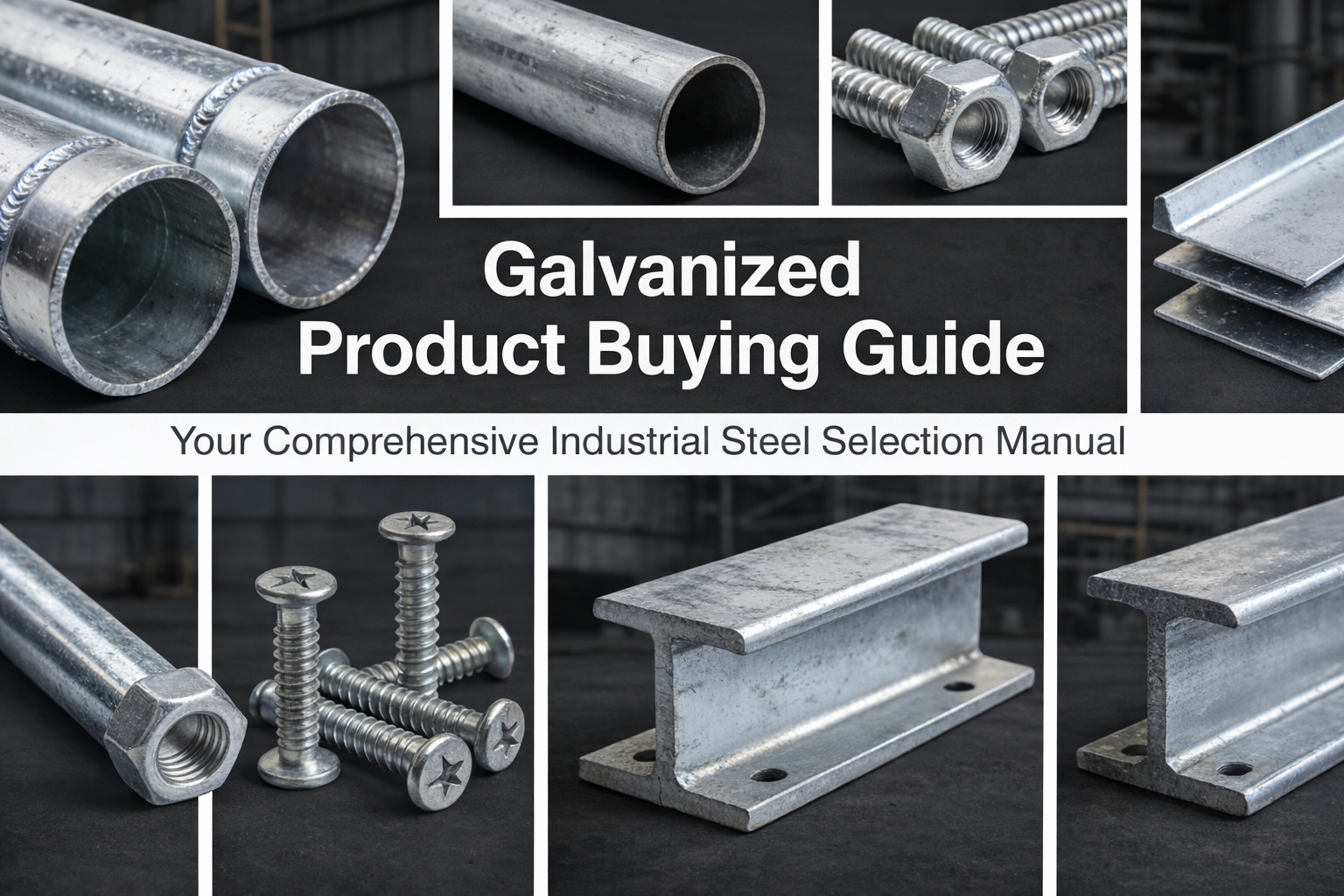
Galvanized product
1.Understanding Galvanized Products
What Are Galvanized Products?
Galvanized products refer to metal items coated with a protective zinc layer applied to surfaces like steel. This coating employs the “sacrificial anode” principle to effectively isolate the base material from exposure to air, moisture, and corrosive agents, significantly enhancing corrosion resistance.
Compared to traditional methods like spray painting or rust-proof oil coating, high-quality galvanized products offer more durable and stable protection, making them ideal for metal components in outdoor, high-humidity, or acidic/alkaline environments.
2.Common Applications of Galvanized Products
Galvanized products are widely used across multiple industries, including:
– Building curtain wall frames and steel structural components
– Warehouse shelving and logistics equipment
– Traffic guardrails and municipal facilities
– Power transmission and telecommunication towers
– Agricultural machinery components
– Marine container fittings
With outstanding corrosion resistance and excellent cost-effectiveness, galvanized products have become fundamental materials in industrial manufacturing and engineering construction.
3.Core Composition and Process Classification of Galvanized Products
Understanding the manufacturing processes and core structure of galvanized products is essential for precise selection:
Base Material: Determines product strength and load-bearing capacity, commonly low-carbon steel or alloy steel
Galvanized Layer: The core corrosion protection layer; its thickness and uniformity directly impact service life
Surface Treatment: Such as passivation or oil coating, enhancing rust resistance and aesthetics
Primary galvanizing processes fall into two categories:
Hot-dip galvanizing: Immersion in molten zinc forms a thick coating with superior corrosion resistance
Electro galvanizing: Electrochemical deposition creates a fine, uniform surface finish suitable for precision components
4.Key Considerations When Selecting Galvanized Products
Corrosion Resistance and Coating Quality
Corrosion resistance is the primary indicator, with focus on:
Coating thickness: ≥85μm recommended for severe corrosion environments; standards may be appropriately reduced for indoor dry environments
Coating adhesion: High-quality coatings resist peeling and flaking, verifiable through bend or cross-hatch adhesion tests
Base Material Composition and Mechanical Properties
Base material quality determines product safety:
– Low-carbon steel for general structural components
– Alloy steel for heavy-load or high-strength applications
Key parameters include tensile strength and yield strength
to ensure long-term load-bearing capacity.
Dimensions and Manufacturing Precision
Accurate dimensions are essential for smooth installation:
– Dimensional tolerances: Verify critical parameters like length, width, and hole diameter
Surface flatness: Prevent warping, deformation, or other issues post-installation
Process Type and Application Matching
Different processes suit distinct environments:
Hot-dip galvanizing: Ideal for outdoor, coastal, chemical, and other high-corrosion scenarios
Electro galvanizing: Suitable for indoor, precision assembly, decorative components, and other high-precision applications
Scientific process matching significantly extends product lifespan.
Compliance and Standard Certification
Meeting standards is crucial for project success:
Domestic projects should prioritize compliance with GB/T 13912 (hot-dip galvanizing) and GB/T 5267 (electro galvanizing). Export products must meet international standards like ISO and ASTM.
Review inspection reports to confirm compliance with salt spray resistance, thickness, adhesion, and other metrics.
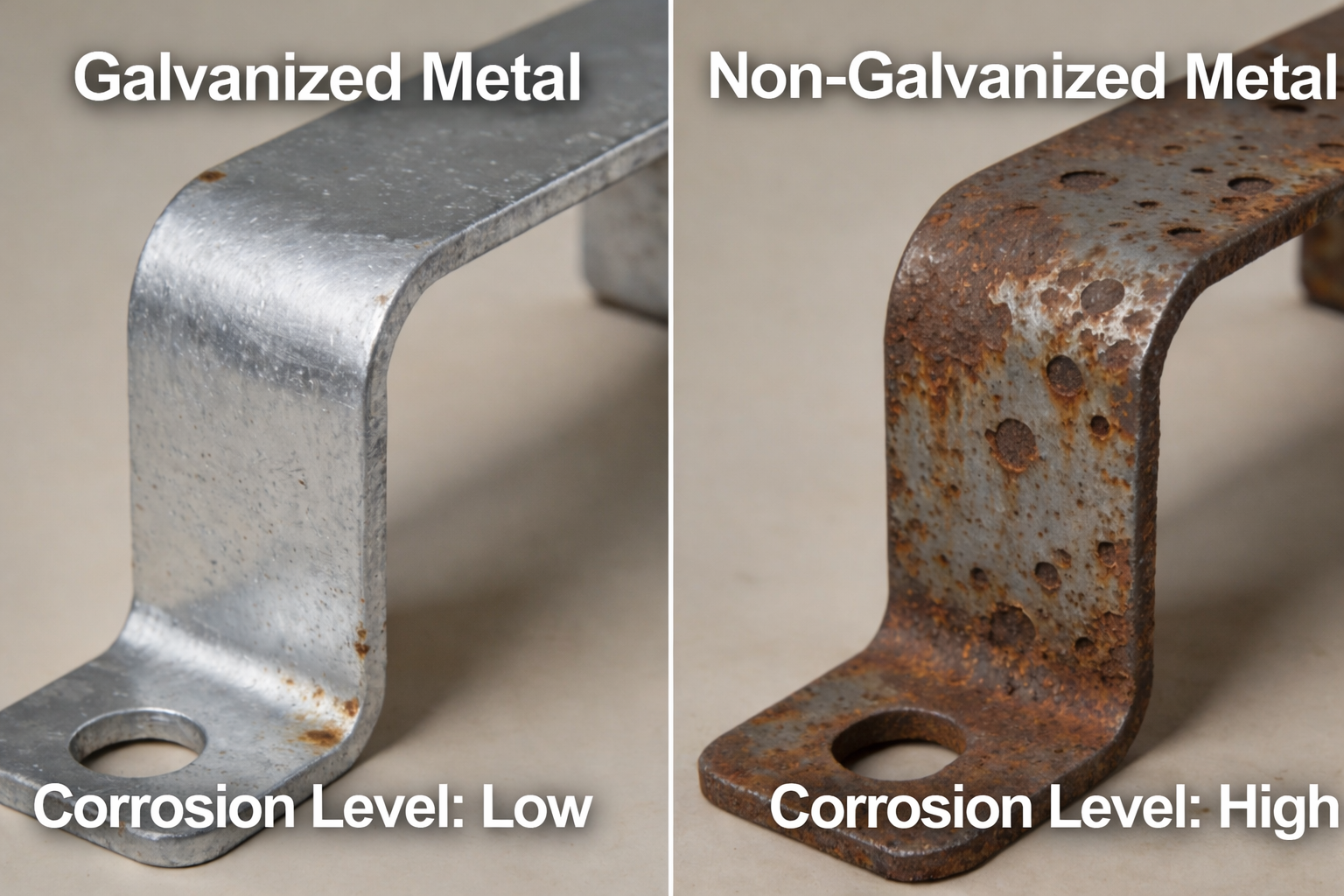
Galvanized VS non-galvanized
Selecting galvanized products is not merely a material procurement decision—it represents a long-term investment impacting project safety, durability, and compliance.
For procurement partners seeking stable delivery and lasting collaboration, choosing a professional, reliable galvanized product supplier is key to ensuring continuous, stable supply chain operations. Contact us today for high-quality galvanized products and customized solutions to support your project’s steady progress.
