
What is the difference between galvanized steel pipes and ordinary steel pipes?
Table of Contents
01 What Are Plain Steel Pipes?
02 What Are Galvanized Steel Pipes?
03 Key Differences Between Galvanized Steel Pipes and Plain Steel Pipes
04 How do you choose based on your actual needs?
05 Common Misconceptions to Avoid
01 What Are Plain Steel Pipes?
Plain steel pipes, also known as black pipes or black steel pipes, refer to carbon steel or low-alloy steel pipes that have not undergone any anti-corrosion treatment. Their surfaces are directly exposed to the air and appear dark black or rust-colored.Ordinary steel pipes are strong and cost-effective, but their biggest drawback is that they rust very easily, especially in damp or acidic or alkaline environments, where corrosion occurs rapidly.
Standard steel pipes are generally classified into two categories: seamless steel pipes and welded steel pipes. They are widely used in fluid conveyance, structural support, and mechanical components.
02 What Are Galvanized Steel Pipes?
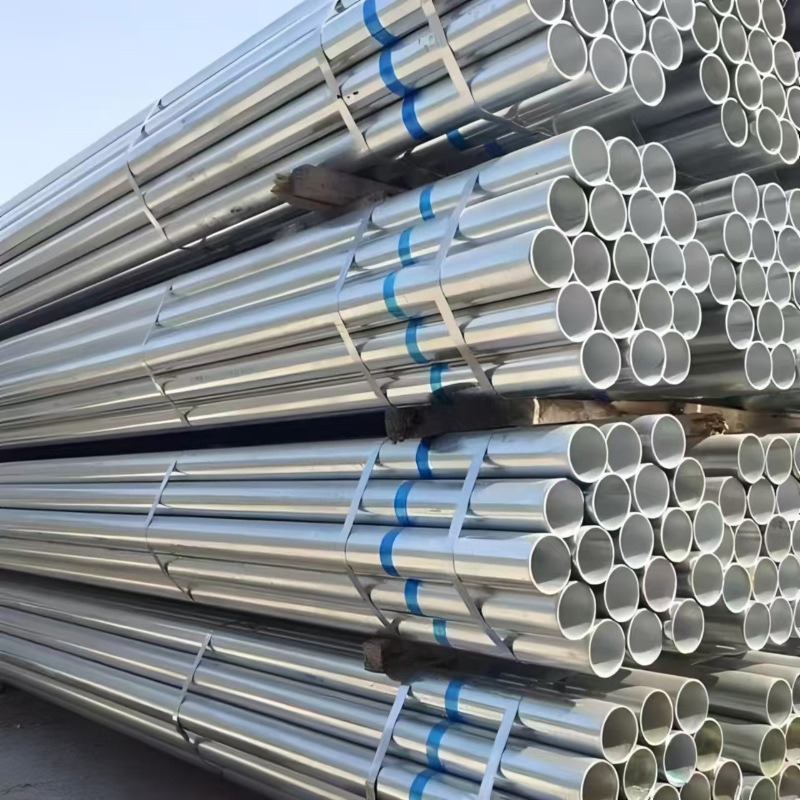
Galvanized steel pipes are produced by applying a uniform layer of zinc to the inner and outer surfaces of ordinary steel pipes through hot-dip galvanizing or electrogalvanizing processes. This zinc layer not only acts as a physical barrier but also provides cathodic protection—even if the coating is damaged in certain areas, the zinc layer will oxidize first, thereby protecting the underlying steel from corrosion.
Depending on the galvanizing process, galvanized steel pipes are primarily classified as follows:
· Hot-dip galvanized steel pipes: These feature a thick zinc coating, strong adhesion, and excellent corrosion resistance, making them suitable for outdoor use, humid environments, and the conveyance of water and steam.
· Electrogalvanized steel pipes (cold-galvanized): These have a thinner zinc coating and relatively weaker corrosion resistance, and are primarily used in dry indoor environments or for decorative purposes.
03 Key Differences Between Galvanized Steel Pipes and Plain Steel Pipes
| Comparison criteria | Galvanized steel pipe | Plain-end steel pipes (black pipes) |
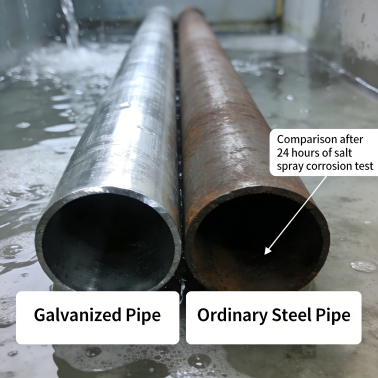
| Surface treatment | The surface is coated with zinc and has a silvery-white or shiny appearance | No coating; the surface is black or rust-colored |
| Corrosion resistance | Great | Very poor |
| Service life | Up to 15–30 years outdoors, and even longer indoors | Indoors, severe rusting can occur within 2 to 5 years; outdoors, it can happen even sooner. |
| Weather resistance | High resistance to moisture, acids, alkalis, and salt spray | Not moisture-resistant; requires additional preservative treatment |
| Mechanical Properties | It is essentially the same as ordinary steel pipe | Good strength, hardness, and toughness |
| Processing | It can be cut and welded, but the zinc coating must be removed before welding (as this produces toxic fumes). | Easy to machine; no special welding requirements |
| Cost price | It is relatively expensive, typically costing 30% to 50% more than standard steel pipes of the same specifications. | lower in price |
| Health and Safety | Hot-dip galvanized pipes can be used in water systems, but caution is advised when using them for drinking water over the long term (as zinc may leach out). | Once rusted, it should not be used in potable water systems, as it can cause rusty water. |
| Applications | Fire sprinkler systems, gas lines, HVAC water systems, outdoor railings, cable conduits | Pipes for structural support, mechanical components, temporary facilities, and indoor drying environments |

04 How do you choose based on your actual needs?
1. Consider the usage environment
· Damp, open-air, or corrosive environments (such as coastal areas, chemical plants, outdoor mounting brackets, and fire protection systems): Galvanized steel pipes must be used; otherwise, ordinary steel pipes will corrode severely within a short period, posing safety hazards and incurring frequent replacement costs.
· Dry, indoor, temporary applications (such as indoor scaffolding, equipment frames, and warehouse shelving): Standard steel pipes offer better value for money, but it is recommended to apply anti-rust paint to extend their service life.
2. Consider the conveyed medium
· Water, steam, gas, and fire protection water: According to national standards, most building water supply, fire protection, and gas systems are required to use hot-dip galvanized steel pipes to ensure sealing, pressure resistance, and corrosion resistance.
· Oil, gas, and non-corrosive fluids: Standard steel pipes can meet the requirements, but the outer walls must be properly protected against corrosion.
3. Consider the Budget and Life-Cycle Costs
Galvanized steel pipes have a higher initial purchase cost, but their service life is 3 to 5 times longer than that of ordinary steel pipes, and they eliminate the need for maintenance costs associated with rust removal and painting. From a life-cycle cost perspective, galvanized steel pipes offer lower overall costs in long-term or critical applications.
05 Common Misconceptions to Avoid
1. “Galvanized steel pipes do not rust.”
Incorrect. If the zinc coating is damaged (e.g., at cut edges, weld points, or severe scratches), the underlying steel may still rust. Therefore, cut edges and welds must be treated with anti-corrosion measures during installation.
2. “Painting ordinary steel pipes can replace galvanized pipes”
Not entirely correct. Painting ordinary steel pipes only provides a physical barrier; once the paint film is damaged, localized rust will spread rapidly. The galvanized coating, however, provides cathodic protection—a function that ordinary paint cannot replicate.
3. “All galvanized pipes are suitable for drinking water”
Caution is advised. Older galvanized pipes were once widely used for municipal water supply systems, but prolonged use can cause the zinc coating to leach out, and the pipes are prone to scaling. Currently, stainless steel, copper, or PPR plastic pipes are more recommended for drinking water systems.
The difference between galvanized steel pipes and ordinary steel pipes essentially boils down to a trade-off between corrosion resistance and cost. Ordinary steel pipes are suitable for dry, non-corrosive environments, low-cost applications, or short-term use; galvanized steel pipes, on the other hand, are the preferred choice for fire protection, gas systems, outdoor projects, and humid environments due to their superior corrosion resistance and long service life.