
How to Choose Galvanized Steel Pipe for Scaffolding
In the construction industry, the safety of scaffolding directly impacts the safety of workers and the progress of projects. As the core material of scaffolding, the selection of galvanized steel pipes is particularly crucial. With such a wide variety of products available on the market, how can one choose galvanized steel pipes that meet standards and are safe and reliable? This article will provide a detailed analysis from multiple perspectives, including material, specifications, galvanized coating, and appearance.
ONE. Understanding the Basic Categories of Galvanized Steel Pipes
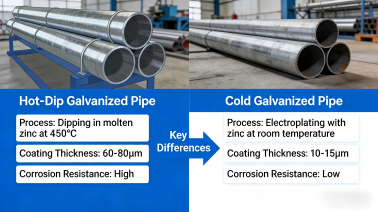
Galvanized steel pipes used for scaffolding are mainly divided into two categories: electrogalvanized pipes and hot-dip galvanized pipes.
Hot-dip galvanized pipes are produced by immersing steel pipes in molten zinc at high temperatures, creating a uniform and dense zinc-iron alloy layer on both the inner and outer surfaces of the pipe. They offer excellent corrosion resistance and a long service life, making them the material of choice for scaffolding projects. Electrogalvanized steel pipes, on the other hand, involve the electrochemical deposition of a zinc layer onto the surface of the steel pipe. The coating is thinner and offers relatively poorer corrosion resistance, so they are generally not recommended for scaffolding structures intended for long-term use.
TWO. Five Key Criteria for Selecting Galvanized Steel Pipes
- Materials and Grades
Galvanized steel pipes used for scaffolding typically employ base pipes made of Q235B or Q355B steel. Q235B is a mild carbon structural steel with moderate strength, suitable for the vast majority of standard scaffolding applications; Q355B is a low-alloy high-strength steel with higher strength, suitable for scaffolding projects involving high-rise buildings or special load requirements. When purchasing, be sure to check the product quality certificate to confirm the material grade.
- Specifications and Dimensions
Scaffolding steel pipes are subject to strict specifications. Common standards are as follows:
| Parameter Items | Standard Requirements | Common Sizes |
| Outer diameter | 48.3mm ±0.5mm | 48.3mm(International Standards) |
| wall thickness | 3.2mm – 3.6mm | 3.2mm、3.5mm、3.6mm |
| Length per strand | Customized to meet your needs | 3m、4m、6mas the mainstream |
| Theoretical weight | About3.84kg/m(wall thickness 3.6mm) | May vary slightly depending on wall thickness |
Selection Recommendations: Wall thickness is a critical factor. Relevant national standards stipulate that the wall thickness of scaffolding steel tubes must not be less than 3.2 mm. Currently, there are “non-standard tubes” on the market with wall thicknesses of less than 3.0 mm; although these are inexpensive, they pose serious safety hazards and are strictly prohibited for use in load-bearing scaffolding. It is recommended to prioritize the use of standard tubes with a wall thickness of 3.5 mm or greater.
- Quality of the Galvanized Coating
The quality of the galvanized coating directly determines the corrosion resistance lifespan of the steel pipe. High-quality hot-dip galvanized scaffolding pipes should meet the following requirements:
- Coating thickness: Average thickness of no less than 70 μm (micrometers), with no local thickness below 55 μm
- Coating uniformity: Smooth inner and outer walls, free of coating defects, bubbles, or burrs
- Adhesion: The coating must bond firmly to the substrate and must not peel or flake off after bending tests
Testing tip: Use a sharp tool to scratch a cross on the surface of the plating and observe whether the plating peels off in sheets; alternatively, perform a simple test using a copper sulfate solution—high-quality plating will resist corrosion for a longer period.
- Appearance and Workmanship
High-quality galvanized steel pipes should exhibit the following visual characteristics:
- Smooth ends: Ends should be free of burrs and deformation, with clean, straight cut edges
- Straight pipe body: The overall curvature of the pipe should not exceed 1.5 mm per meter, and 5 mm over the entire length
- Uniform welds: The welds on longitudinally welded pipes should be smooth, with no defects such as cracks or lack of fusion
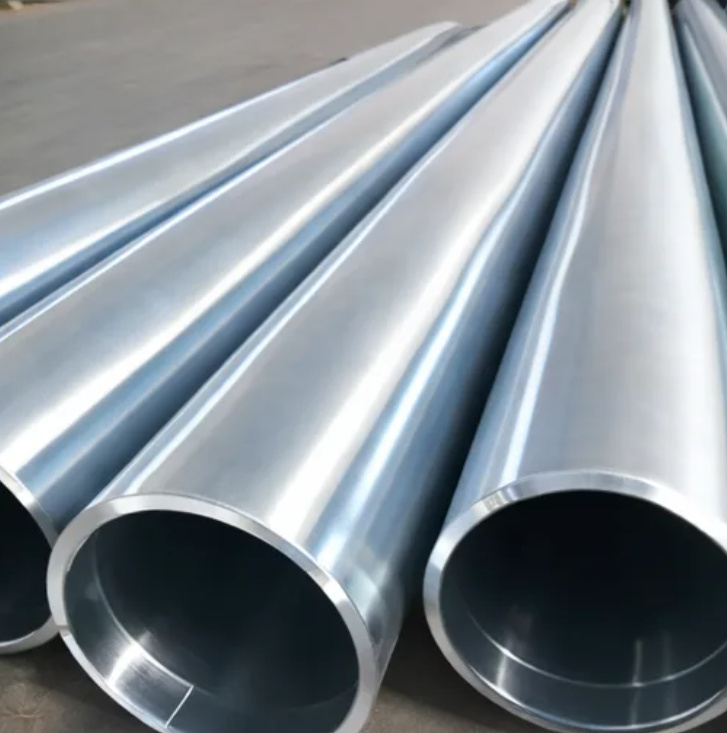
- Uniform color: Hot-dip galvanized pipes should be silver-gray or light gray in color, with a fine crystalline pattern (zinc bloom) on the surface, rather than a glaring bright silver color
- Qualifications and Certifications
Scaffolding steel pipes manufactured by reputable manufacturers should be accompanied by the following:
- Product quality certificate (including material, specifications, and applicable standards)
- Third-party test report
- Compliance with national standards such as GB/T 13793-2016 (Straight-seam Electric-welded Steel Pipes) and GB/T 3091-2015 (Welded Steel Pipes for Low-Pressure Fluid Conveyance)
THREE. Recommendations for Selecting Models Based on Different Use Cases
Standard Ground-Based Scaffolding
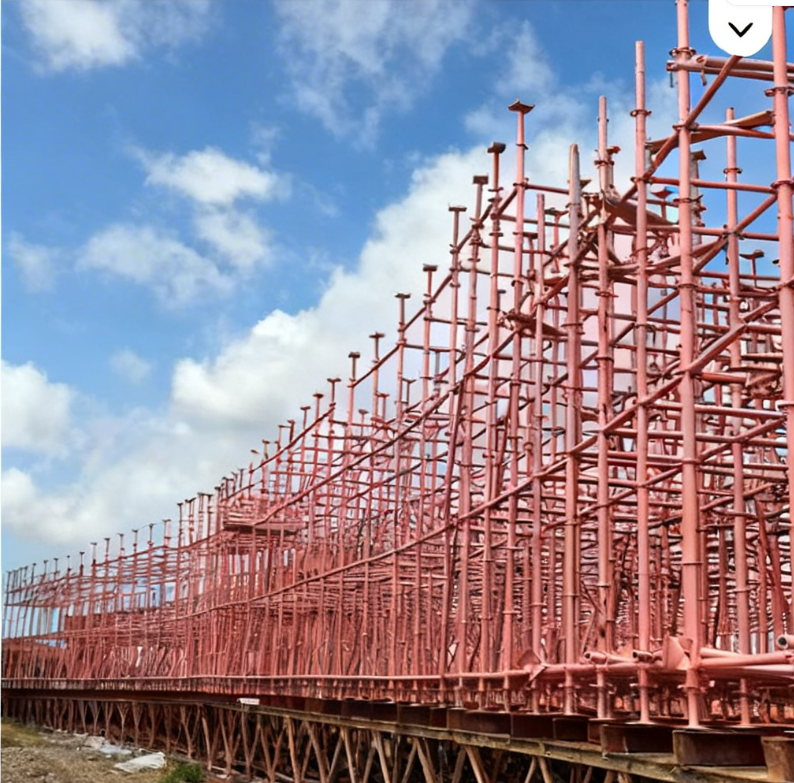
Made from Q235B hot-dip galvanized steel pipes with a wall thickness of 3.2 mm to 3.5 mm and an outer diameter of 48.3 mm, this scaffolding offers excellent value for money and meets the requirements for standard construction heights (under 100 meters).
High-Rise Buildings and Cantilever Scaffolding
It is recommended to use hot-dip galvanized steel pipes made of Q355B steel with a wall thickness of 3.6 mm or greater, as they offer higher strength and greater safety margins. At the same time, the frequency of inspections for pipe straightness and weld quality should be increased.
The Rental Market and Reusable Applications
Since scaffolding steel tubes are intended for repeated reuse, they must meet higher standards for corrosion resistance and wear resistance. Hot-dip galvanized tubes offer significant advantages over painted steel tubes—they feature a hard coating that resists impact, eliminate the need for on-site painting, and result in lower long-term total costs.
Special Environments (Humid, Coastal, Chemical Zones)
In highly corrosive environments, double-sided hot-dip galvanized steel pipes should be selected, with the galvanized coating thickness increased to 80 μm or more. If necessary, request a salt spray test report from the manufacturer to ensure service life.
FOUR. Common Misconceptions and Tips for Avoiding Pitfalls
Misconception 1: Thicker walls are always better
Excessively thick walls increase weight and cost, and may affect the compatibility of fastener connections. As long as the national standard (≥3.2 mm) is met, there is no need to excessively prioritize thick walls.
Misconception 2: The Lower the Price, the Better the Deal
Some suppliers pass off “non-standard pipes” as “national standard pipes,” with significantly reduced wall thickness. For example, passing off a 3.0mm-thick pipe as a 3.5mm-thick one reduces steel consumption by approximately 80–100 kilograms per ton, but the load-bearing capacity drops by more than 15%. When purchasing, it is recommended to measure the wall thickness yourself and conduct random spot checks using a vernier caliper.
Misconception 3: Neglecting End Treatment
High-quality scaffolding steel tubes should have their ends chamfered to facilitate splicing and installation. Steel tubes without chamfers can easily scratch couplers, puncture gloves, and cause jamming during splicing.
Misconception 4: Failing to Distinguish Between New and Used Pipes
When using steel pipes with varying degrees of wear and tear, used pipes must undergo rigorous inspection: pipes with wall thickness wear exceeding 10%, severe bending, or localized rust perforations should be scrapped and must not be reused.