
Steel Specification and Selection Guide: Understanding Load-Bearing Limits for Safe and Efficient Material Selection
In construction, machinery manufacturing, bridge engineering, and equipment installation, steel specification selection and load-bearing performance directly determine project safety, stability, and cost control. Whether for load-bearing structures, lifting components, or equipment support systems, selecting steel that matches actual working conditions is essential to prevent structural failure, equipment damage, and schedule risks.
While considering steel thickness or material designation, do not overlook how loading patterns, environmental conditions, and fabrication quality impact load-bearing capacity.
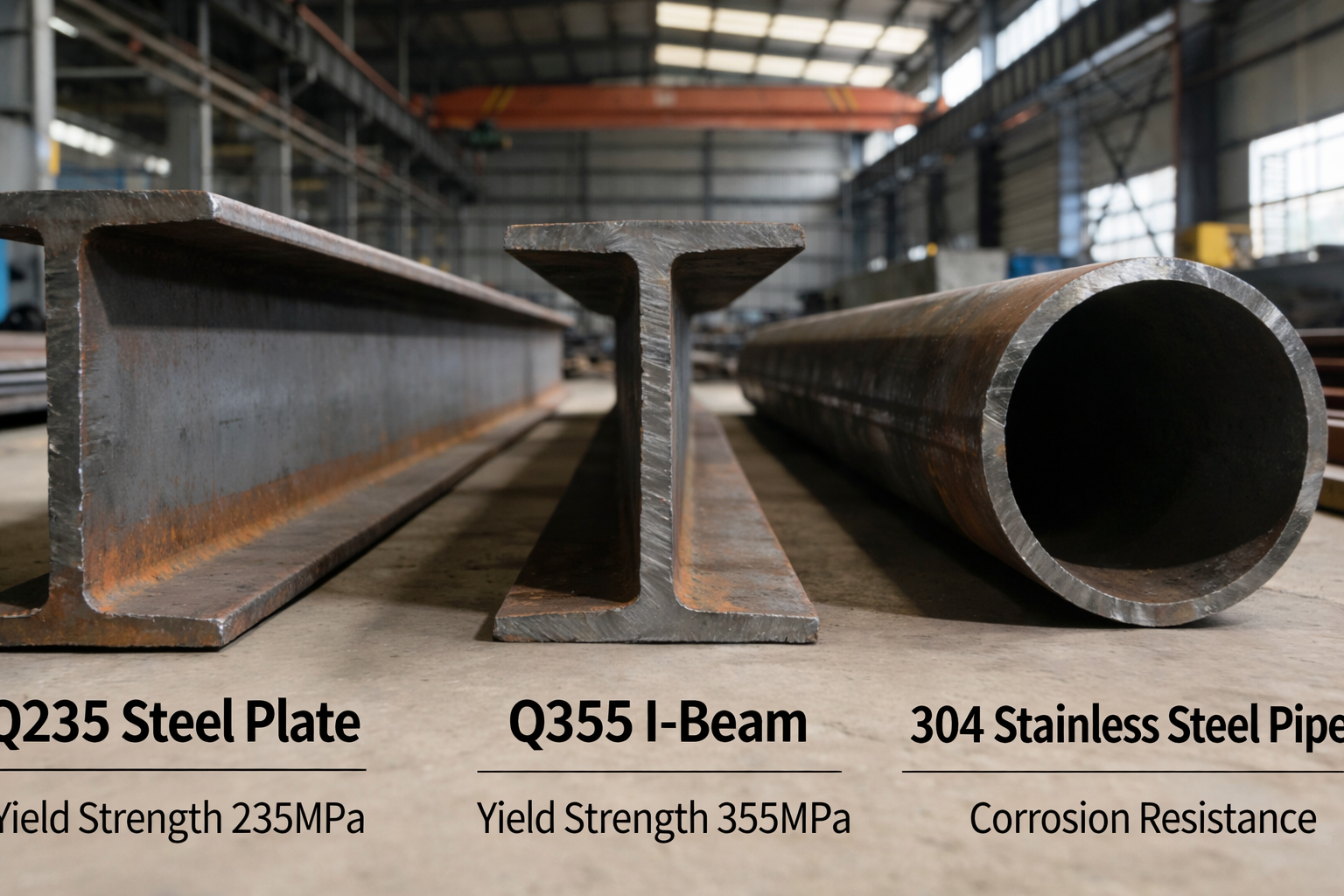
Steel of different materials
1. Steel Load-Bearing Limits and Core Parameter Analysis
The load-bearing limit of steel refers to the maximum load it can safely withstand under normal operating conditions. In engineering practice, allowable stress is typically used as the basis for determination. Note that the load-bearing limit rep
resents a safe working value, not the ultimate state of fracture or failure.
Allowable Stress: Yield Strength ÷ Safety Factor, serving as the core control indicator for material selection
Yield Strength: The critical threshold where steel transitions from elastic to plastic deformation
Tensile Strength: The maximum stress before fracture, used solely for quality assessment, not as a basis for service
Safety Factor: Ranges from 1.2 to 5.0 based on risk level; higher values required for high-risk scenarios like bridges and lifting equipment
2. Key Factors Affecting Actual Load-Bearing Capacity
The theoretical load-bearing capacity of steel is influenced by multiple factors in practical applications, primarily including:
Load Application Method and Angle
Significant differences exist in load-bearing capacity under tension, compression, bending, and shear; when the load angle is less than 60°, the load capacity should be calculated as
Effective load capacity = Allowable load capacity × cosθ
Operating Environment
Low temperatures: Reduced toughness requires a 10%–30% reduction in load capacity
High temperatures: Strength significantly degrades above 300°C
Corrosive environments: Rust diminishes cross-sectional dimensions; use corrosion-resistant steel or increase allowances
Load Type
Static loads: Select based on conventional allowable stress
Dynamic loads: Require an additional 20%–50% load capacity margin
Processing and Installation Quality
Welding defects and installation deviations create weak points under stress, significantly reducing overall load-bearing performance.
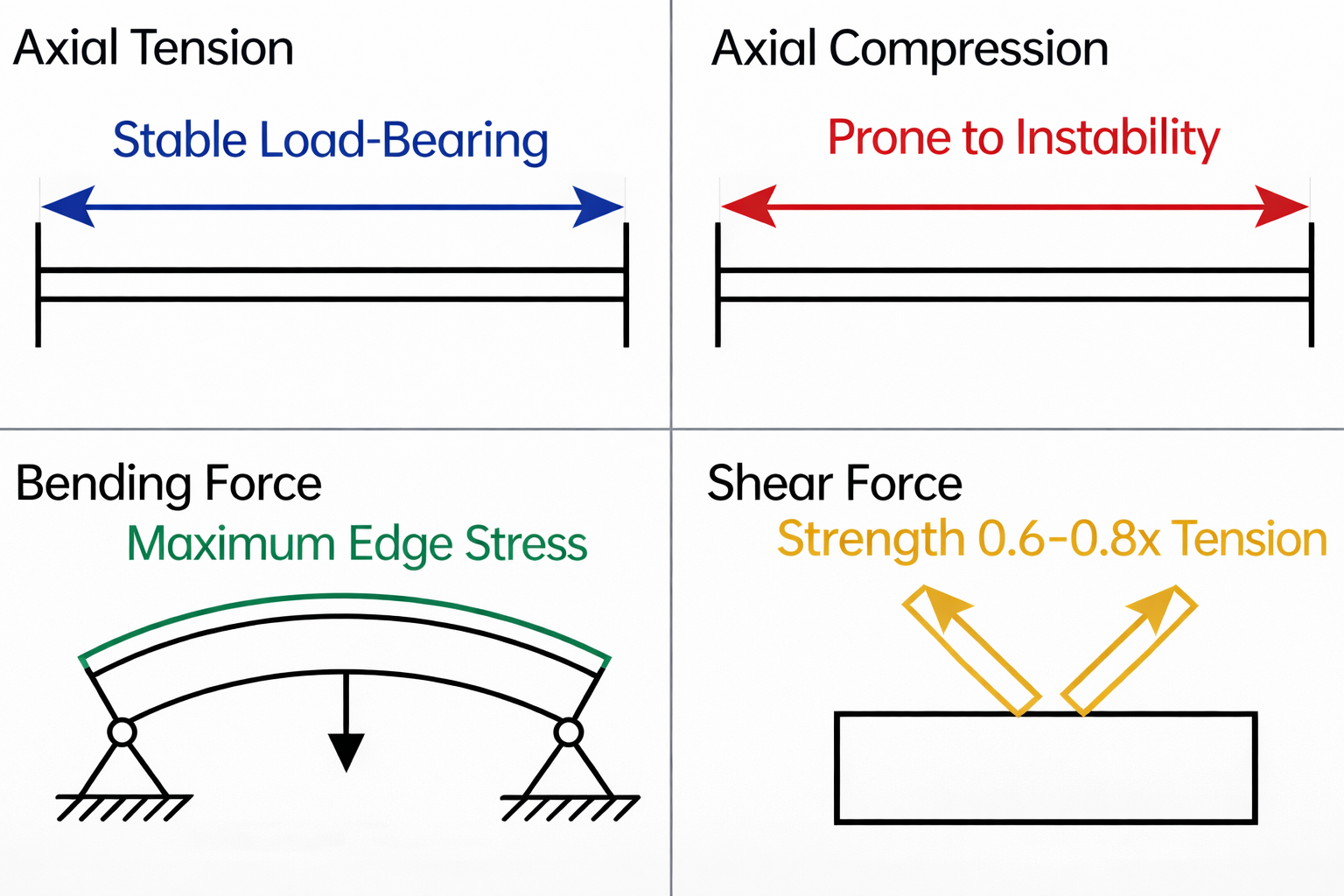
Schematic diagram of structural mechanical forces
3. Practical Steps for Steel Specification Selection
Step 1: Define Operating Conditions
Calculate total load (including dynamic coefficient), confirm loading patterns and operating environment.
Step 2: Preliminary Material and Specification Selection
General structures: Q235
Medium-heavy loads or critical structures: Q355
Corrosive or precision applications: Stainless steel, 45# steel
Determine minimum cross-sectional dimensions via stress analysis or selection manuals.
Step 3: Verify Safety Factors and Environmental Compatibility
Ensure safety factors meet application requirements while accounting for corrosion, temperature, and other correction factors.
Step 4: Compliance and Quality Inspection
Conform to GB/T 700, GB/T 1591 standards with complete material certification.
Step 5: Conduct trial assembly or load testing when necessary
Critical projects should undergo verification at 1.5–2.0 times design load.
4. Overview of Common Steel Specifications and Applications
Steel Type |
Common Specifications |
Load-bearing Grade |
Typical Applications |
Q235 Steel Plate |
2–20mm |
Low–Medium |
Supports, equipment bases |
Q355 Steel Plate |
10–50mm |
Medium–High |
Bridges, heavy structures |
I-Beam I10–I40 |
100–400mm |
Medium–High |
Beams, columns, lifting structures |
Channel Steel 10–20# |
100–200mm |
Medium |
Purl-ins, equipment supports |
Stainless Steel 304 |
1–10mm |
Low–Medium |
Chemical, food processing equipment |
Steel pipe φ20–φ200 |
Wall thickness 2–10mm |
Medium–High |
Scaffolding, connecting rods |
5. Steel Maintenance and Load-Bearing Safety Essentials
Store in dry conditions to prevent rust
Regularly inspect anti-corrosion coatings and welded joints
Replace immediately if section thinning exceeds 10% or cracks appear
Strictly prohibit overloading or unauthorized changes to load-bearing configurations
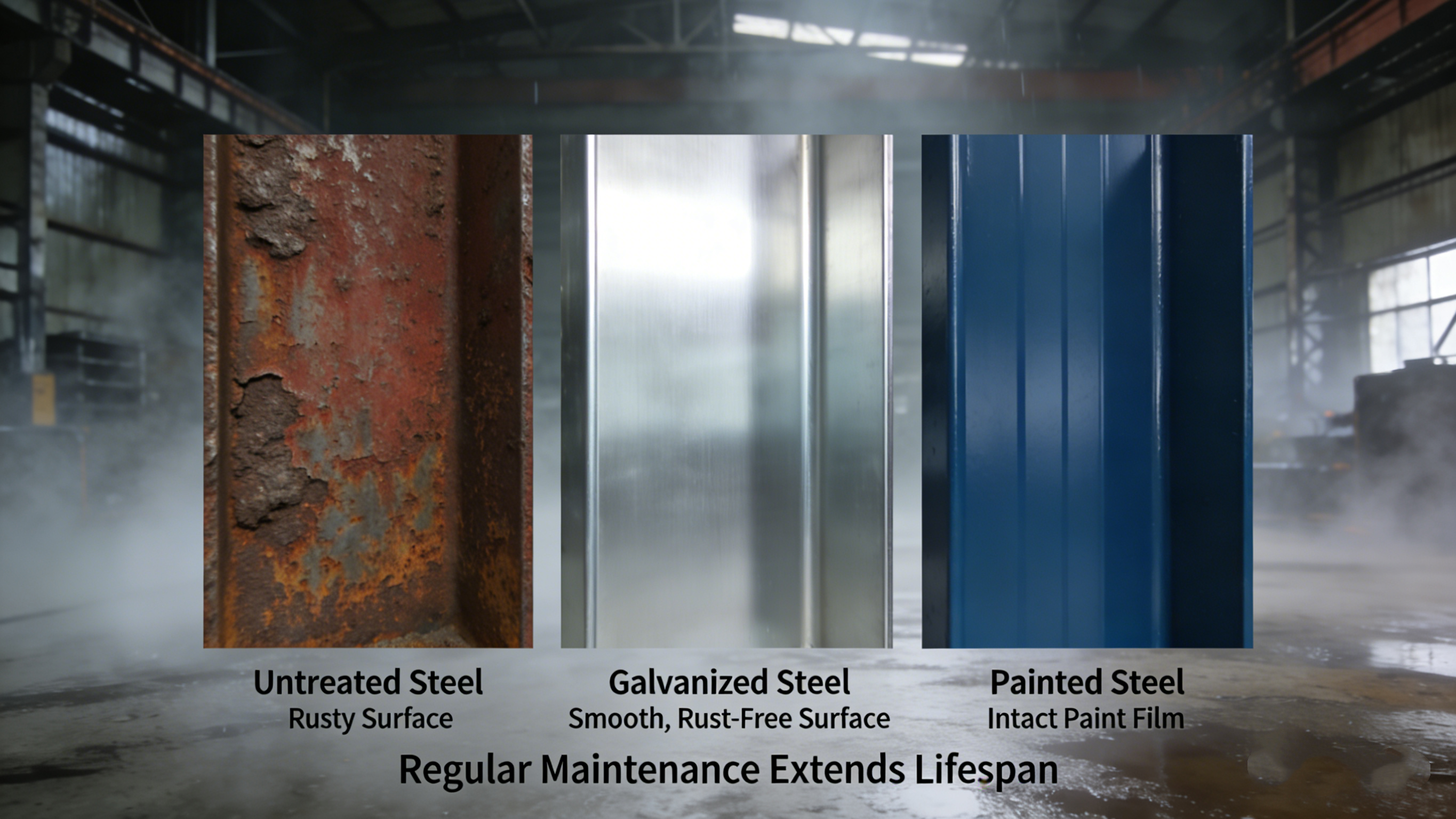
Steel maintenance