
Comprehensive Guide to Alloy Steel Plates: Performance Characteristics, Application Fields, and Selection Criteria
In engineering machinery, energy equipment, pressure vessels, and high-end manufacturing sectors, ordinary carbon steel struggles to meet increasingly stringent demands for strength, wear resistance, and service life. Against this backdrop, alloy steel plates have emerged as a widely adopted critical material. Through the strategic addition of alloying elements, these plates significantly enhance the comprehensive properties of steel.
1. What Are Alloy Steel Plates?
Alloy steel plates are steel materials manufactured by precisely adding one or more alloying elements (such as manganese, chromium, molybdenum, nickel, vanadium, boron, etc.) to a carbon steel base, followed by specialized rolling and heat treatment processes. Compared to ordinary carbon steel plates, the addition of alloy elements significantly improves the steel’s mechanical properties, wear resistance, heat resistance, or corrosion resistance. This enables it to withstand more demanding operating conditions and meet the core component requirements of high-end equipment.
Core Characteristics of Alloy Steel Plates
High strength and toughness coexist: Suitable for withstanding heavy loads and impact stresses
Excellent wear resistance: Extends the service life of equipment and structures
Strong heat treat-ability: Performance optimized through processes like quenching and tempering
Customizable properties: Tailored to meet diverse application requirements based on alloy composition
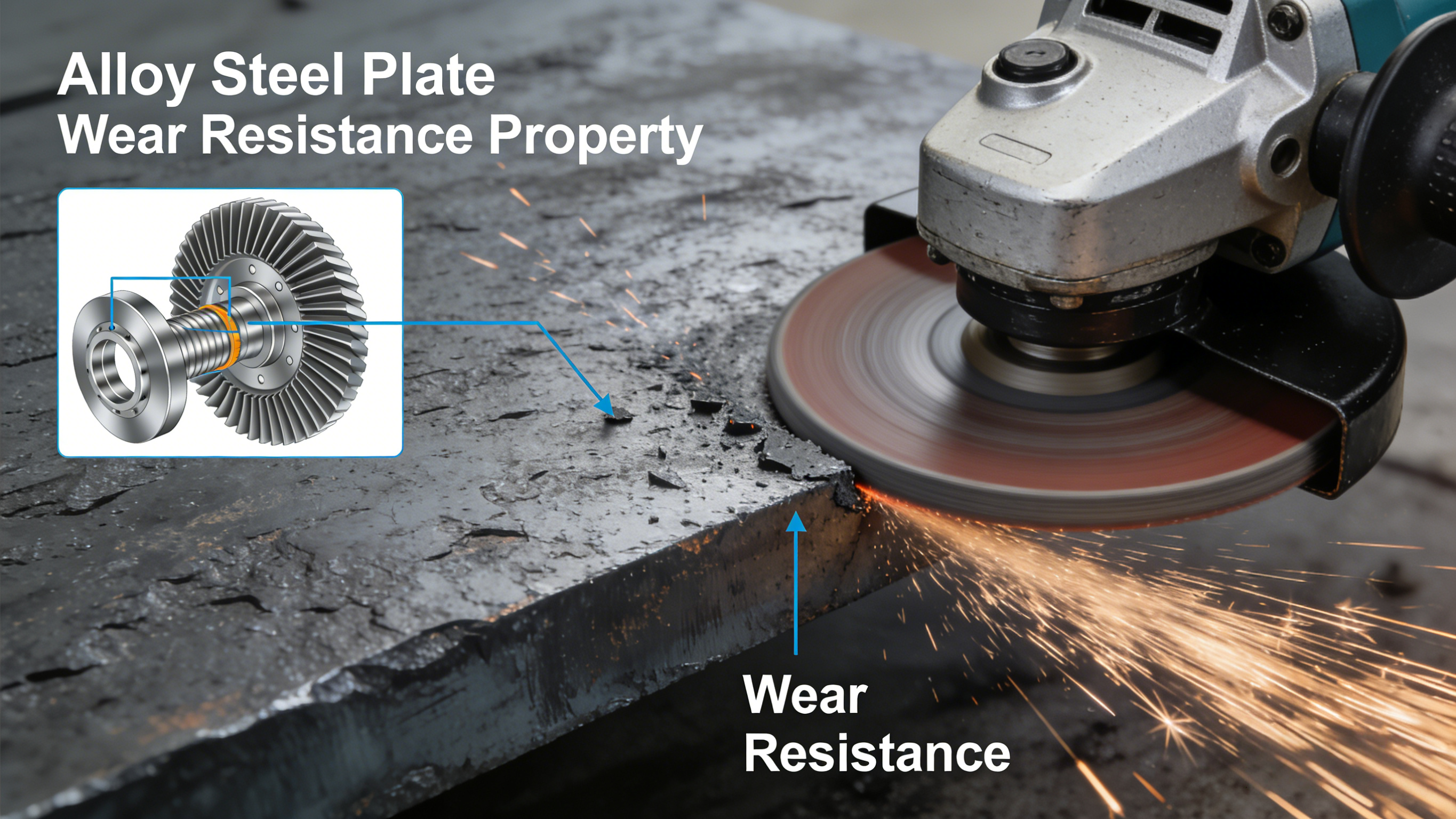
Wear Resistance
2. Principles Behind Performance Enhancement in Alloy Steel Plates
The superior properties of alloy steel plates primarily stem from the strengthening effects of alloying elements on the steel’s micro-structure, including:
Solution strengthening: Alloying elements uniformly dissolve into the ferritic matrix, enhancing base strength and hardness while improving deformation resistance.
Grain refinement strengthening: Alloying elements inhibit grain growth, refining the grain structure to boost toughness and strength.
Precipitation Hardening: Through targeted heat treatment, alloy elements form fine strengthening phases uniformly distributed throughout the matrix, further enhancing the steel’s comprehensive mechanical properties;
Improved Quench-ability: Alloy elements enhance the steel’s harden-ability, ensuring uniform cross-sectional properties in thick alloy steel plates after quenching and preventing performance stratification.
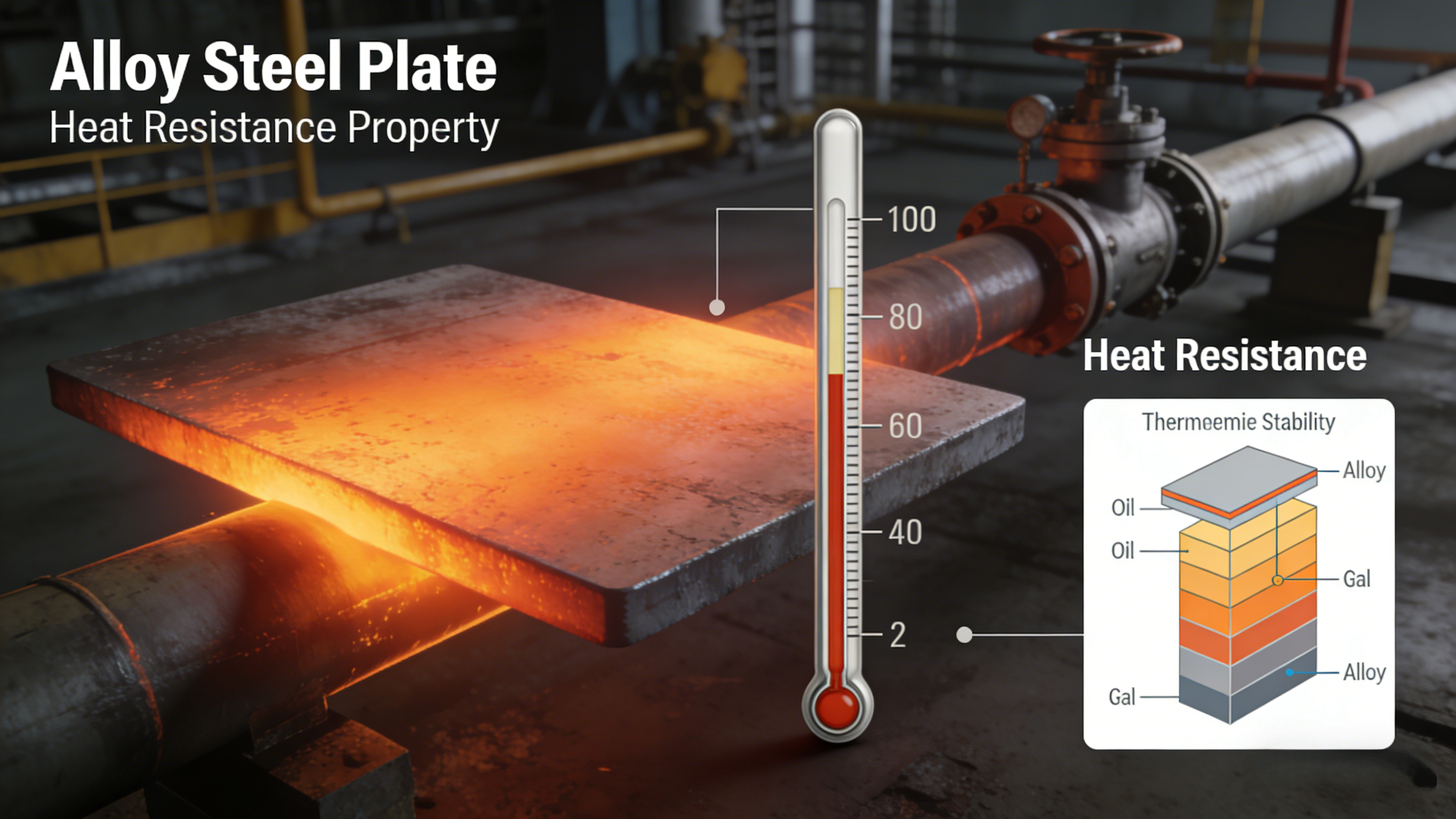
Alloy Steel Plate