
What is Cantilevered Scaffolding? Types, Applications, and Selection Guide
In high-rise construction, exterior wall finishing, and curtain wall installation projects, safety and construction efficiency are equally indispensable. As a vital elevated work support system, cantilevered scaffolding is widely adopted in modern construction due to its flexible structure, strong load-bearing capacity, and high adaptability.
Cantilevered Scaffolding
1. What is Cantilevered Scaffolding?
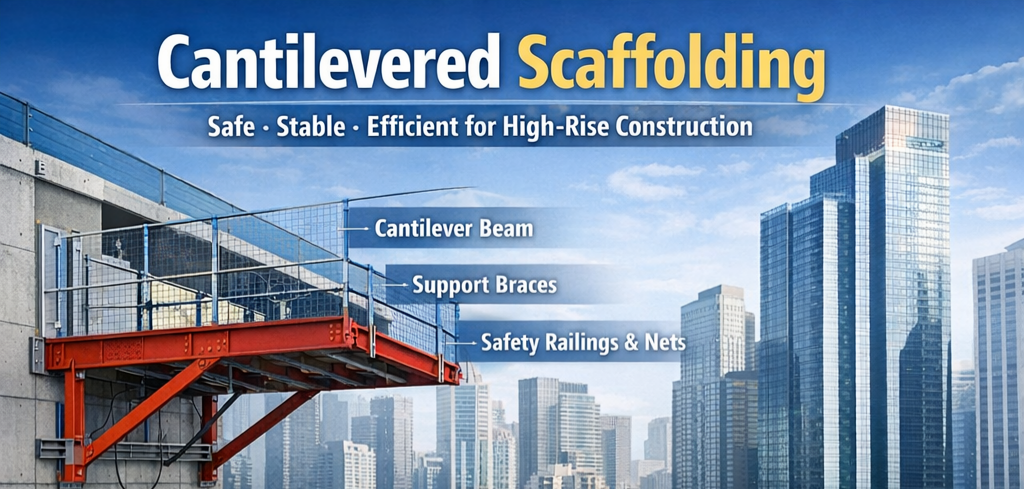
Cantilever scaffolding is a system anchored to a building’s structure via cantilever beams or steel frames, rather than resting directly on the ground. It is primarily used for exterior wall construction and elevated operations on high-rise buildings.
Cantilever scaffolding typically consists of the following components:
Cantilever beams (I-beams/channel beams, etc.): Primary load-bearing elements fixed to floor slabs or beams
Uprights, crossbars, and diagonal braces: Forming the overall support framework
Connectors and anchors: Ensure structural stability
Guardrails and safety nets: Protect workers
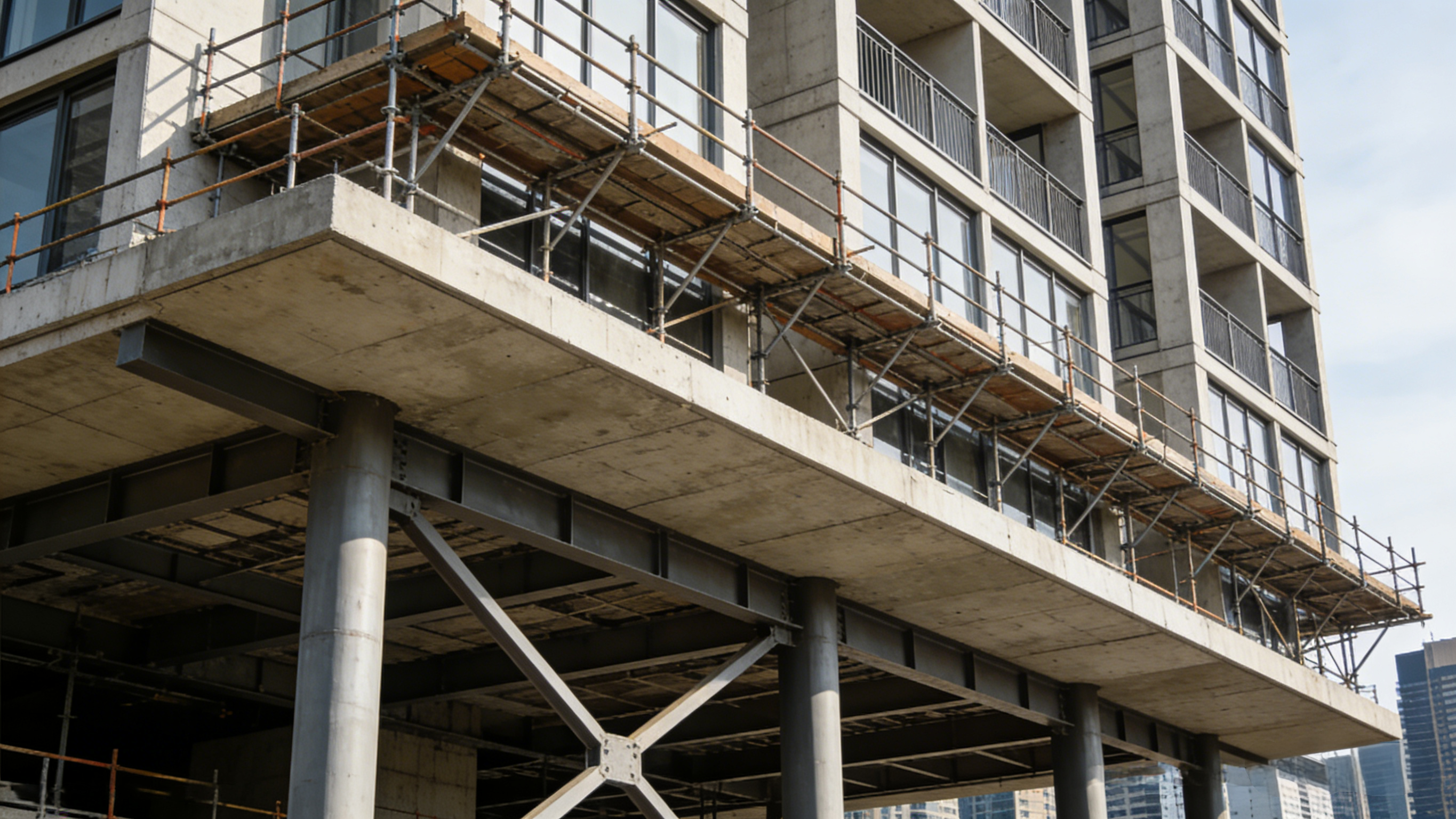
Through scientific load-bearing design, the scaffold remains securely cantilevered on the building’s exterior.
Cantilever Scaffolding
2. Key Features of Cantilevered Scaffolding
Ground-independent support
Requires no ground space, ideal for construction in densely populated urban areas.
Suitable for high-rise buildings
Commonly used for exterior wall construction on buildings over 10 stories or super-high-rises.
High stability
Well-designed systems offer excellent wind resistance and load-bearing capacity.
Flexible construction
Can be progressively raised or adjusted with building height.
3. Core Advantages of Cantilevered Scaffolding
Enhances safety in high-rise construction
Conserves ground space resources
Adaptable to complex construction environments
Reduces material accumulation and interference
Improves overall construction efficiency
Proper application of cantilevered scaffolding not only mitigates safety risks but also effectively shortens project timelines and elevates construction management standards.
4. Common Types of Cantilever Scaffolding
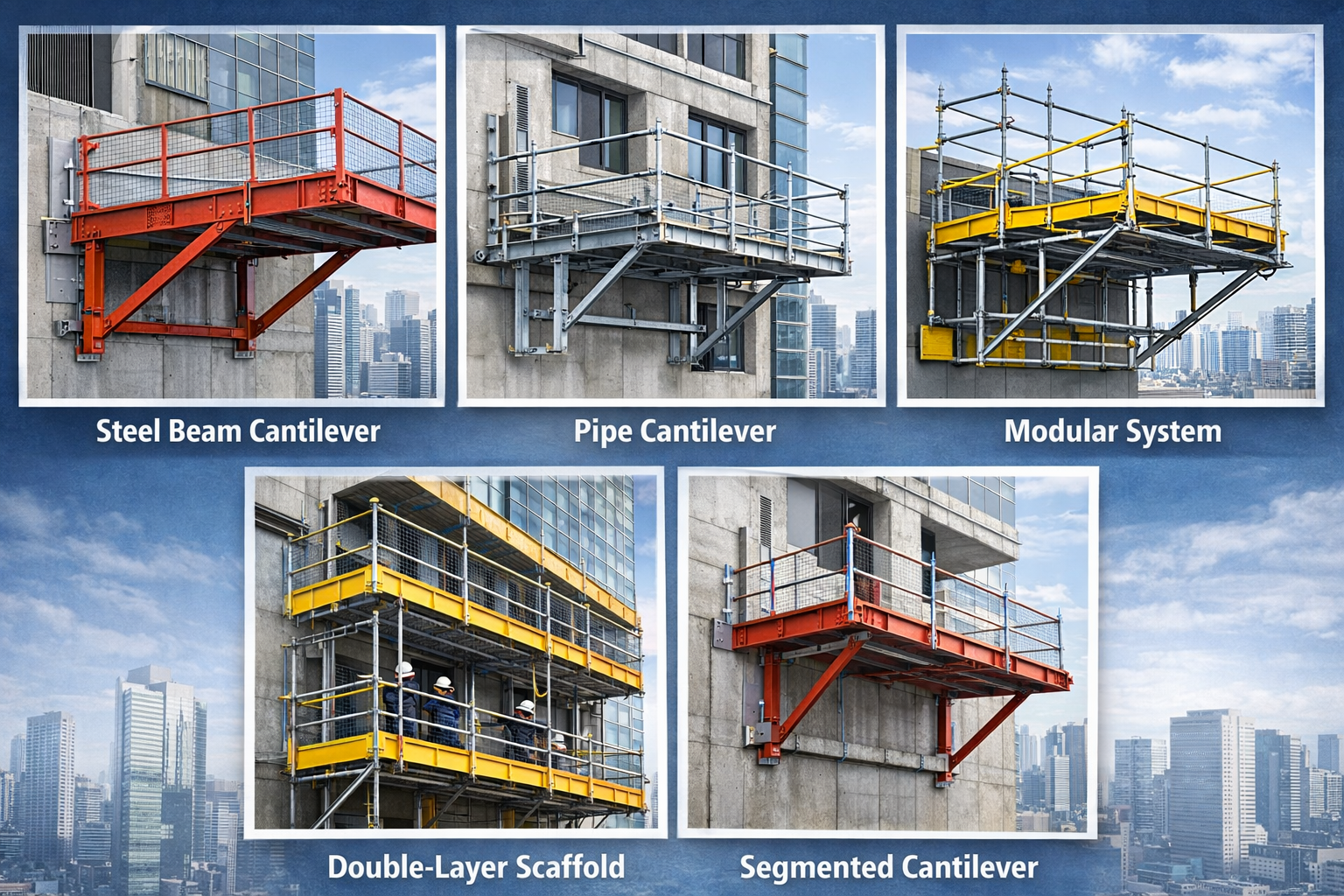
Cantilever scaffolding is typically categorized into the following types based on structural form, material configuration, and usage methods. Selecting the appropriate type in actual projects is crucial for ensuring safety and controlling costs.
A. Steel Beam Cantilever Scaffolding (Most Common Type)
This is currently the most widely used and mature form of cantilever scaffolding.
Features:
Main cantilever beams made of I-beams and channel steel
Strong load-bearing capacity
High stability
Excellent deformation resistance
Long service life
Applications:
High-rise and super high-rise buildings
Large residential complexes and office towers
Commercial complex projects
Suitable for key projects with stringent safety requirements.
B. Steel Pipe Cantilever Scaffolding
Primarily uses steel pipes as load-bearing components, connected via couplers to form cantilever structures.
Features:
Flexible structural configuration
High material versatility
Relatively low cost
Good construction adaptability
Applications:
Small-to-medium projects
Renovation and refurbishment projects
Temporary construction works
Suitable for projects with limited budgets and short timelines.
C. Modular Cantilevered Scaffolding System
Integrates cantilevered structures with standardized scaffolding systems (e.g., disk-coupler, portal-type).
Features:
Modular design
High installation/dismantling efficiency
Unified structural specifications
Superior safety performance
Neat on-site appearance
Suitable for:
Large-scale standardized construction sites
Flagship projects
Projects with stringent management requirements
Ideal for enterprises pursuing high-efficiency, high-standard construction.
D. Double-layer Cantilever Scaffolding
Features two cantilever beams on the same floor level to enhance overall load-bearing capacity.
Features:
More uniform load distribution
Strong overturning resistance
Enhanced stability
High safety factor
Suitable for:
Super high-rise buildings
Large-span construction areas
Heavy-load construction zones
Primarily used for critical sections or special conditions.
E. Segmented Cantilever Scaffolding
Cantilever structures are installed in stages according to construction height, progressively erected floor by floor.
Features:
Phased construction capability
Flexible height adjustment
Streamlined management and inspection
Reduced upfront investment costs
Applicable Scenarios:
Phased construction projects
Long-duration projects
Complex floor structure projects
Commonly used for segmented construction in high-rise residential buildings.
Type Of Cantilevered Scaffolding