
Maintenance Guide for Hot-Rolled, Cold-Rolled, and Galvanized Steel Sheets – Practical Tips for Extending Steel Sheet Lifespan and Reducing Costs
In construction, manufacturing, and industrial applications, the lifespan of steel sheets directly impacts project safety, operating costs, and long-term return on investment. Whether hot-rolled, cold-rolled, or galvanized, improper maintenance and management can lead to premature corrosion, deformation, or performance degradation. Proper storage, regular inspections, and scientific maintenance can effectively extend the lifespan of these three common steel sheet types and reduce replacement frequency and overall costs.

Comparison chart of steel sheet maintenance
1.Understanding Steel Sheet Types and Factors Affecting Their Lifespan
Due to differences in production processes and surface treatments, different types of steel sheets exhibit significant differences in their aging mechanisms, durability performance, and maintenance priorities during use.
Hot-Rolled Steel Sheets
Hot-rolled steel sheets are rolled at high temperatures and typically have a layer of oxide scale on the surface, possessing high strength and good structural properties. However, their surface protection capabilities are relatively limited, making them more susceptible to surface corrosion in humid, open-air, or highly corrosive environments. Therefore, rust prevention and environmental isolation measures are crucial.

Hot-rolled steel sheet
Cold-rolled steel sheet:
Cold-rolled steel sheet is precision rolled at room temperature, resulting in higher surface finish and dimensional accuracy, making it suitable for applications requiring high appearance and processing precision. However, without coating or protective treatment, cold-rolled steel sheet is more sensitive to moisture and chemical media, and long-term exposure may lead to increased corrosion risk.
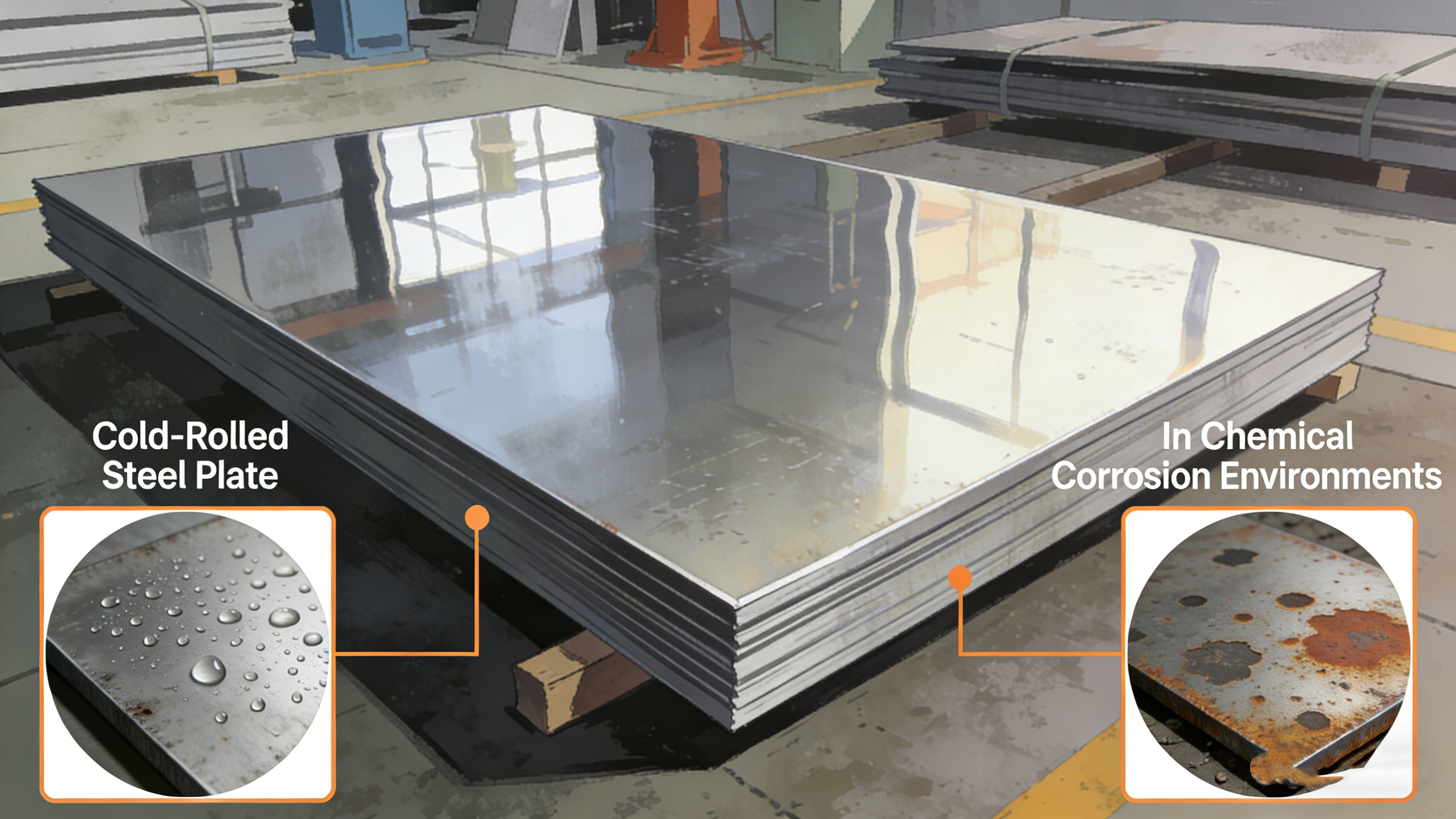
cold-rolled steel sheet
Galvanized steel sheet:
Galvanized steel sheet effectively improves corrosion resistance by covering the substrate surface with a zinc layer, resulting in a relatively longer overall service life, especially suitable for outdoor and humid environments. However, once the zinc layer is damaged due to scratches, abrasion, or chemical corrosion, its protective ability will significantly decrease, requiring timely repair to prevent substrate corrosion.

galvanized steel sheet
2.Common Threats and Early Damage Signals: Core risk factors affecting the service life of steel sheets:
Corrosion and oxidation: Moisture, rain, and salt spray environments are the primary causes of steel sheet aging, directly damaging the steel matrix.
Mechanical damage: Improper handling and improper stacking methods can easily cause scratches on the steel sheet surface and damage to edges and corners.
Chemical corrosion: Contact with acids, alkalis, oil residues, or corrosive industrial gases will accelerate the degradation of sheet metal performance.
Long-term stress and deformation: Inadequate load-bearing design and uneven structural stress can lead to permanent deformation or hidden damage to the steel sheet.
Common early warning signs: Rust spots appear on the surface, protective coating or zinc layer peels off, sheet metal bending/warping deformation, and accelerated edge corrosion. If any of these signs are found, immediate action must be taken to prevent the damage from spreading and to ensure the performance of the steel sheet.
3.Step-by-step steel sheet maintenance guide
A.Regular inspection and recording
Recommended every 3–6 days A. Visual Inspection: Conduct a visual inspection monthly.
Focus on edges, welded areas, and contact surfaces.
Establish inspection records to help determine material aging trends.
B.Cleaning and Surface Management:
Remove dust, water stains, and oil with a dry cloth or neutral detergent.
Avoid using strong acids or alkalis to clean the steel sheet surface.
For galvanized steel sheets, prevent hard objects from scratching the zinc coating.
C.Protection and Surface Treatment:
Hot-rolled steel sheets: Apply rust-preventive oil or anti-corrosion coating.
Cold-rolled steel sheets: Spraying or film coating is recommended for storage.
Galvanized steel sheets: Focus on protecting the integrity of the zinc coating; perform local repairs if necessary.
D.Proper Storage:
Dry, well-ventilated indoor environment. Best Practices:
Use wooden blocks or pallets to avoid direct contact with the ground.
Store different steel plates in separate areas to prevent mutual friction.
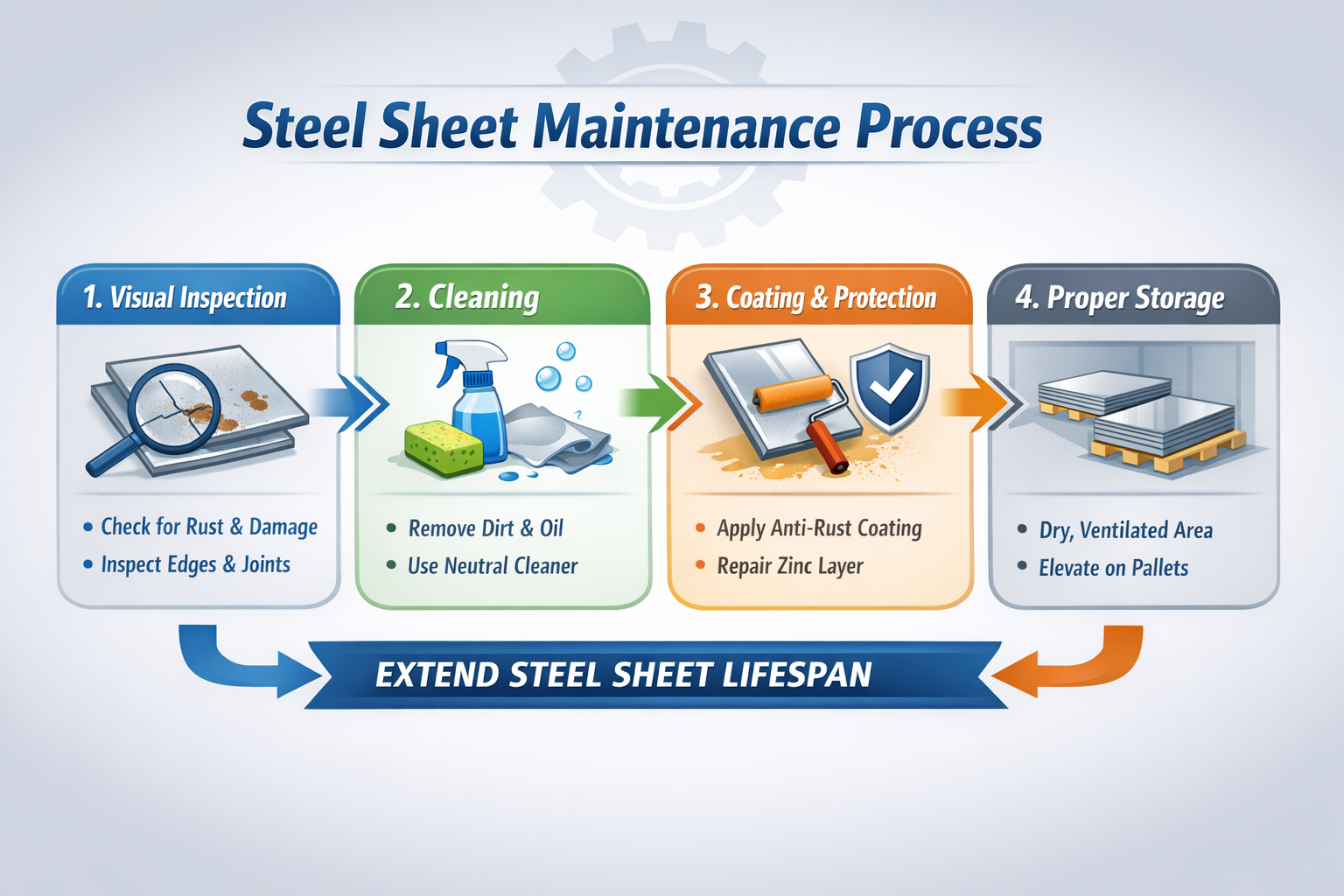
steel sheet maintenance process
4.Advanced Suggestions for Extending Steel Plate Lifespan
To further optimize performance, consider the following strategies:
Customized Environmental Maintenance: Increase inspection frequency in coastal and chemical industrial areas.
Employee Operation Training: Reduce hidden damage caused by improper handling.
Lifecycle Management: Develop replacement or refurbishment plans based on service life.
Sustainability Strategies: Recycle reprocessable steel plates to reduce raw material costs.
These methods not only extend the lifespan of steel plates but also help meet environmental and compliance requirements.
Scientific Maintenance for Maximizing Steel Plate Value
Through systematic inspection, cleaning, protection, and management, the lifespan of hot-rolled, cold-rolled, and galvanized steel plates can be extended by 20%–40%, significantly reducing long-term operating costs.
If you are looking for high-quality steel plates or professional selection and maintenance advice, please contact us.