
How Long Does Galvanized Steel Pipe Last Durability & Longevity
 How Long Does Galvanized Steel Pipe Last?
Galvanized steel pipe is known for its durability and corrosion resistance, making it a popular choice for plumbing, outdoor structures, and industrial applications. But how long does galvanized steel pipe last? The answer depends on several factors, including the environment and maintenance.
Typical Lifespan of Galvanized Steel Pipe
On average, galvanized steel pipes can last anywhere from 20 to 50 years. In ideal conditions, some pipes have been known to last even longer. However, most commonly installed galvanized pipes tend to reach the upper limit of this range before showing signs of wear.
Average Life Expectancy in Different Conditions
- Indoor plumbing: Usually lasts 30-50 years with proper care.
- Outdoor applications: Typically last 20-40 years, especially if exposed to harsh weather.
- Underground: Can last 30-50 years but are more vulnerable to soil conditions.
- Coastal or high-corrosion areas: Expect a shorter lifespan, around 15-30 years.
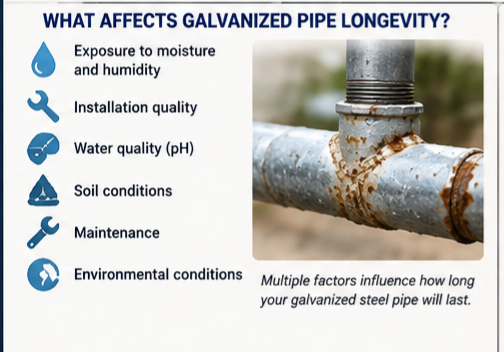
What Affects Galvanized Pipe Longevity?
Several factors influence how long galvanized steel pipes stay functional:
- Exposure to moisture and humidity: Higher moisture levels accelerate corrosion.
- Installation quality: Proper installation and handling prevent early damage.
- Water quality: Acidic or high-pH water speeds up rust.
- Soil conditions: Soil chemistry and moisture affect underground pipes.
- Maintenance: Regular inspections and cleaning can extend lifespan.
- Environmental conditions: Outdoor and coastal environments tend to reduce pipe durability.
Understanding these factors helps you better predict how long your galvanized steel pipe will last and when it might need replacement.
Factors That Affect Galvanized Steel Pipe Lifespan
The longevity of galvanized steel pipe depends on several key factors. First, exposure plays a big role—indoor pipes typically last longer because they’re protected from harsh weather and moisture, while outdoor or underground pipes face more aggressive conditions that can accelerate corrosion. For example, outdoor galvanized pipes are more vulnerable to rain, snow, and temperature swings, which can wear down the zinc coating faster.
Underground installation conditions are another critical aspect. Soil chemistry, moisture levels, and drainage impact how quickly a pipe might corrode. If the soil has high moisture content or is acidic, it can cause the zinc layer to wear down sooner, shortening the pipe’s lifespan. Proper installation techniques, such as ensuring adequate burial depth and avoiding damage during handling, also influence how long galvanized pipes last.
Water quality and pH levels are important too. Hard water, with high mineral content, can lead to buildup and corrosion, while water with low pH (more acidic) can eat away at the zinc coating faster. Soil conditions, like high salinity or acidity, increase the risk of rust and corrosion when pipes are buried underground.
Finally, regular maintenance and inspection are essential. Proper handling during installation, routine checks for signs of rust or leaks, and timely repairs can extend the life of galvanized steel pipes. Overall, understanding these factors helps in choosing the right pipe for your needs and keeping it in good shape longer. For more on selecting durable galvanized pipes, visit our galvanized steel pipe category.
How Galvanized Steel Pipe Resists Corrosion
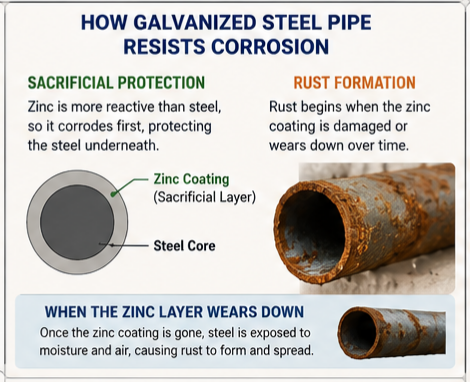
Galvanized steel pipe resists corrosion mainly thanks to its zinc coating. When steel pipes are galvanized, a layer of zinc is applied, creating a barrier that prevents moisture and oxygen from reaching the metal underneath. This zinc layer acts as the first line of defense against rust and corrosion, which are common issues for steel pipes exposed to water and humidity.
Sacrificial protection explained simply
Zinc provides what’s called sacrificial protection. This means zinc is more reactive than steel, so it corrodes first if the pipe is exposed to moisture. Think of zinc as a sacrificial shield that takes the hit, saving the steel core from rusting. As long as the zinc layer is intact, the steel inside stays protected, extending the pipe’s lifespan.
How rust starts on galvanized pipe
Rust begins when the zinc coating gets damaged or wears down over time. Once the zinc is gone, the steel underneath is exposed to water and air, leading to rust formation. This process can start with tiny pinholes or scratches that allow moisture to seep in. Over time, rust can spread, weakening the pipe and reducing its durability.
What happens when the zinc layer wears down
When the zinc coating wears away completely, the pipe loses its corrosion resistance. At this point, rust can develop rapidly, especially in humid or salty environments. That’s why regular inspection and maintenance are key to catching early signs of zinc depletion and preventing pipe failure. For long-lasting galvanized steel pipes, choosing high-quality coatings and proper installation methods can make a big difference.
If you want to learn about the different types of galvanized pipes and their durability, check out this hot-dip galvanized steel pipe.
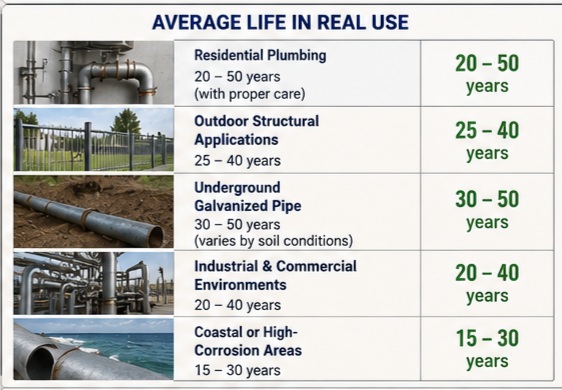
Average Life of Galvanized Steel Pipe in Real Use
Galvanized steel pipes are widely used in various settings, but their lifespan can vary a lot depending on where they’re installed and how they’re maintained.
Residential Plumbing Lifespan
In homes, galvanized plumbing pipes typically last around 20 to 50 years. Over time, corrosion and mineral buildup can cause issues like low water pressure or leaks. Proper maintenance and early detection of rust can help extend their service life. Keep in mind that older galvanized pipes might need replacing sooner, especially if they show signs of rust or leaks.
Outdoor Structural Applications
For outdoor uses, such as fencing or supports, galvanized steel pipes often last about 25 to 40 years. Exposure to the elements can accelerate corrosion, especially if the zinc coating wears down or if the pipes are exposed to harsh weather conditions. Regular inspections and protective coatings can improve longevity.
Underground Galvanized Pipe Lifespan
Underground galvanized pipes generally last between 30 and 50 years, but this depends heavily on soil chemistry, moisture levels, and burial depth. Soil conditions with high moisture or acidity can speed up corrosion, reducing the pipe’s lifespan. Proper installation and protective coatings are key to extending their durability in underground applications. For more details on underground pipe longevity, visit this guide on galvanized pipe durability.
Industrial and Commercial Environments
In industrial or commercial settings, galvanized steel pipes can last 20 to 40 years, depending on the severity of exposure to chemicals, moisture, and physical wear. These environments often demand more frequent inspections and maintenance to prevent unexpected failures.
Lifespan in Coastal or High-Corrosion Areas
In coastal or high-corrosion areas, galvanized steel pipes tend to have a shorter lifespan, typically around 15 to 30 years. Saltwater and salty air accelerate the rusting process, wearing down the zinc coating faster. Using higher-grade galvanized pipes or applying additional protective coatings can help improve their durability in these challenging environments.
How Long Do Galvanized Pipes Last Underground?
Galvanized steel pipes are often used underground because they’re durable and resistant to corrosion at first. But their lifespan can vary a lot depending on several factors. Soil moisture and corrosion are major concerns—if the soil is damp or acidic, it can speed up rusting and weaken the pipe faster. Drainage also matters; well-drained soil helps keep moisture away from the pipe’s surface, extending its life. The burial depth is another factor—pipes buried deeper are generally better protected from surface elements and temperature swings.
Coating thickness and soil chemistry play a big role too. Thicker zinc coatings provide more protection, but if the soil contains high levels of salts or acids, even well-coated pipes can corrode quicker. Warning signs of underground pipe failure include rust spots, leaks, or low water pressure, which often show up after many years of service. Regular inspection and understanding these factors can help prevent unexpected failures and extend the lifespan of galvanized pipes buried underground. For more on how to protect your pipes, check out this guide on steel pipe corrosion prevention.
Galvanized Steel Pipe Maintenance Tips
Proper maintenance is key to maximizing the lifespan of galvanized steel pipes. Regular inspections help catch early signs of wear and corrosion, which can prevent costly repairs later on. A simple inspection checklist includes checking for rust discoloration, leaks, and any scaling or buildup inside the pipe.
Cleaning the pipes periodically with gentle brushes or water can remove dirt and prevent moisture from sticking to the zinc coating, which helps resist corrosion. Applying protective coatings or paint designed for galvanized steel can provide an extra layer of defense, especially in harsh environments.
Fixing minor corrosion early is crucial—small rust spots can quickly spread if left untreated. Using rust-inhibiting products or zinc-rich paints can slow down deterioration. Reducing exposure to moisture and humidity, particularly in outdoor or underground settings, can significantly extend the pipe’s durability.
When you follow these maintenance tips, you can often prolong the service life of galvanized steel pipe beyond its typical lifespan. Regular upkeep not only preserves its corrosion-resistant properties but also helps avoid unexpected failures, making your investment last longer.
Signs Your Galvanized Steel Pipe Is Wearing Out
Knowing when your galvanized steel pipe is nearing the end of its lifespan is important to prevent costly repairs or water damage. Here are some common signs that your galvanized pipe may be wearing out:
- Rust and Discoloration: One of the clearest indicators is rust forming on the pipe’s surface or discoloration in the water. Rust weakens the pipe, increasing the risk of leaks or bursts. This is especially common in older pipes that have been exposed to moisture over time.
- Low Water Pressure: If you notice a drop in water flow, it could be due to internal buildup or corrosion narrowing the pipe’s interior. Scaling and mineral deposits inside the pipe can reduce water pressure, making daily chores more difficult.
- Leaks and Pinhole Damage: Small leaks or tiny holes in the pipe can develop as the galvanized coating deteriorates. These leaks may start small but can cause significant water damage if not caught early.
- Scaling and Buildup Inside the Pipe: Over time, mineral deposits and corrosion products can accumulate inside galvanized pipes. This buildup restricts water flow and can lead to further corrosion, reducing the pipe’s overall durability.
- Frequent Repair Needs: If you find yourself repeatedly fixing leaks or replacing sections of pipe, it’s a sign that the galvanized steel pipe is reaching the end of its life. Regular issues often mean corrosion has compromised the pipe’s integrity.
Being aware of these signs helps you decide whether it’s time to replace your galvanized steel pipe. Regular inspection and maintenance can extend its lifespan, but eventually, corrosion-resistant steel pipes like stainless steel may offer a longer-lasting solution. For more on pipe longevity and maintenance, check out seamless steel pipe options.
Galvanized Steel Pipe vs Other Pipe Materials
When comparing galvanized steel pipe to other materials like stainless steel, PVC, or copper, the choice often depends on the specific use and environment.
Galvanized steel vs stainless steel
Stainless steel is more resistant to corrosion than galvanized steel because it contains chromium, which forms a protective layer. This means stainless steel pipes generally last longer, especially in harsh environments or areas with high moisture. However, galvanized steel is usually more affordable and still offers decent durability for many residential and industrial applications.
Galvanized steel vs PVC
PVC pipes are completely corrosion-proof and lightweight, making them ideal for many plumbing needs, especially in less demanding conditions. But they don’t handle high temperatures or mechanical stress as well as galvanized steel. Galvanized pipes tend to last longer in outdoor or underground settings where physical durability and heat resistance are important.
Galvanized steel vs copper
Copper pipes are highly resistant to corrosion and can last 50 years or more in many cases. They are often preferred for plumbing due to their durability and natural antimicrobial properties. Galvanized steel, on the other hand, typically has a shorter lifespan because the zinc coating wears down over time, leading to rust and potential leaks.
Which lasts longer in different uses?
- In residential plumbing, copper often outperforms galvanized steel in lifespan.
- For outdoor or underground applications, galvanized steel can be durable if properly installed and maintained, but copper or stainless steel might be better choices for longevity.
- In industrial environments with high corrosion risks, stainless steel or specialty alloys usually last longer than galvanized steel.
Choosing the right pipe material depends on your specific needs, environment, and budget. Proper installation and maintenance can also significantly extend the lifespan of galvanized steel pipes.
How to Make Galvanized Steel Pipe Last Longer
To extend the life of galvanized steel pipes, you need to focus on several key factors. Here’s what I recommend:
1. Choose the Right Pipe Grade
Selecting high-quality galvanized steel pipe with a thicker zinc coating or better corrosion resistance can significantly boost longevity. Look for reputable suppliers that offer durable grades suited for your specific environment. For example, industrial-grade galvanized pipes tend to last longer in harsh conditions. You can explore options like square metal tubing for added strength.
2. Use Proper Installation Methods
Correct installation is crucial. Avoid bending or damaging the zinc coating during setup. Ensure pipes are securely fastened and supported to prevent movement that could cause wear or cracks. Proper handling reduces risks of early corrosion and helps maintain the galvanized pipe’s durability.
3. Protect Pipes from Harsh Environments
Environmental factors greatly influence galvanized steel pipe lifespan. Keep pipes away from direct exposure to moisture, chemicals, or saltwater, especially in coastal areas. Installing pipes indoors or in protected locations can prevent rusting and extend service life. For outdoor or underground uses, additional protective measures are recommended.
4. Apply Compatible Coatings
Adding protective coatings or paint designed for galvanized steel can provide an extra layer of defense against corrosion. These coatings help shield the zinc layer from wear and environmental attack, especially in high-moisture areas. Be sure to choose coatings that won’t interfere with the zinc’s sacrificial protection.
5. Schedule Regular Inspections
Routine checks can catch early signs of corrosion or damage. Look for rust spots, discoloration, leaks, or scaling inside the pipe. Addressing minor issues early—like cleaning or reapplying protective coatings—can prevent costly repairs or replacements down the line.
Table:
| Step | Key Action | Benefit |
|---|---|---|
| 1 | Choose high-grade pipe | Longer lifespan, better corrosion resistance |
| 2 | Proper installation | Prevents damage and early wear |
| 3 | Protect from environment | Reduces moisture and chemical attack |
| 4 | Use protective coatings | Adds extra corrosion resistance |
| 5 | Regular inspections | Detects issues early, extends pipe life |
By following these simple tips, you can maximize the durability and lifespan of your galvanized steel pipes, whether for residential, industrial, or outdoor use. Proper care and installation are key to making galvanized pipes last longer and perform reliably over time.
FAQs About Galvanized Steel Pipe Lifespan
How long does galvanized steel pipe last on average?
On average, galvanized steel pipe lasts about 20 to 50 years, depending on the environment and maintenance. In ideal conditions, some can even go beyond 50 years, but most tend to wear out sooner due to corrosion. The zinc coating provides initial protection, but over time, rust and corrosion inevitably develop, especially if exposed to moisture or harsh conditions.
Does galvanized pipe last longer indoors?
Yes, galvanized plumbing pipes typically last longer indoors. Indoor environments tend to have less exposure to moisture, soil, and aggressive elements that accelerate corrosion. Proper insulation and regular maintenance can help extend their lifespan. However, in areas with high humidity or water exposure, even indoor galvanized pipes may need replacement sooner.
Can galvanized pipe last 50 years?
It’s possible for galvanized steel pipes to last up to 50 years, especially if they are installed in dry, controlled environments and maintained properly. However, most galvanized pipes tend to require replacement around the 20-30 year mark, especially if signs of rust or leaks appear.
When should galvanized pipe be replaced?
Galvanized pipes should be replaced when they show signs of significant rust, leaks, low water pressure, or internal buildup. Scaling and corrosion inside the pipe can restrict water flow and lead to contamination. Regular inspections can help catch these issues early, preventing more costly repairs later.
What shortens galvanized pipe life the most?
Factors that cut short the lifespan of galvanized steel pipes include exposure to moisture, soil acidity, poor installation, and lack of maintenance. High humidity, underground corrosion, and aggressive water with low pH levels also accelerate rusting. Proper installation and routine inspections are key to prolonging their service life.
For more on how to maintain galvanized steel pipes and extend their durability, check out our maintenance tips.