
Hot-Dip Galvanizing vs Pre-Galvanizing: Key Differences Explained
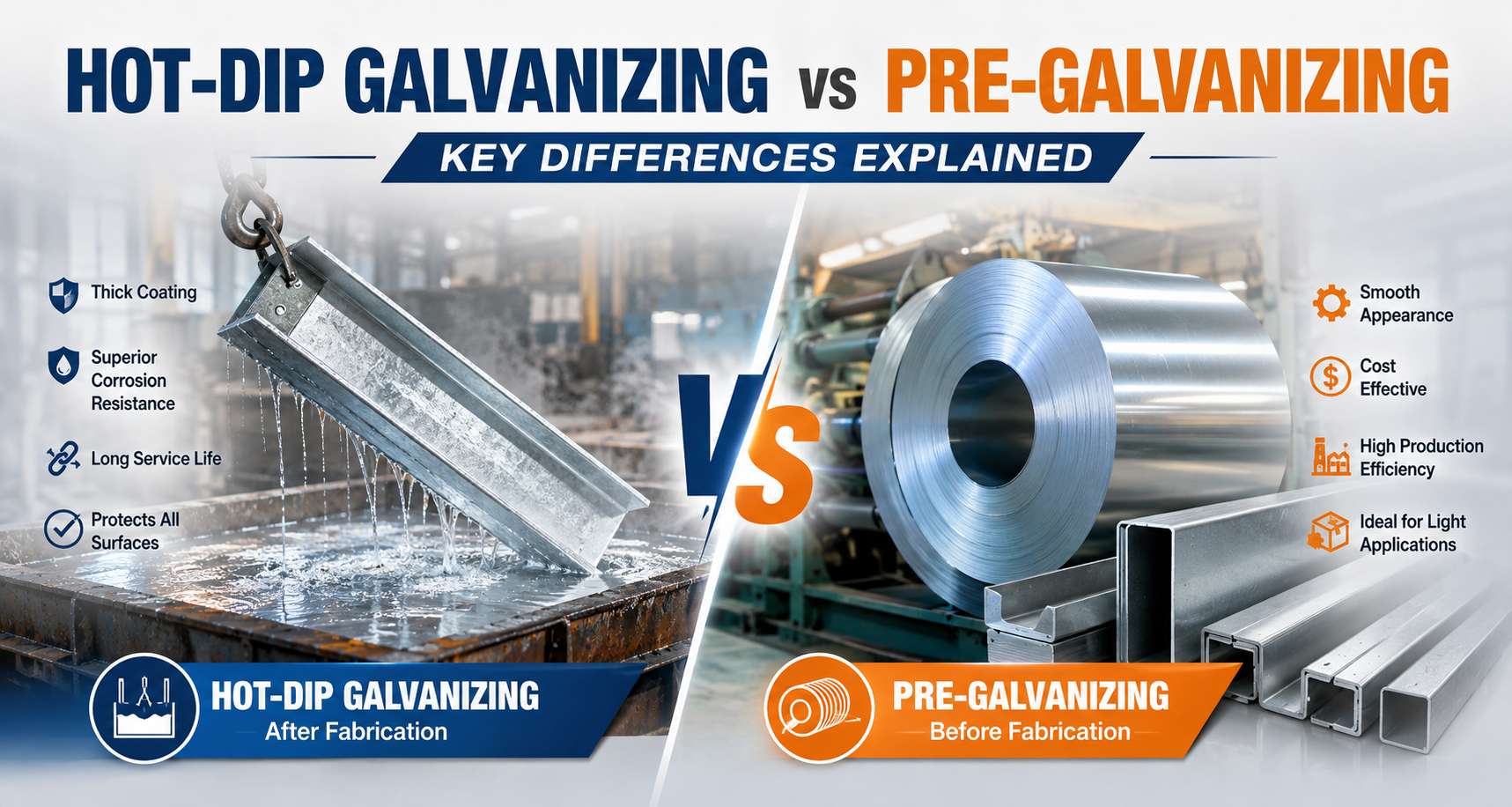
Steel is one of the most widely used construction and manufacturing materials, but it is also highly susceptible to corrosion. To extend its service life, galvanized coatings are commonly applied to protect steel from rust and environmental damage. Among the various galvanizing methods, hot-dip galvanizing and pre-galvanizing are the two most common processes.
Although both involve coating steel with zinc, they differ significantly in manufacturing process, coating thickness, corrosion resistance, applications, and cost. Understanding these differences is essential for selecting the right material for your project.
In this guide, we’ll compare hot-dip galvanizing vs pre-galvanizing, explain how each process works, and help you determine which option best suits your application.
What Is Hot-Dip Galvanizing?
Hot-dip galvanizing (HDG) is a process in which fabricated steel components are immersed in a bath of molten zinc at approximately 450°C (842°F).
Before dipping, the steel undergoes several preparation steps, including:
- Degreasing
- Pickling to remove rust and mill scale
- Fluxing to improve zinc adhesion
When the cleaned steel is submerged into molten zinc, a metallurgical reaction occurs between iron and zinc, forming several layers of zinc-iron alloy topped by pure zinc.
The result is a thick, durable coating that provides long-lasting corrosion protection.
Advantages of Hot-Dip Galvanizing
- Excellent corrosion resistance
- Thick zinc coating
- Strong metallurgical bond
- Long service life
- Protection for internal and external surfaces
- Minimal maintenance requirements
What Is Pre-Galvanizing?
Pre-galvanizing, also known as mill galvanizing or continuous galvanizing, is performed before steel products are fabricated.
In this process, steel sheets, strips, or coils pass continuously through a molten zinc bath at high speed during manufacturing. After coating, the galvanized steel is cut, formed, welded, or fabricated into finished products.
Because the coating is applied before fabrication, any cutting or welding performed afterward may expose bare steel unless additional protection is applied.
Advantages of Pre-Galvanizing
- Smooth and uniform appearance
- High production efficiency
- Lower manufacturing cost
- Suitable for high-volume production
- Ideal for lightweight applications
Hot-Dip Galvanizing vs Pre-Galvanizing: Key Differences
Let’s compare the two methods across several important factors.
1. Manufacturing Process
Hot-Dip Galvanizing
The entire fabricated product is galvanized after welding and fabrication. Every surface, including edges, corners, and hollow sections, receives zinc protection.
Pre-Galvanizing
Steel coils or sheets are galvanized before fabrication. After cutting or welding, exposed areas may lose their zinc protection.
Winner: Hot-dip galvanizing offers more complete protection.
2. Coating Thickness
One of the biggest differences lies in zinc coating thickness.
| Feature | Hot-Dip Galvanizing | Pre-Galvanizing |
|---|---|---|
| Typical Zinc Thickness | 50–150 μm | 10–30 μm |
| Coating Uniformity | Moderate | Very High |
| Durability | Excellent | Moderate |
The thicker coating of hot-dip galvanizing significantly increases corrosion resistance.
3. Corrosion Resistance
Hot-dip galvanized steel generally lasts much longer in harsh environments.
Typical service life:
- Rural environment: 70–100 years
- Urban environment: 50–80 years
- Industrial environment: 30–60 years
- Coastal environment: 20–50 years
Pre-galvanized steel performs well indoors or in mildly corrosive conditions but deteriorates more quickly in humid, marine, or industrial environments.
4. Surface Appearance
Pre-galvanized steel usually has a cleaner, smoother, and brighter finish because the coating is applied under controlled production conditions.
Hot-dip galvanized products often have:
- Zinc spangles
- Slight surface texture
- Visible drainage marks
- Matte gray finish over time
For decorative applications, pre-galvanized steel may offer a more attractive appearance.
5. Protection of Welds and Edges
This is where hot-dip galvanizing has a significant advantage.
Since fabrication occurs before galvanizing, welded joints, drilled holes, and cut edges are all coated with zinc.
In contrast, pre-galvanized steel exposes bare steel after fabrication unless repaired using zinc-rich paint or other protective treatments.
6. Mechanical Durability
Hot-dip galvanized coatings form zinc-iron alloy layers that are harder than pure zinc.
These coatings provide:
- Better abrasion resistance
- Higher impact resistance
- Greater durability during transportation and installation
Pre-galvanized coatings are thinner and more susceptible to scratches during fabrication.
7. Cost
Pre-galvanizing is generally less expensive because it supports continuous, high-speed manufacturing with lower processing costs.
Hot-dip galvanizing requires:
- Additional handling
- Cleaning processes
- Individual immersion
- Quality inspection
While the upfront cost is higher, the longer lifespan and lower maintenance often reduce total lifecycle costs.
8. Typical Applications
Hot-Dip Galvanizing Applications
- Structural steel
- Transmission towers
- Highway guardrails
- Bridges
- Utility poles
- Outdoor staircases
- Steel platforms
- Agricultural equipment
- Marine structures
- Industrial facilities
Pre-Galvanizing Applications
- HVAC ducts
- Electrical conduits
- Ceiling systems
- Drywall studs
- Steel furniture
- Cable trays
- Light steel framing
- Automotive components
- Household appliances
Comparison Table
| Feature | Hot-Dip Galvanizing | Pre-Galvanizing |
| Process | After fabrication | Before fabrication |
| Zinc Thickness | Thick | Thin |
| Corrosion Resistance | Excellent | Good |
| Service Life | Longer | Shorter |
| Weld Protection | Fully protected | Exposed after welding |
| Appearance | Rougher | Smooth |
| Cost | Higher | Lower |
| Maintenance | Minimal | Moderate |
| Outdoor Use | Excellent | Limited |
| Indoor Use | Excellent | Excellent |
Which One Should You Choose?
The right choice depends on your project requirements.
Choose hot-dip galvanizing if you need:
- Maximum corrosion resistance
- Long service life
- Outdoor exposure
- Marine environments
- Industrial facilities
- Infrastructure projects
- Heavy structural steel
Choose pre-galvanizing if you need:
- Lower production cost
- Smooth appearance
- Indoor applications
- Lightweight structures
- High-volume manufacturing
- Decorative products
Frequently Asked Questions
Is hot-dip galvanizing stronger than pre-galvanizing?
Yes. Hot-dip galvanized coatings are significantly thicker and form a metallurgical bond with the steel, making them more durable and resistant to corrosion.
Can pre-galvanized steel be used outdoors?
It can be used outdoors in mild environments. However, in coastal, industrial, or high-humidity areas, hot-dip galvanized steel generally provides much better long-term performance.
Why is hot-dip galvanizing more expensive?
The process requires cleaning, fluxing, immersion of fabricated parts, cooling, and inspection. Although the initial investment is higher, maintenance costs over the product’s lifetime are often much lower.
Does welding damage galvanized coatings?
Yes. Welding burns away zinc near the weld area. For pre-galvanized steel, these exposed areas should be repaired with zinc-rich coatings. In hot-dip galvanizing, welding is typically completed before galvanizing, so the finished product receives full coating coverage.
Final Thoughts
Both hot-dip galvanizing and pre-galvanizing provide effective protection against corrosion, but they serve different purposes.
If your project demands long-term durability, superior corrosion resistance, and reliable performance in harsh outdoor environments, hot-dip galvanizing is the preferred choice despite its higher initial cost.
On the other hand, if cost efficiency, smooth surface quality, and high-volume production are your priorities, pre-galvanizing is an excellent option for indoor or low-corrosion applications.
By understanding the key differences between these two galvanizing methods, engineers, manufacturers, contractors, and buyers can make informed decisions that balance performance, longevity, and budget.
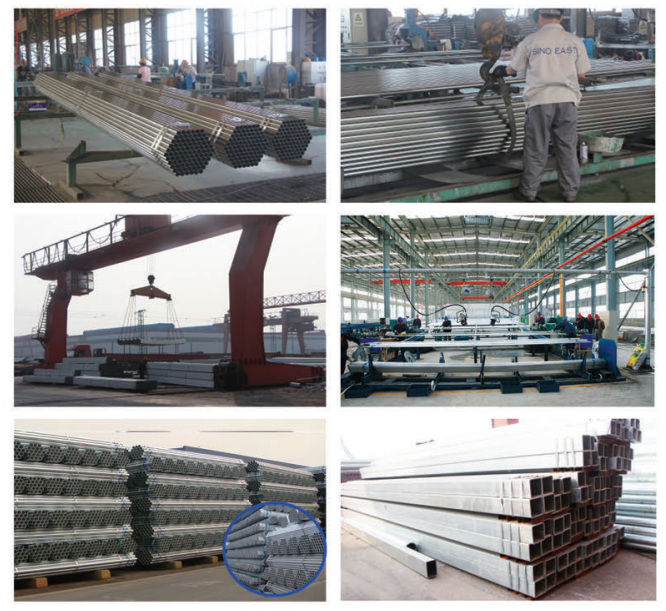
⚡ Quick RFQ & Instant CIF Quotation
Inquiring about Hot-Dip Galvanizing vs Pre-Galvanizing Key Differences Explained? Contact our export engineering team for 2026 FOB/CIF pricing, MTC 3.1 certificates, and 20GP container loading calculations.
