
Which is more suitable for photovoltaic mounting systems: hot-rolled steel plates or cold-rolled steel plates?
With the rapid development of the global new energy industry, the scale of photovoltaic power plant construction continues to expand. As the core structure supporting photovoltaic modules, the material selection for photovoltaic mounting systems directly impacts system safety, service life, and overall investment costs. Among various steel types, hot-rolled steel plates and cold-rolled steel plates are the two materials most frequently compared.
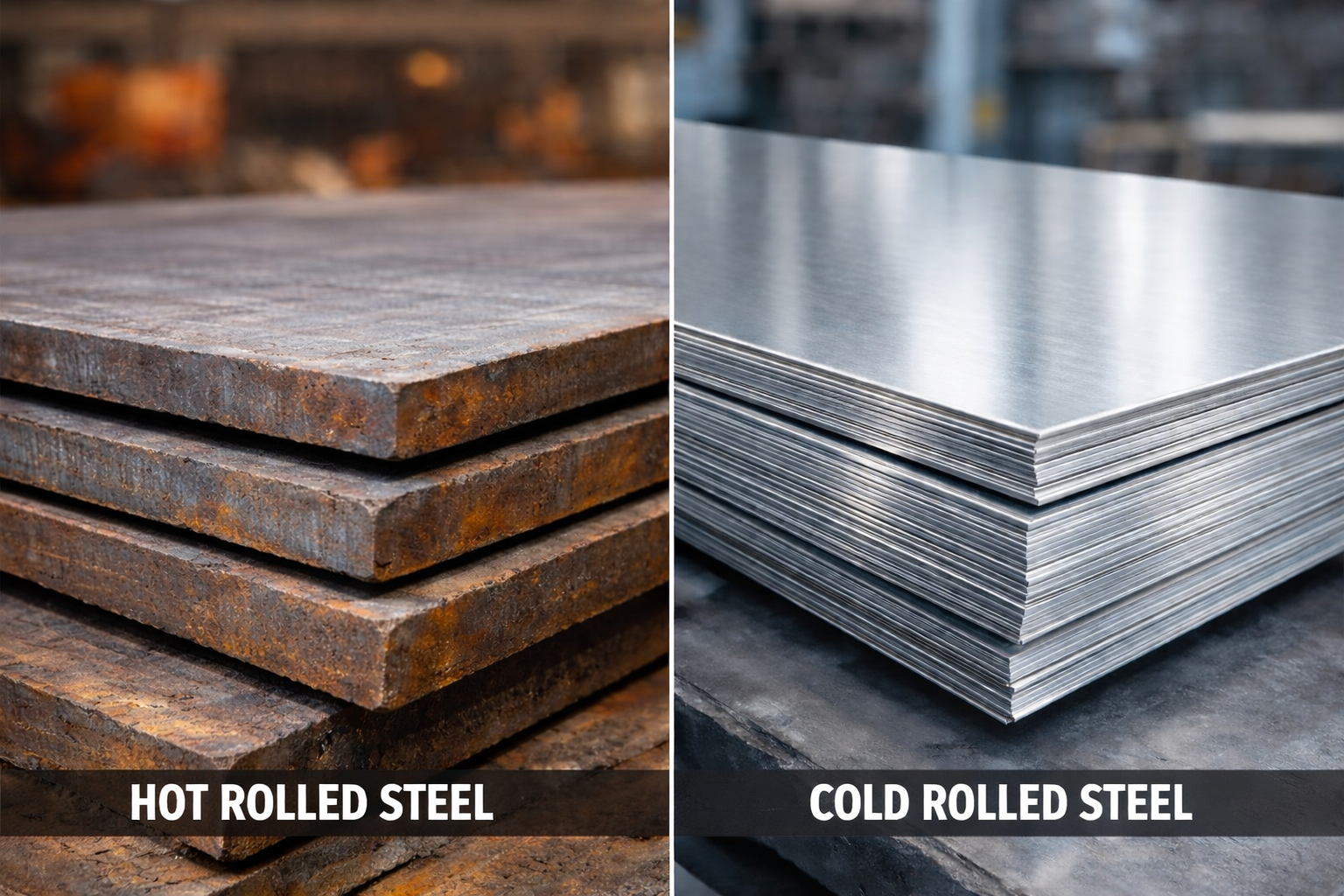
Hot-rolled Steel Plate&Cold-rolled Steel Plate
So, which is more suitable for photovoltaic mounting systems: hot-rolled steel plate or cold-rolled steel plate?
1.Core Material Requirements for Photovoltaic Mounting Systems
High Structural Strength and Load-Bearing Capacity
Photovoltaic mounting systems must sustain the self-weight of solar panels long-term while withstanding various external forces such as wind loads, snow loads, and seismic events. This demands high structural strength and load-bearing capacity from the material.
Excellent toughness and fatigue resistance
During prolonged outdoor operation, racks endure repeated environmental load fluctuations. Materials must exhibit superior toughness and fatigue resistance to minimize structural failure risks.
Outstanding weather resistance and corrosion resistance
Photovoltaic plants are often constructed in challenging environments like deserts, coastal areas, or plateaus. Materials must possess stable weather resistance and corrosion resistance to ensure long-term service life.
Good Process-ability and Construction Adaptability
Photovoltaic mounting systems typically involve large-scale on-site installation. The steel used should facilitate cutting, drilling, welding, and assembly to enhance construction efficiency and reduce project complexity.
Reasonable Cost and Economic Control
Photovoltaic projects are highly sensitive to return on investment. Material selection must not only meet performance requirements but also balance cost control to achieve an equilibrium between performance and economics.
2.Characteristics of Hot-Rolled Steel Plates and Their Advantages in Photovoltaic Mounting Systems
A.Fundamental Properties of Hot-Rolled Steel Plates
Hot-rolled steel plates are formed through high-temperature rolling, featuring stable micro-structures and excellent comprehensive properties. Key characteristics include:
High strength and good toughness, capable of withstanding significant structural loads and impact forces
Uniform internal structure with stable and reliable mechanical properties
Suitable for medium-to-thick plates and various structural components, meeting load-bearing requirements
Mature production processes with relatively low costs, offering distinct economic advantages
B.Core Advantages of Hot-Rolled Steel Plates in PV Mounting Structures
a.Exceptional Load-Bearing Capacity for Critical Structural Components
Core load-bearing elements like columns, beams, and braces in PV mounting systems typically demand high steel thickness and strength. Hot-rolled steel plates demonstrate superior adaptability in thickness range and structural load capacity, ensuring long-term stable operation of PV systems.
b.Superior Impact Resistance and Fatigue Strength
Under extreme weather conditions like strong winds and heavy snow, hot-rolled steel plates demonstrate more stable mechanical properties and excellent fatigue resistance, making them suitable for long-term outdoor use.
c.Suitable for Large-Scale Engineering Applications
Hot-rolled steel plates offer high production efficiency and a broad range of specifications, facilitating bulk procurement and application in centralized ground-mounted solar power plants and large-scale photovoltaic projects.
d.Higher Cost-Effectiveness for Enhanced Cost Control
Compared to cold-rolled steel plates, hot-rolled steel plates feature a simplified production process and lower overall costs, better aligning with the photovoltaic industry’s requirements for material cost-effectiveness and return on investment.
3.Characteristics and Limitations of Cold-Rolled Steel Sheet
A.Fundamental Properties of Cold-Rolled Steel Sheets
Cold-rolled steel sheets are produced by further rolling steel at ambient temperatures, exhibiting the following typical characteristics:
– Smooth surface, high flatness, and excellent appearance quality
– High dimensional accuracy with strict thickness control, suitable for precision machining
– Relatively high strength, but lower toughness due to work hardening effects
B.Limitations of Cold-Rolled Steel Sheets in PV Mounting Structures
a.Thickness constraints render them unsuitable for primary load-bearing structures
Cold-rolled steel sheets are primarily used in thin-plate applications. However, load-bearing components like columns and main beams in PV mounting structures typically require greater thickness and higher structural strength, where cold-rolled steel sheets show significant limitations.
b.Higher costs hinder large-scale adoption
The production process of cold-rolled steel sheets involves additional steps like pickling and cold rolling, resulting in overall costs generally higher than hot-rolled steel sheets. This hinders cost control in large-scale photovoltaic project construction.
c.Excessive precision is unnecessary in photovoltaic mounting systems
Photovoltaic mounting systems prioritize structural stability over surface aesthetics and extreme dimensional accuracy. The advantages of cold-rolled steel sheets are difficult to fully leverage in this application scenario.
4.Material Selection Recommendations for Different PV Application Scenarios
A.Centralized Ground-Mounted PV Power Plants
Operating Environment: High wind and sand exposure, significant temperature fluctuations, heavy load-bearing requirements
Recommended Material: Hot-rolled steel plate (galvanized or corrosion-resistant treatment)
Rationale: Hot-rolled steel plate offers high strength and excellent stability while maintaining cost control, meeting durability requirements in harsh environments.
B.Commercial/Industrial Rooftop PV Systems
Operating Environment: Structural constraints, high demands on weight and installation efficiency
Recommended Solution:
Primary structure: Hot-rolled steel plate
Auxiliary connectors: Cold-rolled steel plate may be used where appropriate to reduce weight and enhance installation convenience
C.Argo-Photovoltaicand Aquaculture-Photovoltaic Projects
Operating Environment: Complex conditions with high humidity and strong corrosion
Recommended Material: Hot-rolled steel plate + hot-dip galvanized treatment
Rationale: This combination is better suited for long-term outdoor use, effectively resisting high humidity and corrosion to ensure stable system operation.
5.Which steel plate is more suitable for PV mounting systems?
| Comparison Dimension | Hot-rolled Steel Plate | Cold-rolled Steel Plate |
| Structural Strength | ★★★★★ | ★★★★☆ |
| Toughness & Impact Resistance | ★★★★★ | ★★★ |
| Thickness Range | Wide adaptability | Narrower |
| Cost Control | ★★★★★ | ★★★ |
| PV Compatibility | ★★★★★ | ★★ |
Considering comprehensive factors including structural safety, service life, workability, and cost, hot-rolled steel plates represent the most suitable and industry-standard material choice for photovoltaic mounting systems. In contrast, cold-rolled steel plates are better suited for applications demanding exceptional aesthetic and dimensional precision, rather than photovoltaic mounting systems where structural load-bearing is the primary concern. During photovoltaic power plant construction, rational material selection not only ensures stable engineering quality but also directly impacts the project’s long-term economic benefits and operational returns.