
How to Select Steel Products for Solar Panel Mounting Structures
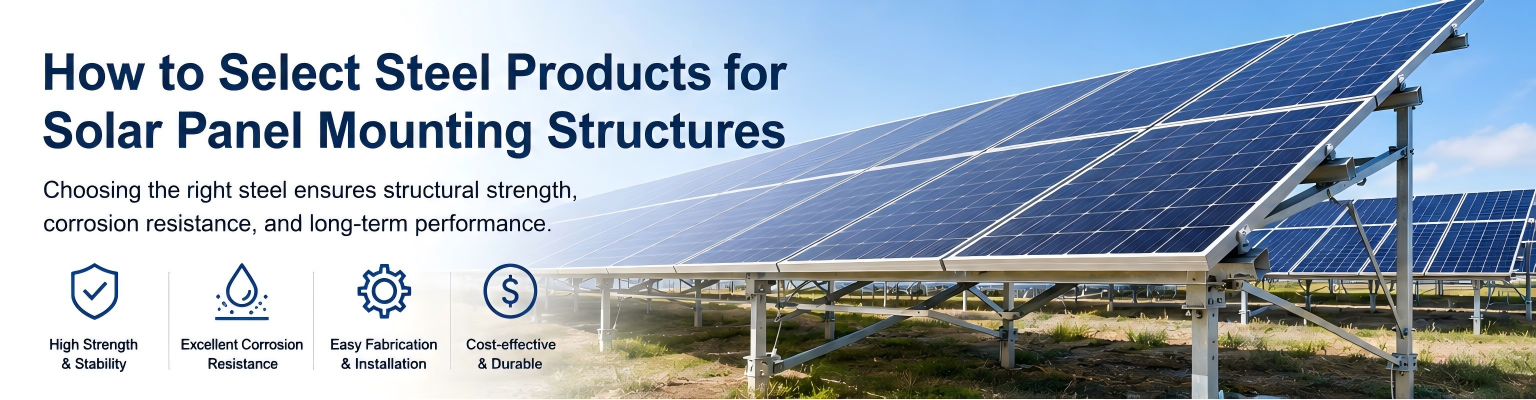
As the global demand for renewable energy continues to grow, solar power projects are being deployed at an unprecedented pace. Whether for utility-scale solar farms, commercial rooftops, or residential photovoltaic systems, the stability and durability of the mounting structure are essential to long-term system performance.
Steel is one of the most widely used materials for solar mounting structures due to its excellent strength, durability, and cost-effectiveness. However, selecting the right steel products requires careful consideration of environmental conditions, structural requirements, corrosion resistance, and project budget.
This guide explains the key factors to consider when choosing steel products for solar panel mounting structures.
Why Steel Is the Preferred Material for Solar Mounting Systems
Solar mounting structures must support solar panels for more than 25 years while withstanding wind loads, snow loads, earthquakes, and changing weather conditions.
Compared with aluminum and other materials, steel offers several advantages:
- Higher structural strength
- Excellent load-bearing capacity
- Long service life
- Competitive material cost
- Easy fabrication and welding
- High recyclability and sustainability
These benefits make steel the preferred choice for large-scale solar projects around the world.
Common Steel Products Used in Solar Mounting Structures
Different components of a solar mounting system require different steel profiles. The most commonly used steel products include:
Steel C Channels
C channels are widely used for rails, beams, and support members. They provide excellent bending resistance while remaining lightweight.
Typical applications include:
- Solar rails
- Purlins
- Secondary support members
Steel U Channels
U channels provide stable support and are often used for base frames and reinforcement structures.
Advantages include:
- Easy installation
- High structural stability
- Cost-effective manufacturing
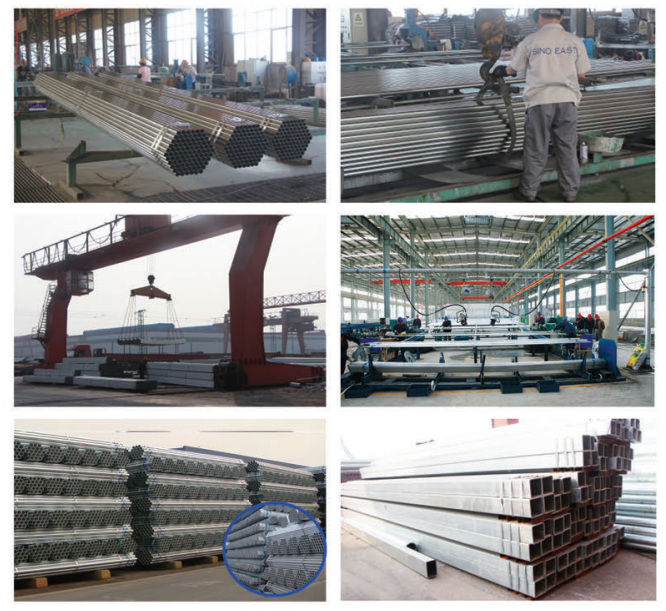
Square and Rectangular Steel Tubes
Hollow structural sections offer excellent torsional strength and are commonly used for support posts and frames.
Benefits include:
- High load capacity
- Attractive appearance
- Reduced maintenance
Angle Steel
Angle steel is frequently used for braces and reinforcement components.
It provides:
- Strong connection support
- Excellent rigidity
- Simple fabrication
Steel Plates
Steel plates are mainly used for:
- Base plates
- Connection plates
- Anchor components
- Customized brackets
Laser cutting and CNC machining allow steel plates to meet precise project requirements.
Galvanized Steel vs Stainless Steel
One of the most important decisions is selecting the appropriate material.
Hot-Dip Galvanized Steel
Hot-dip galvanized steel is the most common choice for solar mounting systems.
Advantages include:
- Excellent corrosion resistance
- Lower cost than stainless steel
- Long service life
- Suitable for most outdoor environments
The zinc coating protects the steel from rust even if minor surface scratches occur.
Stainless Steel
Stainless steel is typically used in highly corrosive environments such as:
- Coastal areas
- Offshore solar installations
- Chemical plants
- High-humidity regions
Although stainless steel offers outstanding corrosion resistance, its higher material cost means it is generally reserved for critical components such as fasteners, bolts, and connectors.
Consider Environmental Conditions
The installation environment directly affects steel selection.
Coastal Areas
Salt spray significantly accelerates corrosion.
Recommended materials:
- Hot-dip galvanized steel with thicker zinc coating
- Stainless steel fasteners
- Additional anti-corrosion coatings if necessary
Desert Regions
Solar projects in desert environments face:
- High temperatures
- UV exposure
- Sand abrasion
Steel products should feature durable protective coatings capable of resisting wear and oxidation.
Snowy Regions
Heavy snow increases structural loads.
Engineers should select thicker steel sections with higher yield strength to ensure long-term structural safety.
Evaluate Mechanical Properties
Not all steel grades provide the same performance.
Key mechanical properties include:
Yield Strength
Higher yield strength enables the structure to withstand greater loads without permanent deformation.
Tensile Strength
Tensile strength determines the maximum load the steel can bear before failure.
Structural Stability
The steel profile should resist:
- Wind uplift
- Dynamic loading
- Vibration
- Fatigue over decades of service
Proper engineering calculations are essential before material selection.
Importance of Corrosion Protection
Solar mounting systems are expected to operate for 25–30 years with minimal maintenance.
Corrosion protection is therefore a critical investment.
Common protective methods include:
- Hot-dip galvanizing
- Zinc-aluminum-magnesium coating
- Powder coating
- Epoxy coating
- Duplex coating systems
Choosing the right surface treatment can significantly reduce maintenance costs throughout the project’s lifecycle.
Consider Manufacturing Quality
Reliable steel products should meet international standards and maintain consistent quality.
Look for suppliers that offer:
- Strict quality control
- Material traceability
- Precision fabrication
- Welding inspection
- Dimensional accuracy
- Third-party testing reports
Consistent manufacturing quality helps ensure faster installation and fewer on-site issues.
Balance Cost and Long-Term Value
While initial material cost is important, it should not be the only factor.
A slightly higher investment in premium steel products often results in:
- Longer service life
- Reduced maintenance
- Lower replacement costs
- Improved structural safety
- Better return on investment
When evaluating suppliers, consider the total lifecycle cost rather than simply comparing purchase prices.
Conclusion
Selecting the right steel products for solar panel mounting structures requires balancing strength, corrosion resistance, environmental suitability, manufacturing quality, and overall project cost.
Hot-dip galvanized steel remains the most popular solution for most solar installations due to its excellent combination of durability and affordability. For harsh environments, stainless steel components and advanced protective coatings provide additional reliability.
Working with an experienced steel manufacturer ensures your solar mounting system achieves long-term structural performance, reduced maintenance costs, and maximum project value.
As solar energy continues to expand worldwide, choosing high-quality steel products today is an investment in decades of reliable clean energy production.
⚡ Quick RFQ & Instant CIF Quotation
Inquiring about How to Select Steel Products for Solar Panel Mounting Structures? Contact our export engineering team for 2026 FOB/CIF pricing, MTC 3.1 certificates, and 20GP container loading calculations.

