Hot Rolled vs. Cold Rolled Steel Plate: Core Differences and Optimal Application Scenarios
Introduction
In the modern industrial field, steel remains one of the most common and widely used materials, with hot-rolled and cold-rolled steel sheets being two basic types used in manufacturing and construction. Different processing methods can significantly affect the material’s performance, characteristics, and applicability. Understanding the differences between these two processes is not just a matter of technical detail but is crucial for engineers, designers, and manufacturers to optimize product quality, performance, and cost efficiency.1. The Production Processes: From Steel Ingot to Finished Plate.
1.1 Hot Rolling Process
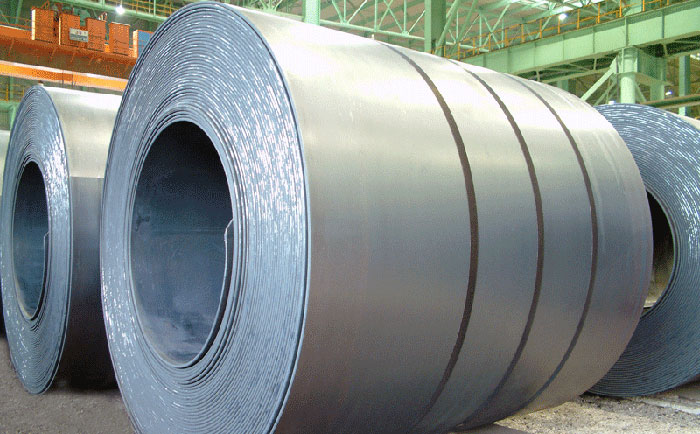
Hot rolling refers to the process of processing steel at a high temperature above its recrystallization point, usually exceeding 1700°F (approximately 927°C). This method begins by heating large steel billets or slabs in a furnace until they reach a plastic state. The heated material is then pressed between rollers through roughing and finishing mills to achieve the desired thickness. The process typically starts with a continuous cast slab about 230 millimeters thick and gradually reduces it to the final thickness, ranging from 1 to 20 millimeters, through controlled rolling.
An important feature of hot rolling is controlled thermomechanical processing, where operators carefully regulate the starting temperature, finishing temperature, and coiling temperature to influence the evolution of the steel’s microstructure and its mechanical properties. High-temperature processing allows significant deformation with minimal resistance, making it more efficient than cold rolling for producing larger sections and thicker plates. However, uneven cooling after processing can introduce residual stresses in the steel, affecting its performance under load.
1.2 Cold Rolling Process
Cold rolling is carried out at room temperature (below the recrystallization temperature), using hot-rolled sheets as the raw material. This multi-step process first requires pickling the hot-rolled material to remove surface scale. After the scale is removed, the steel sheets are then compressed between rollers to reduce their thickness, typically producing sheets with thicknesses ranging from 0.1 mm to 4.0 mm, with most factories producing cold-rolled steel no thicker than 4.5 mm.
Unlike the hot rolling process, cold rolling involves additional processing stages that significantly enhance the material’s performance. After pressing, the steel undergoes annealing—a heat treatment process that restores the ductility reduced by pressing. Finally, the material is finished, including leveling and cutting, and sometimes various surface treatments or coatings are applied to improve appearance and performance. The entire process requires complex equipment, including sophisticated control models, L1 and L2 systems, as well as shape control methods to ensure precise dimensional accuracy and surface quality.2. Key Differences Between Hot-Rolled and Cold-Rolled Steel Plates.
2.The main differences between hot-rolled steel sheets and cold-rolled steel sheets
2.1 Mechanical Properties and Performance Characteristics
Different processing methods give hot-rolled steel and cold-rolled steel different mechanical properties, which determine their suitability for various applications:
- Strength and Hardness: Compared to hot-rolled steel, cold-rolled steel exhibits higher hardness and strength. This improvement in mechanical properties stems from strain hardening during the cold working process, which increases the dislocation density in the steel’s crystal structure. While this enhances strength, it may reduce toughness if not adjusted through subsequent annealing.
- Ductility and Formability: Hot-rolled steel typically shows superior ductility and toughness. The hot processing refines the steel’s grain structure while maintaining its flexibility, making it suitable for applications requiring significant deformation during manufacturing. Although cold-rolled steel has lower ductility in a fully hardened state, it can achieve excellent deep-drawing performance after annealing, making it ideal for complex formed components.
- Yield-to-Tensile Strength Ratio: Cold-rolled steel has a more favorable yield-to-tensile strength ratio, meaning the yield point is closer to the ultimate tensile strength. While this allows for efficient material use, there is less warning before failure under overload, which designers need to consider in critical applications.
2.2 Surface Quality and Dimensional Accuracy
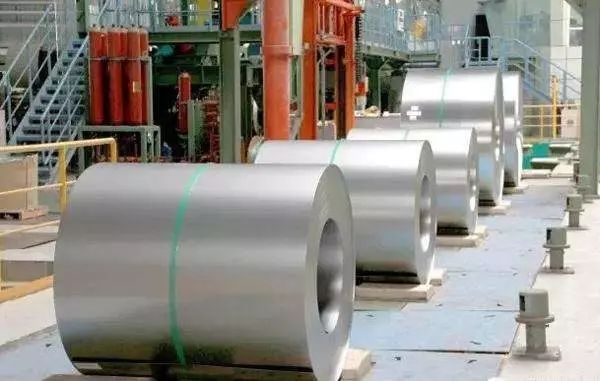
- Surface Characteristics: Hot-rolled steel generally has a rougher, scale-covered surface due to oxidation at high temperatures. This rolled scale can sometimes be beneficial for certain paint adhesion properties but usually has lower reflectivity and surface cleanliness. In contrast, cold-rolled steel offers superior surface smoothness and cleanliness, making it excellent for direct coating, plating, or applications with strict appearance requirements.
- Dimensional Accuracy: Cold-rolled steel significantly outperforms hot-rolled steel in dimensional accuracy, with stricter thickness tolerances and more consistent flatness. The cold-rolling process is conducted at room temperature and equipped with advanced control systems, minimizing variations in thickness and width while maintaining excellent shape control. While hot-rolled steel is dimensionally acceptable for many applications, it has greater thickness variation and may experience slight distortion due to uneven cooling.
Table: Comparative Characteristics of Hot-Rolled and Cold-Rolled Steel Plates
|
Property |
Hot-Rolled Steel | Cold-Rolled Steel |
|
Hardness |
Lower |
Higher |
|
Strength |
Lower, more ductile | Higher, less ductile |
| Surface Finish | Rough, scaled |
Smooth, bright |
|
Dimensional Tolerance |
Wider tolerances | Tight tolerances |
| Cost | Lower production cost |
Higher production cost |
| Common Thickness | 1-20mm |
0.1-4.0mm |
2.3 Residual Stress and Shape Capabilities
These two processes produce different residual stress patterns, which significantly affect performance:
- Residual Stress Distribution: Hot-rolled steel mainly develops residual stresses through uneven cooling, resulting in a so-called “membrane-type” stress distribution across the cross-section. Cold-rolled steel, particularly cold-formed thin-walled sections, exhibits a “bending-type” residual stress distribution due to non-uniform plastic deformation during rolling.
- Shape Control and Sectional Capacity: Hot-rolled sections generally have higher free-torsion stiffness, providing superior torsional resistance compared to equivalent cold-rolled sections. This makes hot-rolled steel more suitable for applications where torsional stability is crucial. However, cold-rolled steel better utilizes post-buckling strength, allowing thin sections to maintain load-carrying capacity under limited local buckling.3. Optimal Application Scenarios.
3. Applications of hot-rolled and cold-rolled steel
3.1 Applications Best Served by Hot-Rolled Steel
Hot-rolled steel plates are most suitable for applications where high surface precision and strict dimensional tolerances are not critical, but cost-effectiveness, structural integrity, and material toughness are highly valued:
- Construction and structural applications: Hot-rolled steel is widely used in the construction and infrastructure sectors for structural frameworks, building beams, and bridge components. The combination of strength, ductility, and cost-effectiveness makes it well-suited for these uses. Recent industry trends show that hot-rolled carbon steel plates are widely specified for building frameworks, with toughness and energy absorption capacities being particularly important in earthquake-prone and high-wind areas.
- Heavy machinery and equipment: In manufacturing industries, hot-rolled plates are used for machine bases, structural frames of heavy equipment, and industrial components where surface precision is not critical but overall strength and cost sensitivity matter. The material’s uniformity, reliability, and competitive price make it the preferred choice for non-visible components.
- Pipeline and pressure vessel systems: Special categories of hot-rolled steel include plates and pipe sections for high-pressure vessels, meeting the needs of the energy sector. The through-thickness properties and integrity of hot-rolled plates make them suitable for these critical applications where failure is unacceptable.
- Emerging applications: Recent innovations include ultra-wide hot-rolled plates with a width of up to 2180 millimeters, used in new energy sectors, shipbuilding, and specialized containers. These ultra-wide specifications can replace traditional medium-thick plates and enable new processing methods.
3.2 Applications Best Served by Cold-Rolled Steel
Cold-rolled steel excels in applications that require precision, surface quality, and consistent mechanical properties:
- Automotive Manufacturing: The automotive industry heavily relies on cold-rolled steel for body panels, doors, hoods, and structural components. Its high strength-to-weight ratio contributes to vehicle lightweighting efforts, with advanced high-strength cold-rolled steel grades capable of reducing weight by 15% or more while maintaining safety standards. Superior surface quality provides an ideal substrate for automotive paint systems, and consistent mechanical properties ensure reliable formability in high-volume production.
- Home Appliances: Cold-rolled steel dominates the home appliance market in refrigerator cabinets, washing machine housings, air conditioner enclosures, and microwave interiors. The smoothness and consistency of this material’s surface help achieve high-quality finishing through painting, powder coating, or laminating. Specific grades with enhanced deep-drawing performance (classified as ZF, HF, and F grades based on stamping complexity) allow manufacturers to produce complex shapes without cracking or excessive thinning.
- Precision Instruments and Electronics: The high dimensional accuracy and surface cleanliness of cold-rolled steel make it ideal for precision instrument casings, internal structural components, and electronic device enclosures. The consistency of the material ensures dimensional stability in sensitive applications, with advanced grades controlling thickness variation within ±0.01 mm.
- Specialized applications achieved through coating variations: Further processing of cold-rolled steel produces specialized materials including galvanized sheets (electro-galvanized, hot-dip galvanized), zinc-aluminum coated sheets, electrolytically tinned sheets, and pre-coated coils. These value-added products meet specific market demands, such as corrosion-resistant building panels, food containers requiring specific barrier properties, and decorative applications.
-
Market Trends and Future Outlook
The global hot-rolled and cold-rolled steel markets are continuously evolving with technological advancements, sustainability requirements, and changes in demand patterns:
- Market Size and Growth Trends: The hot-rolled carbon steel sheet market continues to expand, serving foundational industries including construction, machinery, automotive, and aerospace. Meanwhile, the cold-rolled steel market shows particularly strong performance in high-growth sectors.
- Regional Production Dynamics: Asian countries, especially China, dominate global production capacity for hot-rolled and cold-rolled steel products. China currently accounts for approximately 42% of global cold-rolled steel capacity. This regional concentration reflects strong domestic demand as well as the development of an integrated steel production ecosystem.
- Focus on Technology and Innovation: The industry is increasingly focusing on intelligent manufacturing and green production technologies. The application of AI-controlled systems and automated rolling technologies in advanced production facilities reduces energy consumption while improving the accuracy of surface defect detection. Meanwhile, product innovation continues to advance, with the development of nano-coating technologies, graphene composite steel plates, and ultra-high-strength steel grades continuously pushing performance limits.
- Sustainability and Regulatory Impact: Increasingly strict environmental regulations worldwide are driving hot-rolled and cold-rolled steel to adopt more eco-friendly production methods. The steel industry is responding to these demands by improving energy efficiency, reducing water usage, and strengthening recycling infrastructure. These developments not only align with global carbon reduction initiatives but also meet specific regulatory requirements in different markets.
Conclusion
The choice between hot-rolled and cold-rolled steel sheets has a significant impact on product performance, manufacturing processes, and final value. Hot-rolled steel is cost-effective and tough, making it suitable for large structural applications where surface finish is not critical. Cold-rolled steel, on the other hand, offers better surface quality, dimensional accuracy, and enhanced strength, making it suitable for applications that require precision, formability, and aesthetics.
Understanding these differences allows engineers, designers, and standards developers to make informed material choices, better optimize performance, and control costs and manufacturing efficiency. As both technologies continue to evolve, hot-rolled steel is expanding toward ultra-wide specifications, while cold-rolled steel is advancing toward smarter and more sustainable production. The unique advantages of each process will continue to play complementary roles in the industrial field. In the future, as global demand for stronger, lighter, and more sustainable materials grows across various economic sectors, further specialization and performance enhancements are likely to develop.