
Galvanized Pipe vs. Regular Steel Pipe: 5 Key Factors to Help You Decide
Steel pipes are indispensable materials in construction, manufacturing, infrastructure, and home renovation. But when faced with numerous options, how can one make an informed decision between galvanized pipes and ordinary steel pipes? This article will delve into the differences between these two types of steel pipes and provide comprehensive decision-making guidance based on five key factors.
The First key Factor: Corrosion Resistance— The Key to Service Life
The Rust Prevention Advantages of Galvanized Pipes
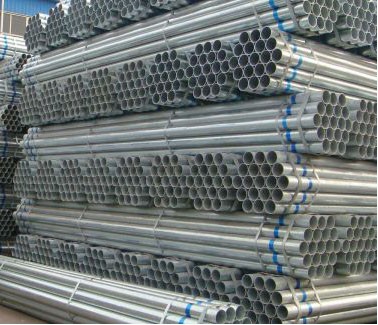
Galvanized pipes form a dual protective mechanism by coating ordinary steel pipes with a layer of zinc: the zinc layer acts as a physical barrier isolating the steel from corrosive environments; simultaneously, zinc’s higher chemical reactivity than iron allows it to corrode preferentially as a “sacrificial anode” when the coating is damaged, thereby shielding the steel substrate. This protection enables galvanized pipes to perform exceptionally well in humid, rainy, or corrosive environments, with a service life up to 3-5 times longer than that of ordinary steel pipes.
Corrosion Challenges for Standard Steel Pipes
Untreated standard steel pipes exposed directly to air, particularly in environments with high humidity or containing salts and acidic substances, are prone to electrochemical corrosion. The rust (iron oxide) forming on their surfaces not only detracts from their appearance but also gradually erodes the pipe material, reducing structural strength and shortening service life.
Data Comparison: Under identical outdoor conditions, ordinary steel pipes may show significant rusting within 2-3 years, whereas galvanized pipes typically remain rust-free for 10-15 years.
The second key factor: cost considerations—balancing initial investment and long-term value
Initial cost comparison
Ordinary steel pipes feature relatively simple production processes without additional galvanization treatment, resulting in initial costs typically 20%-40% lower than galvanized pipes. For projects with limited budgets or short-term usage, ordinary steel pipes offer a clear price advantage.
Life Cycle Cost Analysis
However, considering only the initial cost is insufficient. Although galvanized pipes require higher upfront investment, their exceptional corrosion resistance significantly reduces maintenance, replacement, and downtime costs. Particularly in applications where repairs or replacements are difficult or costly—such as underground pipelines and high-rise building structures—the long-term economic advantages of galvanized pipes become even more pronounced.
Recommendation: For short-term projects or dry indoor environments, standard steel pipes may be more economical; for long-term use, outdoor applications, or humid conditions, galvanized pipes typically offer lower total cost of ownership.
The Third Key Factor: Application Scenario Matching—Selecting Based on Local Conditions
Ideal Application Scenarios for Galvanized Pipes
- Outdoor Structures: Facilities exposed to wind and rain long-term, such as fences, balcony railings, and streetlight poles
- Water Supply Systems:Hot and cold water pipes within buildings (Note: Some countries have restricted galvanized pipes for drinking water; local regulations must be understood)
- Humid Environments: Basements, bathrooms, swimming pools, and other high-moisture areas
- Agricultural Facilities: Greenhouse frameworks, irrigation systems, and environments exposed to fertilizers and pesticides
Applications of Standard Steel Pipes
- Dry interior structures:Temporary building frameworks, non-load-bearing interior partitions
- Non-exposed applications: Piping concealed within walls in dry environments
- Short-term projects: Construction formwork support, temporary protective structures
- Coating substrates: Steel structural substrates slated for professional anti-corrosion coating
Fourth Key Factor: Installation and Maintenance – Operational Convenience and Long-Term Burden
Installation Considerations
Galvanized pipes feature a relatively hard surface. Cutting and threading require specialized tools and techniques; otherwise, the zinc coating may be damaged, compromising corrosion resistance. Welding galvanized pipes releases toxic zinc fumes, necessitating strict safety precautions.
Ordinary steel pipes are easier to process and weld, but if not treated with corrosion protection immediately after installation, they may begin to rust rapidly.
Maintenance Requirements Comparison
Galvanized pipes require virtually no maintenance, as the zinc coating provides long-term self-healing protection (zinc at scratches corrodes preferentially to shield the iron base). Ordinary steel pipes, however, necessitate regular inspection, rust removal, and repainting, resulting in significantly higher maintenance costs and labor demands.
Maintenance Frequency Comparison: In moderately corrosive environments, ordinary steel pipes may require anti-corrosion maintenance every 2-3 years, while galvanized pipes often require no special maintenance for over 10 years.
Fifth Key Factor: Environmental Impact and Sustainable Development – Considerations for Green Choices
Environmental Impact During Production
The galvanizing process involves chemical treatment and high-temperature operations, potentially generating wastewater, exhaust gases, and solid waste, necessitating strict environmental management. Modern hot-dip galvanizing techniques have significantly improved, with most reputable manufacturers implementing closed-loop production and waste recycling.
While standard steel pipe production has relatively low energy consumption, inadequate corrosion protection leading to frequent replacements may paradoxically increase resource consumption and waste generation.
Service Life and Resource Efficiency
The extended service life of galvanized pipes translates to fewer material replacements and reduced waste generation, often yielding superior resource efficiency from a full life cycle assessment perspective.
Recycling
Both types of steel pipes are 100% recyclable. However, galvanized pipes require specialized processing to separate zinc from steel, whereas standard steel pipes undergo simpler, more direct recycling.
Green Recommendation: Balance selection based on project lifecycle and local environmental requirements. For long-term infrastructure, the durability of galvanized pipes may better align with sustainability principles.
Comprehensive Decision Guide
01 When to Choose Galvanized Pipes
Environmental Conditions: Highly corrosive environments such as humid, rainy, coastal, or industrial zones
Budget Cycle: Long-term projects prioritizing total lifecycle costs
Application Scenarios: Outdoor structures, potable water systems (compliant with regulations), agricultural facilities
Maintenance Capability: Seeking to minimize long-term maintenance
Environmental Considerations: Emphasis on material longevity to reduce replacement frequency
02 When Selecting Standard Steel Pipes
Environmental Conditions: Dry, low-humidity indoor environments
Budget Cycle: Short-term projects with strictly limited initial budgets
Application Scenarios: Dry indoor structures, temporary facilities, coating substrates
Maintenance Capability: Ability to perform regular anti-corrosion maintenance
Environmental Considerations: Short project lifecycles, or access to specialized recycling channels
Conclusion
Choosing between galvanized pipes and ordinary steel pipes is not a simple “good or bad” judgment, but rather a trade-off based on specific requirements and conditions. Five key factors—corrosion resistance, cost, application scenarios, installation and maintenance, and environmental impact—collectively form the decision-making framework.
Before making a final decision, it is recommended to:
- Conduct a detailed assessment of corrosion risks in the project environment
- Calculate the total cost of ownership over 5-10 years (including maintenance and replacement)
- Consult local building codes and safety standards
- Consider potential future environmental changes or shifts in usage
- Obtain samples for field testing (If circumstances permit)
Regardless of the type of steel pipe selected, ensuring the supplier provides quality certifications and that installation is performed correctly by professionals is essential to fully leverage material performance and guarantee project safety and longevity.
In today’s era of advancing materials science, new anti-corrosion technologies and alternative materials continue to emerge. However, galvanized pipes and standard steel pipes remain reliable choices that have stood the test of time. Informed decisions begin with thorough understanding. We hope these five key factors provide you with a clear path to decision-making.