
5 Key Tips for Extending the Service Life of Square Steel Tubes
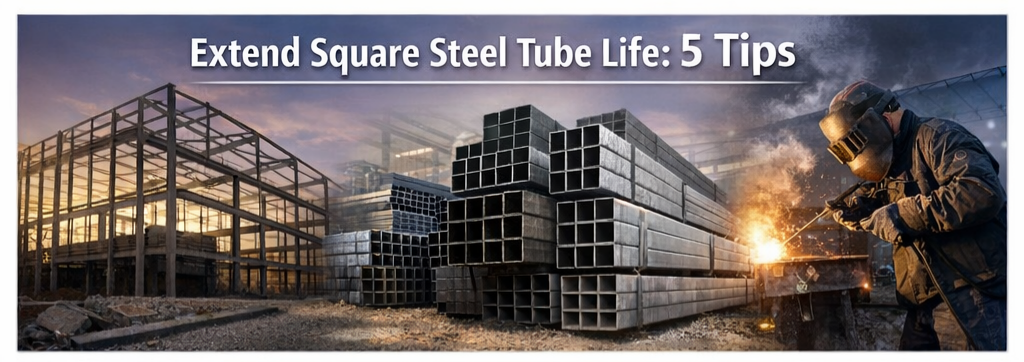
Extend Square Steel Tube Life 5 Tips
As a fundamental material widely used in construction, machinery manufacturing, warehousing and logistics, and engineering structures, the service life of square steel tubes directly impacts project safety, construction efficiency, and cost control. However, in practical applications, many companies neglect routine maintenance and proper management, leading to premature rusting, deformation, or even failure of the tubes. This not only increases replacement costs but may also create potential safety hazards. So, how can we effectively extend the service life of square steel tubes?
1.Choose the Right Material to Enhance Durability from the Start
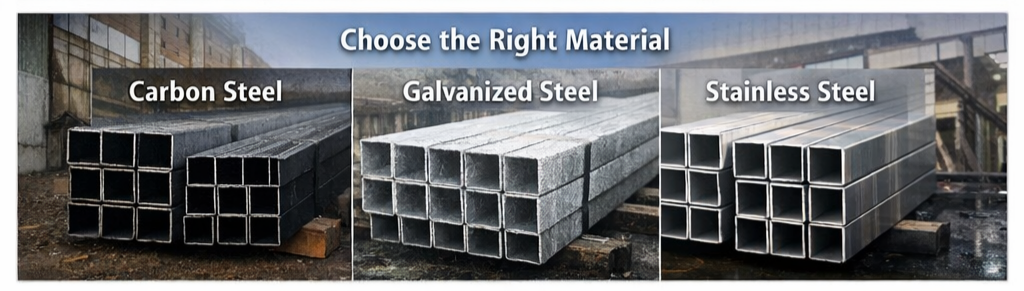
Steels of different materials
The first and most critical step in extending the service life of square steel tubes is to select the appropriate material based on the application scenario, thereby mitigating the risk of damage from the outset.
Common square steel tube materials and their suitable applications:
Ordinary Carbon Steel Square Tubes
Low-cost and cost-effective, but with weak corrosion resistance. Suitable only for dry indoor environments or short-term temporary use, and requires additional anti-corrosion measures.
Low-Alloy High-Strength Steel Tubes
Superior toughness and load-bearing capacity compared to ordinary carbon steel, with strong impact resistance. Suitable for applications requiring high strength, such as building structures and machinery manufacturing, though basic corrosion protection is necessary.
Galvanized Square Steel Tubes
A dense zinc layer on the surface effectively blocks air and moisture, providing excellent corrosion resistance. Suitable for outdoor, humid environments, or open-air projects.
Stainless Steel Square Tubes
With exceptional corrosion and wear resistance and minimal rusting, these are suitable for highly corrosive and demanding industries such as food processing, chemical manufacturing, and coastal applications.
2.Implement Surface Corrosion Protection to Prevent Oxidation and Rusting
Corrosion is the primary cause of damage to steel. Once rust appears on square tubes, it not only compromises the clean appearance but also gradually erodes the tube walls, reducing structural strength and ultimately leading to failure. Effective surface corrosion protection is essential for extending the service life of these tubes.
Common Corrosion Prevention Methods
Applying Anti-Rust Paint
Using a “primer + topcoat” dual-layer protection system forms a dense protective film on the pipe surface, effectively blocking air and moisture. This method is simple to apply and cost-effective, suitable for standard indoor and outdoor applications, though it requires periodic touch-ups.
Spraying Anti-Corrosion Coatings
Using specialized industrial anti-corrosion coatings provides superior weather resistance and corrosion resistance. This method is suitable for industrial workshops, harsh outdoor environments, and other scenarios with high corrosion protection requirements.
Hot-Dip Galvanizing
This process forms a uniform, dense zinc-iron alloy layer on the surface of the steel pipe, providing long-lasting corrosion protection. It is currently one of the most effective corrosion prevention methods, suitable for long-term outdoor use and humid environments, with a service life up to 3–5 times longer than that of ordinary carbon steel pipes.
Regular Application of Rust-Preventive Oil
This method is convenient and cost-effective, suitable for square steel pipes during storage or short-term inactivity. It quickly forms an oil film barrier to prevent short-term oxidation and rusting.
3.Standardize Storage Methods to Prevent Environmental Damage
Much of the damage to square steel pipes does not result from use but from improper storage. Hidden issues such as a damp environment or improper stacking can silently accelerate corrosion and deformation of the pipes; these factors are often overlooked yet have a significant impact.
Maintain Dry and Well-Ventilated Conditions
Storage warehouses must be well-ventilated and free of standing water to prevent the pipes from being exposed to a damp environment for extended periods, thereby avoiding surface condensation, oxidation, and rust.
Store Off the Ground
Lay wooden or rubber mats or use supports on the floor to elevate the steel pipes 10–15 cm off the ground. This prevents direct contact with soil and standing water, isolating the pipes from ground moisture.
Stack by Category
Stack square steel pipes of different specifications and materials separately to avoid mixing, crushing, friction, and collisions. This facilitates management and retrieval while minimizing surface scratches.
Control stacking height
Keep the stacking height within 1.5 meters to prevent the weight of upper-layer pipes from causing deformation or structural damage to lower-layer pipes.
4.Minimize mechanical damage and prevent structural deformation
During transportation, handling, and construction, mechanical damage is a major cause of damage to square steel tubes. Damage such as surface scratches, impacts to edges and corners, and localized dents can compromise the protective coating, exposing the steel tube to the air and making it highly susceptible to localized corrosion, which in turn accelerates overall deterioration.
Common Types of Mechanical Damage
Surface Scratches
During handling and friction, hard objects scrape and damage the anti-corrosion coating, creating potential rust hazards;
Localized Dents or Bends
Uneven force during loading, unloading, and stacking causes the steel pipe to deform, affecting its load-bearing capacity;
Corner Impact Damage
Violent collisions during handling and transportation result in damage to the pipe corners and thinning of the pipe wall.
Targeted Protective Measures:
Use soft padding, slings, or specialized clamps during handling to prevent direct contact between steel wire ropes and the pipe surface, thereby reducing scratches;
Handle pipes with care during loading and unloading; avoid throwing or violent impacts to prevent corner damage and pipe deformation;
Secure pipes firmly during transport to minimize swaying and friction, and prevent damage caused by mutual collisions.
5.Regular Inspection and Maintenance to Extend Overall Service Life
Even the finest materials and most comprehensive protective measures will accelerate aging and damage without regular inspection and maintenance. “Prevention costs far less than replacement costs.” Regularly identifying potential issues and performing timely maintenance can significantly extend the overall service life of square steel pipes.
Recommended Inspection Intervals:
In storage (not in use): Inspect once a month, focusing on moisture and rust;
In-service structures (already in use): Inspect once every 3–6 months; the interval may be shortened as appropriate based on the operating environment.
Key inspection points:
Surface condition: Check for rust spots, peeling anti-corrosion coatings, surface scratches, etc.;
Structural condition: Check for deformation such as bending, dents, cracks, etc.;
Connection points: Check whether welded joints and bolted connections are loose or cracked;
Environmental Conditions: Check whether the storage or usage environment is excessively humid or contains corrosive substances.
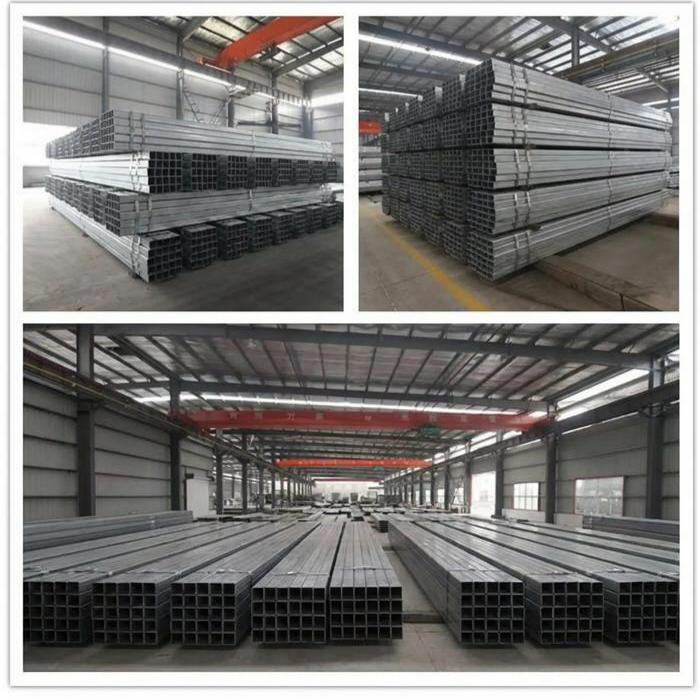
Square steel tubes
Corresponding Maintenance Measures:
Minor Rust: Sand down the rust layer with fine sandpaper, clean thoroughly, then apply a fresh coat of anti-rust paint or anti-rust oil;
Damaged Protective Coating: Thoroughly clean the damaged area, then reapply the anti-corrosion coating or anti-rust paint;
Severe Deformation or Cracks: Replace immediately to avoid compromising project safety; never continue using the product if it is damaged.
To truly extend the service life of square steel tubes, no complicated procedures are required—just follow these 5 key principles: Material Selection + Corrosion Protection + Storage + Damage Prevention + Maintenance. By ensuring standardized operations and thorough implementation across these 5 core areas, the service life of square steel tubes can be significantly extended—by as much as 30% to 50% or more. This not only reduces replacement costs but also ensures project safety and maximizes material value. If you are currently selecting materials for a project or wish to reduce long-term maintenance costs, please feel free to contact us. We would be happy to recommend the most suitable square steel pipe specifications and corrosion protection solutions for your needs.