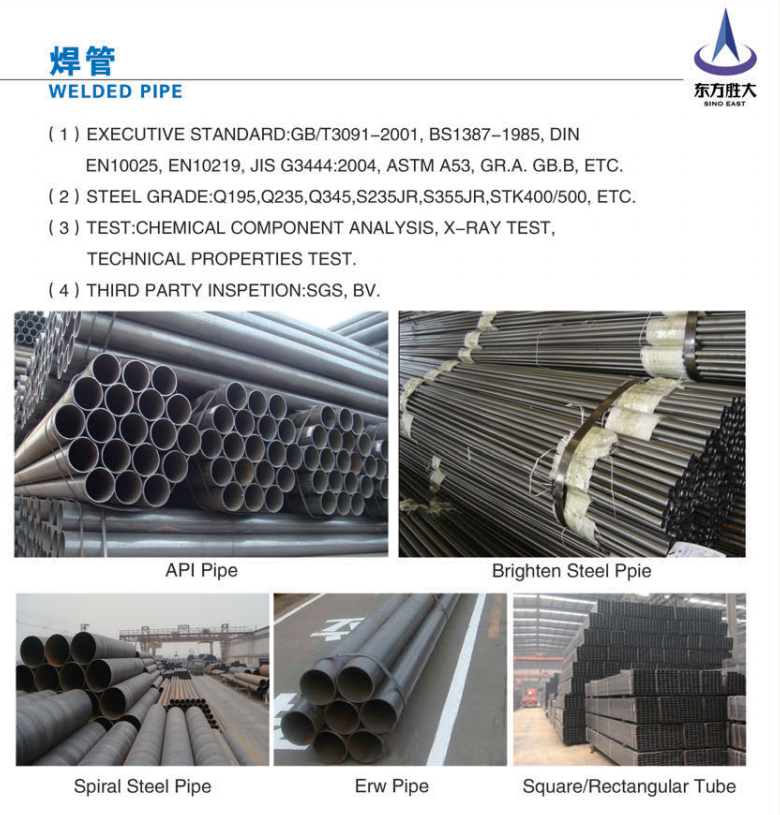
Types of Welded Pipe Manufacturing Processes Explained
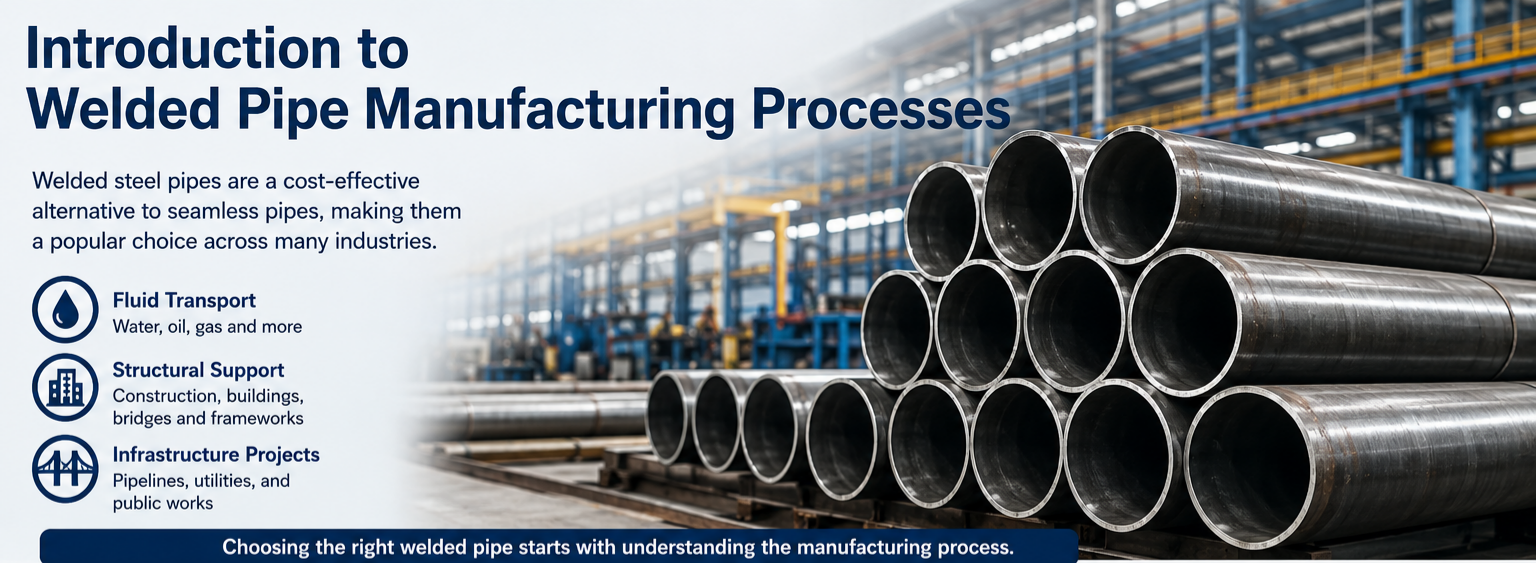 Introduction to Welded Pipe Manufacturing Processes
Welded steel pipes are a cost-effective alternative to seamless pipes, making them a popular choice across many industries. They play a vital role in fluid transport, structural support, and infrastructure projects worldwide. Whether for transporting water, oil, or gas, or providing structural strength, choosing the right welded pipe depends on understanding the various manufacturing process types.
Knowing the differences between processes like electric resistance welded (ERW), submerged arc welding (SAW), and furnace welded pipes helps ensure you select the best pipe for your specific pressure, corrosion resistance, and budget needs. The manufacturing method directly impacts the pipe’s strength, durability, and cost, which is why it matters so much in today’s complex supply chain. A clear grasp of these process types empowers you to make informed decisions—delivering reliable, high-quality welded steel pipes tailored to your project requirements.
Raw Materials and Preparation for Welded Pipe Manufacturing
Choosing the right raw materials is crucial for producing strong, durable welded steel pipes. Typically, manufacturers select steel coils or plates based on specific criteria such as thickness, width, and grade compatibility. For example, galvanized steel coils are popular for pipes that need corrosion resistance, and you can find high-quality options at galvanized steel suppliers.
Once the raw materials are selected, they undergo cutting, slitting, and edge preparation processes. Cutting ensures the steel sheet or coil is cut to the required length, while slitting involves dividing wide coils into narrower strips for easier handling. Edge preparation is equally important; it involves cleaning and shaping the edges to ensure a proper weld. Proper edge prep helps maintain weld integrity from the very first stage, reducing the risk of defects like porosity or incomplete fusion. This step is especially critical for high-frequency welded pipes (ERW), where the seam quality directly impacts the pipe’s strength and performance.
Overall, meticulous preparation of raw materials sets the foundation for producing high-quality welded pipes that meet industry standards such as ASTM A53 or API 5L.
Forming Processes: Creating the Pipe Body
Creating the pipe body is a key step in welded pipe manufacturing. Different forming methods shape the steel skelp or plate into a cylinder, setting the foundation for weld quality and pipe performance.
Common Forming Techniques
| Method | Description | Key Benefits |
|---|---|---|
| Roller forming | Steel strip passes through rollers to bend into a cylinder | Precise control, high speed, good for small to medium diameters |
| U-O-E (U-form, O-form, expansion) | Sequential shaping: U-shape, then O-shape, then expanded to full circle | Suitable for large diameters, minimizes residual stress |
| Continuous tube mill | Steel strip is continuously formed and welded in a single line | High efficiency, ideal for large-scale production |
How They Differ
- Roller forming is common for smaller pipes, offering tight control over dimensions.
- U-O-E forming is better for larger pipes, reducing residual stresses that can cause deformation.
- Continuous tube mills are the most efficient for mass production, shaping and welding in one seamless process.
Why It Matters
The way the steel is formed affects the pipe’s dimensional accuracy and residual stress levels. Proper forming ensures the pipe can meet strict standards like API 5L or ASTM A53, and reduces defects that could compromise strength or weld integrity.
Choosing the right forming process depends on your pipe size, production volume, and performance needs. For more details on steel pipe forming techniques, check out this resource.
Welding Processes: Core of Every Welded Pipe
The welding process is at the heart of producing welded steel pipes, and choosing the right method depends on the pipe’s application, size, and performance needs. Common welding techniques include Electric Resistance Welding (ERW), Submerged Arc Welding (SAW), furnace welding, and butt-weld (EFW). Each process has its unique heat source, filler material requirements, seam geometry, and typical size ranges.
Electric Resistance Welding (ERW) is widely used for smaller-diameter pipes, especially in water and structural applications. It uses electrical resistance heat generated between two contact points to fuse the steel edges. Variants like High-Frequency Welding (HFW) and Low-Frequency Welding (LFW) improve weld quality and speed, making ERW suitable for high-volume production. You can explore ERW pipe manufacturing for more details on this process.
Submerged Arc Welding (SAW) is ideal for large-diameter pipes, especially in oil and gas projects. It involves a continuously fed electrode submerged in a flux bath, providing deep penetration and strong welds. Variants include LSAW (Longitudinal Submerged Arc Welding) for straight seam pipes, and SSAW (Spiral Submerged Arc Welding) for spiral seam pipes, which are often chosen for their high production efficiency and ability to handle thicker walls.
Furnace welding and butt-weld (EFW) are other methods used for specific pipe sizes and specifications. Furnace welding involves heating pipe ends in a controlled environment before joining, suitable for high-pressure applications. Butt-welded pipes are common in structural and pressure vessel applications, offering excellent strength and weld integrity.
Each welding process is selected based on factors like pipe diameter, wall thickness, pressure ratings, and cost considerations. Understanding these differences helps in choosing the right process for your project, ensuring durability, compliance, and cost efficiency.
Post-Welding Treatments and Quality Controls
After welding, several critical steps ensure the welded steel pipe meets industry standards like API 5L, ASTM A53, and ASME specifications. These treatments and inspections help eliminate defects, improve strength, and guarantee long-term performance.
Normalizing and Heat Treatment
Normalizing involves heating the pipe to a specific temperature and then air cooling. This process refines the microstructure, relieving residual stresses from welding, and enhances toughness. Heat treatments like quenching and tempering may also be used for high-strength applications, especially in welded carbon steel pipes.
Cold Expansion
Cold expansion is often applied to increase the pipe’s diameter slightly, improving its pressure capacity and reducing the risk of stress corrosion. This process is common in high-pressure pipelines, ensuring the pipe’s integrity under demanding conditions.
Non-Destructive Testing (NDT)
NDT techniques are vital for detecting hidden flaws without damaging the pipe. Common methods include ultrasonic testing, radiographic inspection, and magnetic particle testing. These methods verify weld quality, seam integrity, and detect cracks, porosity, or inclusions early in the process.
- Ultrasonic testing uses high-frequency sound waves to identify internal flaws.
- Radiographic testing employs X-rays or gamma rays to visualize weld seams.
- Magnetic particle inspection detects surface and near-surface defects in ferromagnetic materials.
Meeting Industry Standards
These quality control steps are essential to meet rigorous standards like API 5L for line pipes, ASTM A53 for structural pipes, and ASME B31.1/B31.3 for pressure piping. Proper post-welding treatments and inspections ensure the pipe’s welds are durable, defect-free, and compliant with global safety and performance requirements.
For reliable welded pipe solutions that meet these standards, sourcing from reputable manufacturers with verified WPQR (Weld Procedure Qualification Records) is key. This guarantees your project benefits from high-quality, certified welded steel pipes suitable for a range of demanding industries.
Types of Welded Pipes Classified by Manufacturing Process
Welded pipes are mainly categorized based on their manufacturing process, which influences their seam orientation, size range, and production efficiency. The two primary types are straight-seam welded pipes and spiral-seam welded pipes.
Straight-seam welded pipes are made by welding a flat steel strip or skelp along its length to form a cylinder. They are typically used for smaller diameters and are common in applications like water supply and structural piping. These pipes often feature a longitudinal weld, which can be either high-frequency welded (HFW) or furnace welded (EFW).
Spiral-seam welded pipes, on the other hand, are formed by winding a steel strip into a helix and welding it along the spiral seam. This process allows for larger diameters and thicker walls, making them ideal for oil and gas pipelines. Spiral welds tend to be stronger and more flexible, which is beneficial in high-pressure environments.
In terms of dominant welding techniques, ERW (Electric Resistance Welding) is widely used for straight-seam pipes, especially in small to medium diameters. ERW offers high production efficiency and good weld quality, making it suitable for applications like water lines and structural pipes. For larger diameters, SAW (Submerged Arc Welding)—particularly LSAW (Longitudinal Submerged Arc Welding)—is preferred due to its ability to produce seamless, high-strength pipes.
Here’s a quick table:
| Seam Type | Weld Orientation | Typical Diameter Range | Main Manufacturing Method | Application Focus |
|---|---|---|---|---|
| Straight-seam | Longitudinal weld | Small to medium (up to 24 inches) | ERW, EFW | Water, structural, HVAC |
| Spiral-seam | Spiral weld | Large (up to 120 inches or more) | SSAW | Oil & gas, high-pressure pipelines |
Choosing the right type depends on your project needs—whether you prioritize cost, size, strength, or flexibility. Understanding these classifications helps ensure you select the right welded pipe for your specific pressure, corrosion, and budget requirements.
Key Advantages, Limitations, and Selection Criteria
Choosing the right welded pipe manufacturing process depends on balancing several factors like strength, weld quality, cost, and corrosion resistance. Each process type offers unique benefits and limitations, making some better suited for specific applications.
For example, ERW (Electric Resistance Welding) pipes are ideal for small-diameter water lines and structural uses because they provide good weld quality at a lower cost per ton. They’re quick to produce and have a consistent seam, making them a popular choice for many industries. On the other hand, LSAW (Longitudinal Submerged Arc Welding) pipes excel in large-diameter oil and gas pipelines due to their high strength and ability to handle high pressure, though they tend to be more expensive.
Spiral seam welded pipes (SSAW) are often used in applications requiring flexibility and large diameters, like water transmission or certain structural projects. They offer good corrosion resistance when coated properly but may have limitations in weld quality compared to straight-seam pipes.
When selecting a process, consider:
- Pressure and strength needs: High-pressure pipelines favor LSAW or furnace-welded pipes.
- Corrosion resistance: Coatings and material grade matter more than the welding process itself.
- Budget constraints: ERW pipes generally cost less and are suitable for less demanding applications.
- Size and dimension requirements: Larger diameters often require LSAW or SSAW processes.
Using an application-specific decision matrix helps clarify the best process for your project, ensuring you get the right balance of performance, durability, and cost. For detailed standards and process qualifications, it’s essential to verify compliance with industry norms like API 5L, ASTM A53, or ASME B31.1/B31.3. Properly matching the manufacturing process to your project’s needs guarantees reliable, long-lasting welded steel pipes.
Standards, Certifications, and Compliance for Welded Pipe Manufacturing
When choosing welded steel pipes, it’s crucial to ensure they meet the right standards and certifications. These guidelines guarantee that the pipes are reliable, safe, and suitable for your specific application. Common standards include ASTM, API 5L, and ASME B31.1/B31.3, which set the benchmarks for quality, strength, and safety in welded pipe manufacturing. For international projects, ISO standards also play a key role in ensuring compliance across borders.
Manufacturers are required to maintain traceability records, such as weld procedure qualification records (WPQR) and heat numbers. These documents verify that each batch of pipe has been produced following approved welding procedures and quality controls. Before purchase, always check these records to confirm the pipe’s compliance with relevant standards like ASTM A53 or API 5L, especially for critical applications like oil and gas pipelines or structural support.
Ensuring your welded pipe supplier provides proper certification and traceability helps prevent issues related to weld quality and material integrity. It’s a good practice to request verification of WPQRs and heat treatment records, which serve as proof that the manufacturing process adheres to industry standards. This step is essential for projects demanding high safety and performance levels, giving you peace of mind that your pipes will perform reliably under pressure and corrosive environments.
Application Industries and Real-World Uses of Welded Pipes
Welded steel pipes are everywhere, powering many industries around the world. You’ll find them in oil and gas pipelines, where their strength and weld quality are critical for safety and durability. For municipal water systems, welded pipes provide a cost-effective way to transport clean water over long distances. In construction, they’re used for structural scaffolding and support frames, thanks to their reliable strength and ease of installation.
HVAC systems often rely on welded carbon steel pipes for heating and cooling networks, while the automotive industry uses them for exhaust systems and other structural components. Energy transmission, including power plants and renewable energy setups, also depends heavily on welded pipes, especially those made through LSAW and ERW processes, which can handle high pressures and large diameters.
A recent case study in the oil and gas sector highlighted how choosing the right process—like LSAW for large-diameter pipelines—can make or break a project. Proper process selection ensures the pipe meets pressure ratings, resists corrosion, and stays within budget. Conversely, using the wrong type of welded pipe or manufacturing process can lead to leaks, failures, and costly delays.
Understanding these industry needs and how manufacturing processes align with project demands helps ensure success. Whether it’s a small municipal water line or a major pipeline, selecting the right welded pipe process is key to delivering reliable, long-lasting results.
Future Trends and Innovations in Welded Pipe Manufacturing
The welded pipe manufacturing industry is constantly evolving, driven by new technologies that boost performance, efficiency, and sustainability. Automation is playing a big role, with robotic welding and computer-controlled processes reducing human error and increasing production speed. Digital twin technology is also gaining ground, allowing manufacturers to simulate and monitor the entire welding process in real time, which helps catch defects early and optimize quality control.
High-strength low-alloy (HSLA) grades are becoming more popular, offering better strength and corrosion resistance without significantly increasing costs. This is especially useful for demanding applications like oil & gas pipelines or structural projects. Plus, sustainability is a big focus—recycling scrap steel and using eco-friendly materials are helping manufacturers reduce their environmental footprint.
Emerging technologies are pushing the boundaries of what welded pipe can do, making them more reliable, cost-effective, and adaptable to future needs. For example, innovations like high-frequency welding and advanced heat treatment methods are improving weld quality and extending pipe lifespan. As these trends develop, sourcing verified, certified welded steel pipes from reputable producers will be more important than ever to ensure compliance and performance in critical projects.
Choosing the Right Manufacturing Process for Your Project
Selecting the best welded pipe manufacturing process depends on your specific project needs—whether it’s pressure, corrosion resistance, size, or budget. For small-diameter water lines or structural applications, electric resistance welded (ERW) pipes are often the most cost-effective and efficient choice. On the other hand, large-diameter oil and gas pipelines typically benefit from submerged arc welding (SAW) or LSAW methods, which deliver high strength and durability for demanding conditions.
Here’s a quick guide to help you match the process with your project requirements:
| Application | Recommended Process | Key Features |
|---|---|---|
| Small-diameter water lines | ERW | Cost-effective, high efficiency, good weld quality |
| Large-diameter oil & gas | LSAW | High strength, suitable for high-pressure pipelines |
| Structural support | Spiral seam welded pipe | Flexibility in size, good for scaffolding and structural uses |
| General purpose | Furnace welded or butt-welded pipe | Versatile, reliable, meets strict standards |
Always source your welded steel pipes from reputable producers who provide verified, certified products. Check for compliance with standards like API 5L, ASTM A53, and ASME B31.1/B31.3 to ensure quality and safety. Properly selected manufacturing processes not only meet your project specs but also help optimize costs and performance.
If you’re unsure which process best fits your needs, consulting with experienced suppliers can make a big difference. They can guide you through the selection, ensuring you get the right pipe for pressure, corrosion resistance, and budget constraints.
For more insights on certified welded steel pipes, visit welded steel pipe standards and certifications. Making the right choice now sets your project up for success and long-term reliability.
Frequently Asked Questions (FAQ)
What are the main differences between ERW and LSAW welded pipes?
ERW (Electric Resistance Welding) pipes are typically produced for smaller diameters and thinner walls. They are made using high-frequency welding, making them cost-effective and suitable for applications like water lines and structural supports. In contrast, LSAW (Longitudinal Submerged Arc Welding) pipes are designed for large diameters and thicker walls, often used in oil and gas pipelines. They are formed from a thick steel plate and welded along the length of the pipe using submerged arc welding, which provides high strength and durability.
How thick can welded steel pipes be?
Wall thickness limits depend on the manufacturing process. ERW pipes are generally limited to thinner walls, around 3/8 inch (10 mm), due to the welding method. LSAW pipes can have much thicker walls, exceeding 1 inch (25 mm), making them ideal for high-pressure applications. For very thick walls or specialized needs, furnace welded or butt-welded pipes might be used instead.
When is seamless pipe still necessary despite higher costs?
Seamless pipes are often chosen for high-pressure, high-temperature, or critical applications where weld integrity is a concern. They are made without any weld seam, offering superior strength and uniformity. Despite the higher cost, seamless pipes are preferred in industries like aerospace, power generation, and certain oil and gas projects where safety and performance are paramount.
Are welded pipes compliant with industry standards?
Yes, welded pipes can meet strict standards such as API 5L, ASTM A53, and ASME B31.1/B31.3, provided they undergo proper weld procedures and quality controls. Verifying the weld procedure qualification records (WPQR) and heat numbers ensures compliance and traceability.
Can I choose the right welded pipe for my project easily?
Absolutely. Understanding the differences between process types, sizes, pressure ratings, and corrosion resistance helps in selecting the best pipe. For example, ERW pipes are great for small-diameter water lines, while LSAW pipes excel in large-diameter oil & gas pipelines. Consulting with reputable manufacturers and reviewing their certifications can make the decision smoother.
If you’re interested in specific process details or standards, you might find this resource on welded steel pipe applications helpful.
Related Resources and Further Reading
For those looking to deepen their understanding of welded pipe manufacturing processes, there are plenty of valuable resources available. Standards like ASTM A53 and API 5L provide detailed specifications for welded steel pipes, ensuring quality and consistency across industries. Supplier guides can help you choose the right process and product for your specific project, whether it’s for oil & gas, water systems, or structural applications. Additionally, white papers on topics such as high-frequency welded pipe (ERW) and submerged arc welding (SAW) offer insights into the latest innovations and best practices.
If you’re interested in exploring more about the standards that govern welded pipe quality, this resource offers a comprehensive overview. For technical details on specific pipe grades and manufacturing methods, consulting white papers and supplier guides can help you make informed decisions and ensure compliance with global standards.