
Tips for Efficient Procurement of Square Steel Tubes
As a core structural material in construction, machinery manufacturing, logistics equipment, and steel structure construction, square steel tubes have become an essential material in industrial and infrastructure sectors due to their high load-bearing capacity, ease of processing, and wide range of specifications. The quality of these materials directly impacts project safety, cost control, and construction efficiency. Whether you are a contractor, manufacturer, or individual buyer, mastering sound procurement principles can help you avoid quality risks while maximizing cost savings.

Sino East Steel Group
1.Core Fundamentals of Square Steel Tubes
Square steel tubes (including square and rectangular cross-section tubes) are hollow profiles formed through hot-rolling or cold-rolling. Their material, manufacturing process, and specifications directly determine their applicable scenarios. Thoroughly understanding these basic parameters in advance helps avoid selection errors.
A. Core Characteristics
Excellent mechanical properties: The square cross-section distributes stress evenly, offering outstanding resistance to bending, compression, and torsion, making it suitable for load-bearing structures;
High processing adaptability: Easily cut, welded, drilled, and bent to meet customized fabrication needs;
Wide range of applications: Covers fields such as building scaffolding, mechanical frameworks, logistics shelving, curtain wall structures, and guardrail fabrication.
B. Key Parameter Categories
| Parameter Category | Specifications/Types | Application Notes/Features |
| Cross-Section Specifications | Square: 20×20 mm, 40×40 mm, 50×50 mm, 100×100 mm | Meets diverse structural and design requirements; custom specifications are flexible and adaptable |
| Rectangular: 30×50 mm, 80×120 mm (customizable) | ||
| Wall Thickness Range | 1 mm–10 mm | Thin-walled: Decorative or lightweight structures |
| Thick-walled tubes: Heavy-duty load-bearing applications | ||
| Surface Finishes | Hot-rolled | High cost-effectiveness, sufficient strength, commonly used for general-purpose structures |
| Cold-rolled | High precision, smooth surface, suitable for precision structures | |
| Galvanized (Hot-dip galvanized / Electro galvanized) | Rust-proof and corrosion-resistant, suitable for outdoor or humid environments | |
| Main Materials | Carbon Steel (Q235B, Q355B) | The general-purpose choice, moderate strength, high cost-effectiveness |
| Stainless Steel (304/316) | Strong corrosion resistance, suitable for applications requiring strict corrosion protection | |
| Galvanized Steel | Specifically designed for outdoor and humid environments, offering durable corrosion protection |
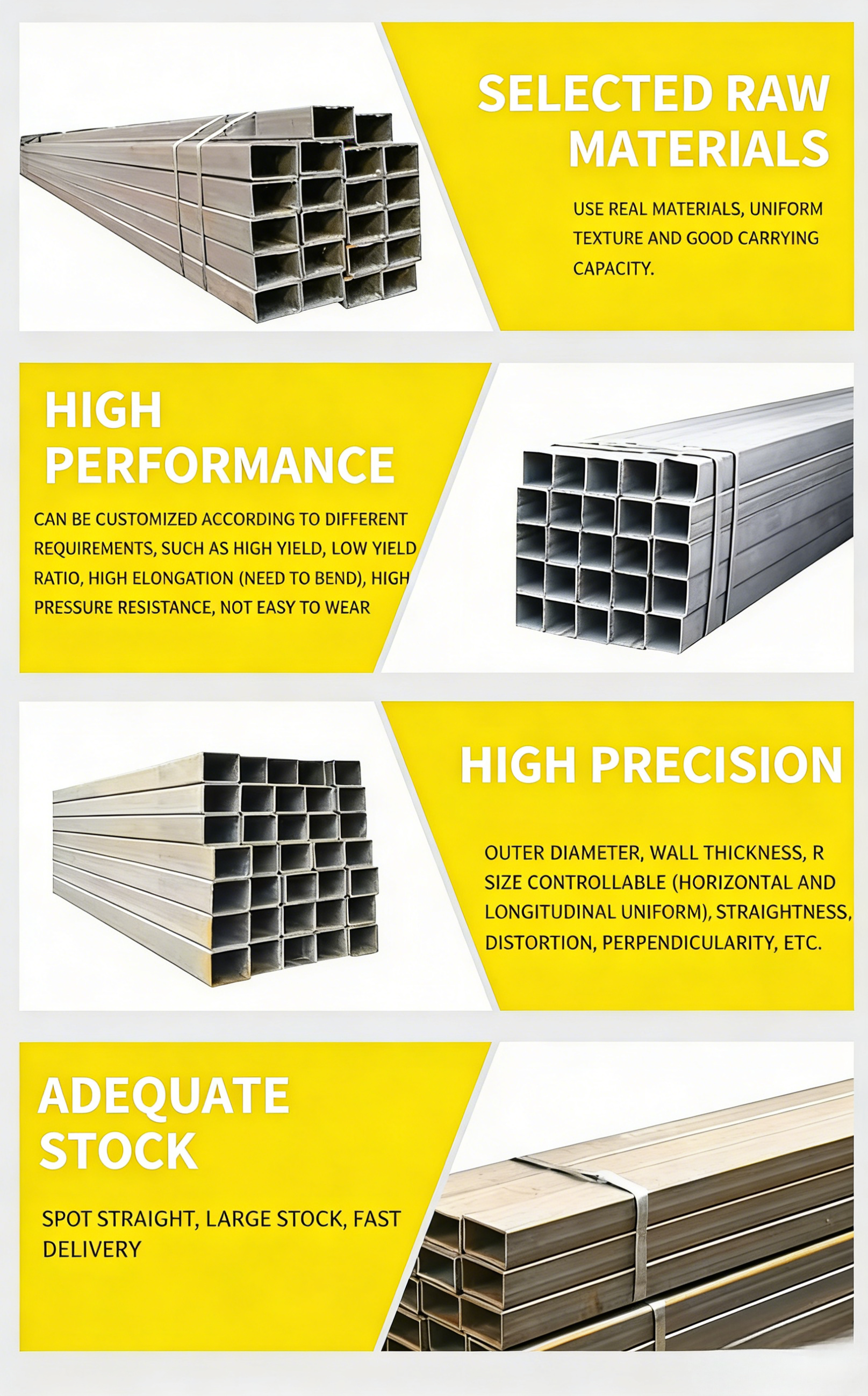
Square steel tubes
2. Pre-Purchase Planning
Clearly defining core requirements before purchasing is key to avoiding waste and ensuring compatibility. Follow these three steps to identify the optimal solution.
A. Define the Application Scenario to Guide Selection
Different application scenarios have vastly different requirements for materials, processes, and precision. Precise matching prevents unnecessary spending:
Outdoor / Humid Environments: Prioritize hot-dip galvanized square steel tubes and 304 stainless steel tubes for strong corrosion and rust resistance, extending service life;
Heavy-duty load-bearing structures: Select Q355B carbon steel with increased wall thickness to ensure load-bearing capacity and structural stability;
Precision mechanical components: Choose cold-rolled steel for tight dimensional tolerances, a smooth surface, and excellent weld-ability;
Decorative structures: Emphasize surface treatment to ensure a scratch-free, rust-free, and visually smooth finish.
B. Accurate Determination of Specifications and Quantities
To avoid material shortages that delay schedules or excess inventory that ties up capital, the following must be clarified:
Core Parameters: Cross-sectional dimensions, wall thickness, fixed-length sizes (typically 6m/9m/12m);
Quantity Calculation: Actual usage + reasonable reserve quantity (to account for cutting and construction losses);
Customization Requirements: Whether further processing such as pre-cutting, punching, bending, or welding is required.
C. Market Research and Budget Control
Steel prices fluctuate significantly due to raw material market conditions, specifications, material grades, and transportation costs. Plan ahead by:
Researching current market average prices and distinguishing price differences between standard and non-standard products;
Comprehensive cost calculation: base price + transportation fees + processing fees + taxes, to avoid low-price traps;
Monitoring steel market trends to identify optimal purchasing opportunities and mitigate price volatility risks.
3. Selecting High-Quality Suppliers: Ensuring Stable Supply, Guaranteeing Quality, and Reducing Risk
A. Production Qualifications and Quality Control Capabilities
Possess a complete production line (not merely a middleman reseller) to ensure stable supply;
Hold ISO 9001 quality management system certification and product conformity certificates; able to provide original material certificates and third-party test reports;
Maintain standardized quality inspection procedures, controlling every stage from raw materials to finished products to eliminate issues such as insufficient wall thickness or material adulteration.
B. Industry Reputation and Track Record
Review evaluations from past clients and project case studies; prioritize suppliers with experience in similar projects;
Verify supply capacity to ensure they can meet bulk purchase, urgent order, and custom processing requirements.
C. After-Sales Support and Risk Protection
Clear return and exchange policies: full refunds or replacements for quality issues; procedures for handling dimensional deviations exceeding tolerance limits;
Technical support: product selection advice and processing guidance to enhance procurement convenience.
4. Standardized Procurement Process
Standardize the procurement process with end-to-end management from quotation requests to inventory receipt, ensuring compliance and efficiency in procurement.
A. Multi-Channel Quotation and Price Comparison
Request quotations from reputable suppliers, clearly specifying specifications, materials, quantities, surface finishes, delivery locations, and lead times;
Comparison criteria: unit price, taxes, shipping costs, payment terms, and warranty period—do not simply choose the lowest price.
B. Sample Testing First
For large-volume purchases or special specifications/materials, always request samples first;
Test samples for: dimensional tolerances, wall thickness accuracy, surface quality, weld quality, and material hardness; place bulk orders only after confirming compliance.
C. Standardized Procurement Contract Signing
Ensure contract terms are clear and explicit; eliminate verbal agreements. Key content:
Product Specifications: Detailed down to material, specifications, wall thickness, length, quantity, and surface treatment;
Pricing and Delivery: Unit price, total price, delivery time, shipping method, and delivery address;
Quality Standards: Specify national or enterprise standards, tolerance ranges, and quality inspection criteria;
Division of Responsibilities: Handling of quality issues, late delivery, returns and exchanges, and liability for breach of contract.
5. Answers to Frequently Asked Questions About Procurement: Avoiding Common Pitfalls
A. Is a thicker wall thickness always better for square steel tubes?
Not necessarily. Selection should be based on load-bearing requirements and application scenarios: excessive thickness increases procurement costs and self-weight, while insufficient thickness fails to meet load-bearing capacity. Selecting the appropriate specification based on actual needs is the optimal solution.
B. Why are there significant price differences for square steel tubes of the same specification?
Key differences: Material (Q235B vs. Q355B), manufacturing process (GB standards vs. non-standard), surface treatment (galvanized vs. plain), raw material quality, and manufacturer quality control. Low-priced products often suffer from issues such as insufficient wall thickness, substandard material, and thin anti-corrosion coatings.
C.How to choose between galvanized square steel tubes and plain carbon steel square tubes?
Plain carbon steel square tubes: High cost-effectiveness, suitable for indoor, dry environments, and temporary structures;
Galvanized square steel tubes: The galvanized coating provides rust protection, making them the top choice for outdoor, underground, and humid environments; hot-dip galvanizing offers a longer corrosion-resistant lifespan than electro galvanizing.
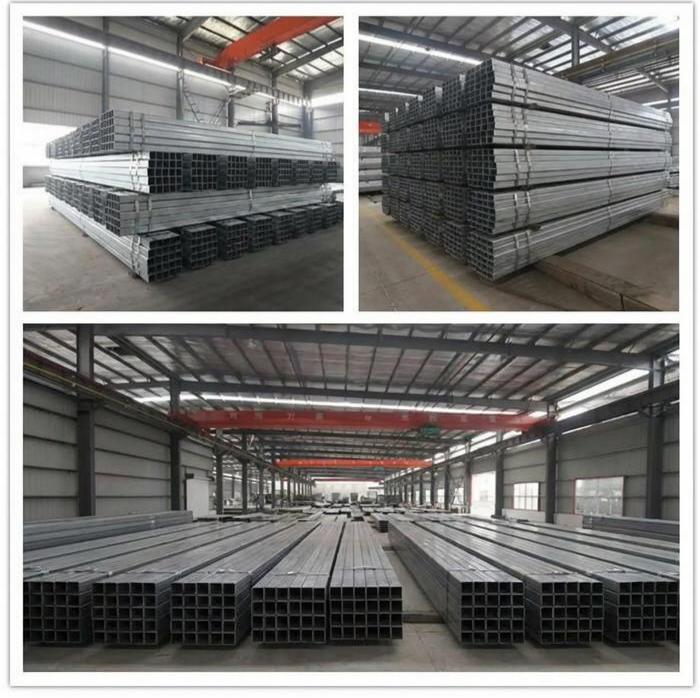
Square steel tubes
Purchasing square steel tubes is not simply a matter of “comparing prices and placing an order”; rather, it involves a comprehensive decision-making process that includes matching requirements, screening suppliers, ensuring quality control, and managing costs. If you are planning to purchase square steel tubes, please feel free to contact us.