
Welded and Seamless Pipe Applications Across Industries
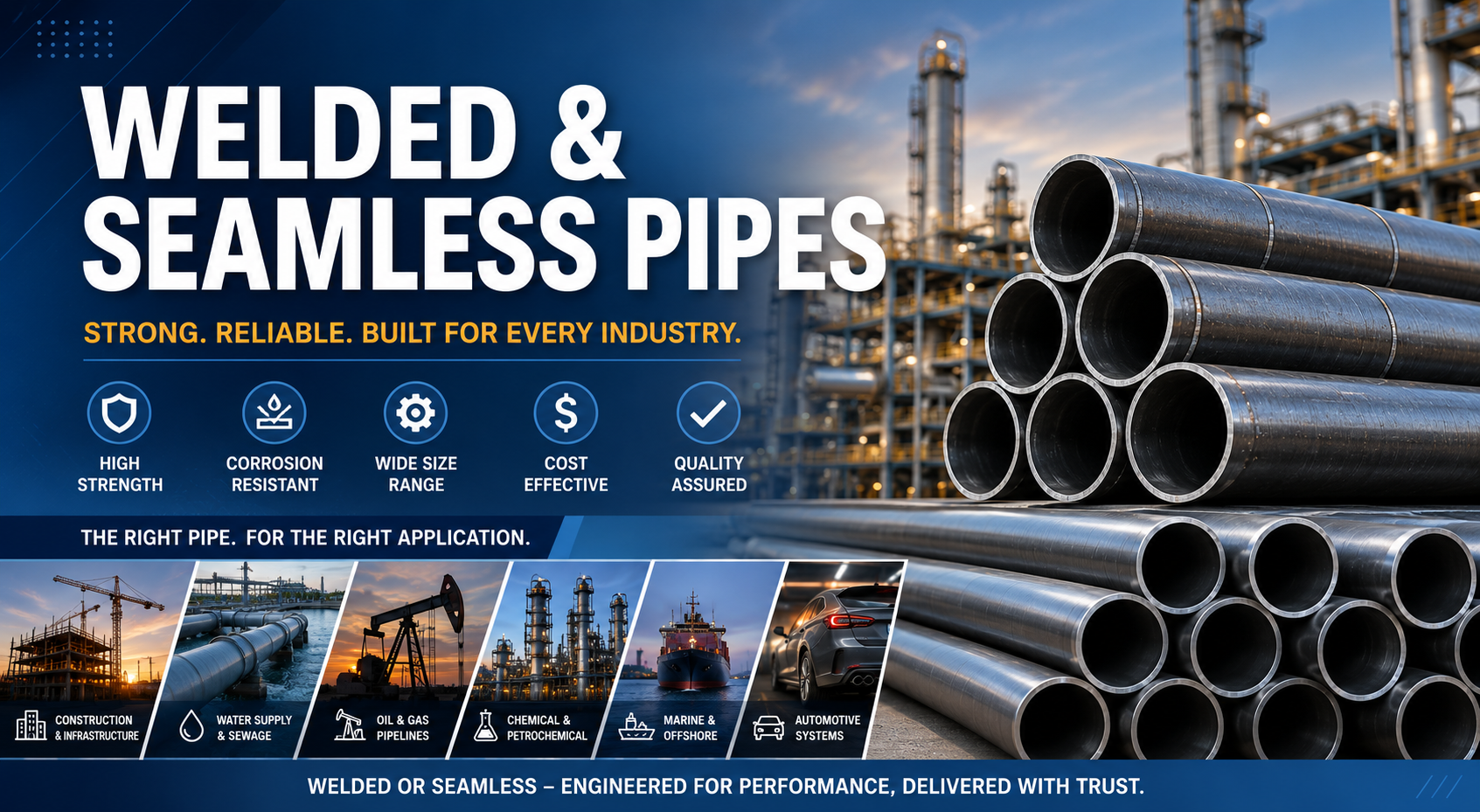
Key Specifications of Welded and Seamless Pipes
When I compare welded and seamless pipes, I usually start with four things: material, size, standard, and project needs. Those details decide how the pipe performs, how much it costs, and where it fits best.
Material Options
The most common material choices for industrial steel pipe uses are below:
| Material | Best For | Key Benefit |
|---|---|---|
| Carbon steel | Oil and gas steel pipelines, construction pipe applications, general service | Strong, cost-effective, widely available |
| Stainless steel | Chemical process piping, food-grade lines, marine and offshore piping | Corrosion resistance and clean service |
| Alloy steel | High-pressure seamless pipe, power plant piping systems, boiler tubes and heat exchangers | Better strength at high temperature and pressure |
A quick rule I use:
- Carbon steel welded pipe is often the most practical option for large systems.
- Stainless steel seamless pipe is common where corrosion resistance matters more.
- Alloy steel is a better fit when pressure, heat, or fatigue is a concern.
Standard Size Ranges
Welded and seamless pipe applications usually cover a wide range of diameters and wall thicknesses.
| Specification | Typical Range |
|---|---|
| Outer diameter | Small tubing sizes to large line pipe diameters |
| Wall thickness | From thin wall to heavy wall schedules |
| Length | Standard random lengths or custom cut lengths |
In practice, the size depends on the job:
- Small diameters are common in hydraulic and automotive tubing.
- Medium and large diameters are common in pipeline and structural steel pipes.
- Heavy wall pipes are often used in high-pressure seamless pipe service.
- Longer lengths help reduce field welds in industrial pipeline solutions.
Common Standards
Most buyers and engineers ask me about certification first. The main pipe standards are:
- ASTM for general industrial and structural pipe use
- API for oil and gas steel pipelines and API 5L line pipe applications
- DIN for European and international industrial projects
- ISO for global quality and process consistency
Common examples include:
- ASTM A106 seamless pipe for high-temperature service
- API 5L for line pipe applications
- DIN and ISO specs for cross-border procurement and project standardization
Custom Pipe Specifications
For many projects, standard sizes are not enough. I often see buyers request custom size steel pipes to match the system exactly.
Custom options can include:
- Special diameter and wall thickness
- Exact cut length
- End finish: plain, beveled, or threaded
- Coating or corrosion protection
- Heat treatment or special testing
- Tight tolerances for critical welded pipe applications
This matters when you need:
- Industrial pipeline solutions with fewer field changes
- Better fit for construction pipe applications
- A safer match for seamless pipe for refineries
- Faster installation in large B2B projects
What I Check First
Before selecting welded or seamless pipe, I always confirm:
- Operating pressure and temperature
- Fluid or media type
- Corrosion risk
- Required standard
- Installation method
- Lead time and budget
That simple check helps narrow the choice fast and keeps the project aligned with real site conditions.
Welded and Seamless Pipe Applications Across Industries
Welded and seamless pipes are vital in many industries due to their strength, durability, and versatility. They are widely used in oil and gas pipelines and flowlines, where high-pressure resistance is crucial. For these applications, seamless pipes are often preferred because they can handle extreme pressures and corrosive environments better. You can explore options like API 5L line pipe applications for such demanding uses.
In construction and infrastructure projects, welded pipes are common for structural steel applications, offering cost-effective solutions for large-scale projects. These pipes support bridges, buildings, and other infrastructure needs. For automotive systems, welded pipes are used in exhaust and fluid transfer systems, providing reliable performance with easier customization.
Power generation plants rely on high-quality boiler tubes and piping systems made from seamless steel pipes to withstand high temperatures and pressures. Chemical and petrochemical industries use both welded and seamless pipes for process piping, where safety and chemical resistance are critical.
Food, pharma, and sanitary applications demand corrosion-resistant, hygienic piping systems. Seamless pipes are often chosen here for their smooth internal surface, reducing contamination risks. Marine and offshore industries also depend on welded and seamless pipes for their durability against harsh seawater conditions, ensuring long-term performance in offshore rigs and ships.
Welded vs Seamless Pipes: Comparative Analysis
When choosing between welded and seamless pipes, understanding their strength and pressure ratings is essential. Seamless pipes typically offer higher strength and better pressure resistance, making them ideal for high-pressure applications like oil and gas pipelines or boiler tubes. Welded pipes, on the other hand, are often suitable for less demanding uses but can be more cost-effective for large-scale projects.
Cost is another key factor. Seamless pipes generally cost more due to their manufacturing process, which involves more steps like hot rolling and cold drawing. Welded pipes tend to be cheaper and quicker to produce, especially when custom sizes are needed. For projects with tight budgets, welded solutions often make sense.
Knowing when to choose seamless pipes is crucial. They are best for critical applications requiring high pressure, temperature stability, or corrosion resistance—such as chemical processing or power plant piping. Their durability and performance justify the higher cost.
Conversely, welded pipes are a better fit for large infrastructure projects, construction, or structural steel applications where cost savings and quick fabrication are priorities. They are widely used in building frameworks and water systems.
Industry-specific recommendations help guide the decision. For example, in oil and gas industries, seamless pipes are preferred for line pipes due to their superior strength and reliability. In construction, welded pipes are common for structural purposes because they are easier to produce in large quantities and can be customized quickly.
Overall, selecting between welded and seamless pipes depends on the project’s pressure, temperature, and budget needs. Both types have their advantages, so understanding the application requirements is key to making the right choice.
Benefits of Welded and Seamless Steel Pipes
When I choose between welded pipe applications and seamless pipe applications, I look at pressure, cost, lead time, and how long the system needs to stay in service. For global projects, the right mix often saves money without giving up safety.
High-Pressure Service
Seamless pipe is the stronger pick for high-pressure seamless pipe service. Because there is no weld seam, it gives stable performance in demanding work.
- Better fit for API 5L line pipe applications and ASTM A106 seamless pipe use
- Strong option for heat, pressure, and vibration
- Good choice for refineries, power plant piping systems, and chemical process piping
- Lower risk of seam-related weak points
Welded Pipe Value
Welded pipe gives strong value for large industrial steel pipe uses, especially when the project needs volume and fast supply.
- Lower cost than most seamless pipe options
- Easier to source in custom size steel pipes
- Widely used for welded pipe for infrastructure and construction pipe applications
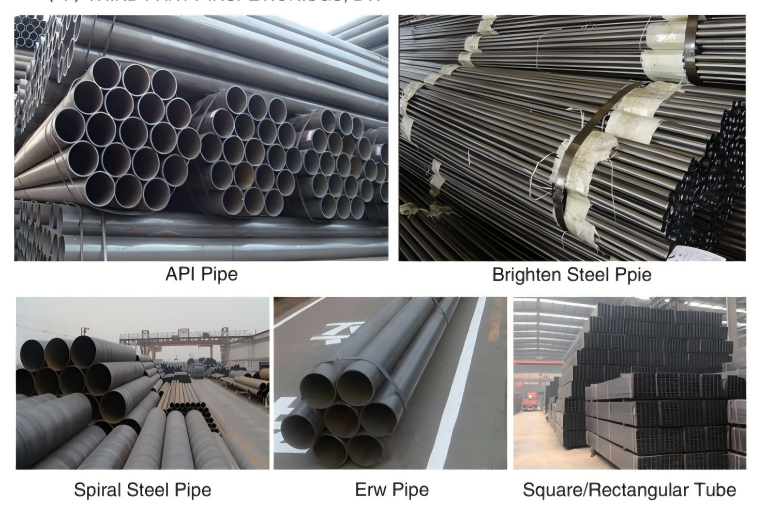
- Common in ERW steel pipe uses, LSAW and SSAW pipes, and structural steel pipes
Quick Comparison
| Item | Seamless Pipe | Welded Pipe |
|---|---|---|
| Pressure service | Stronger for critical high-pressure work | Good for many standard systems |
| Cost | Higher | Lower |
| Availability | More limited in some sizes | Easier for large orders |
| Lead time | Often longer | Usually faster |
| Best use | Oil and gas steel pipelines, boilers, refineries | Construction, utilities, general industrial piping |
Life and Reliability
I also look at long-term service, not just the first purchase price. The right pipe choice can reduce downtime and failures.
- Seamless pipe often helps in high-stress and corrosion-resistant pipe systems
- Welded pipe can lower project cost without hurting performance in normal service
- Better material matching improves lifecycle cost
- Less rework means fewer shutdowns and lower maintenance
My Practical Rule
For critical pressure lines, I lean toward seamless pipe for refineries, power plant piping systems, and boiler tubes and heat exchangers. For big projects with standard loads, I usually choose welded pipe applications because they are easier to buy, install, and replace.
The best choice depends on:
- Pressure and temperature
- Fluid or gas media
- Corrosion risk
- Budget and delivery time
- Maintenance plan and service life
Bottom Line
A good seamless vs welded pipe comparison is not about one being always better. It is about matching the pipe to the job. When I select the right industrial pipeline solutions early, I cut failure risk, keep the system stable, and reduce downtime over the full project life.
Manufacturing Processes for Welded and Seamless Pipes
I look at the pipe making process first because it shapes performance, cost, and lead time. For welded and seamless pipes, the right method depends on pressure, media, size, and project budget.
Seamless Pipe Production
Seamless pipe applications usually need strong, clean pipe walls with no weld seam. The main methods are:
- Hot rolling – A solid billet is heated and pierced, then rolled into pipe form.
- Cold drawing – The pipe is pulled through dies to improve size control and surface finish.
- Extrusion – The material is forced through a die to create a uniform pipe shape.
For high-pressure seamless pipe service, I often compare the service limits and lifecycle value against the advantages of using seamless steel pipes. This is common in ASTM A106 seamless pipe, refineries, boilers, and other demanding industrial steel pipe uses.
Welded Pipe Production
Welded pipe applications are built from steel plate or strip that is formed and joined along a seam. Common processes include:
- ERW – Electric resistance welding, often used for fast production and stable dimensions.
- LSAW – Longitudinal submerged arc welding, used for larger diameter pipe.
- SSAW – Spiral submerged arc welding, often chosen for long runs and big infrastructure jobs.
When I need a clear breakdown of the welded steel pipe manufacturing process, I focus on seam quality, wall control, and how the method fits the job. This matters a lot in welded pipe for infrastructure, API 5L line pipe applications, and large construction pipe applications.
How Process Affects Performance
| Process | Main Strength | Best Fit |
|---|---|---|
| Seamless | No weld seam, strong pressure handling | High-pressure and critical service |
| ERW | Cost-effective, fast to make | Standard lines, ERW steel pipe uses |
| LSAW | Good for large diameters | Oil and gas steel pipelines |
| SSAW | Flexible for long-distance projects | Structural and utility pipe runs |
In practice, the manufacturing method affects strength, pressure ratings, surface finish, and dimensional accuracy. Seamless pipe for refineries usually fits critical service better, while welded pipe for infrastructure works well when size and cost matter more.
Quality Checks During Production
I also check quality testing for steel pipes before release. Typical checks include:
- Dimensional inspection for diameter, wall thickness, and length
- Hydrostatic testing for pressure integrity
- Ultrasonic and other non-destructive testing for hidden defects
- Visual inspection of welds, ends, and surface condition
- Traceability checks for heat numbers, certificates, and standards
These checks help me match pipe standards ASTM and API with real project needs. They also reduce failures, cut downtime, and improve long-term reliability in industrial piping procurement.
Why It Matters
A good pipe manufacturing process gives me better control over safety, delivery, and total project cost. For local and global customers alike, that means fewer surprises and a better fit for the final application.
Quality Assurance for Welded and Seamless Pipe Applications
I treat quality control as part of the product, not an add-on. For welded and seamless pipe applications, the right checks protect safety, improve service life, and keep project risk low across industrial pipeline solutions.
Testing Methods
| Test method | What I check | Why it matters |
|---|---|---|
| Hydrostatic testing | Pressure holding and leak resistance | Confirms the pipe can handle real service loads |
| Ultrasonic testing | Wall soundness and hidden defects | Helps find flaws before delivery |
| Non-destructive testing | Weld quality, surface issues, and internal defects | Keeps the pipe usable while still verifying integrity |
These checks are important for carbon steel welded pipe, stainless steel seamless pipe, and high-pressure seamless pipe used in oil and gas steel pipelines, power plant piping systems, and chemical process piping.
Standards And Compliance
I always look for clear compliance with the right pipe standards ASTM and API, especially:
- API 5L for line pipe applications
- ASTM A106 for seamless pipe in high-temperature service
- Other project-specific requirements under DIN and ISO
For buyers comparing specifications, I also keep a close eye on the pipe manufacturing process ERW and on seamless vs welded pipe comparison details, because the standard alone does not tell the full story.
Traceability And Certification
Traceability matters in industrial piping procurement. I want full mill test reports, heat numbers, size records, and third-party inspection documents when needed. That is especially important for:
- API 5L line pipe applications
- seamless pipe for refineries
- corrosion-resistant pipe systems
- marine and offshore piping
If you want a quick refresher on basic pipe and steel categories, I also use this guide to the three major steel types: shapes, sheets, and pipes when matching material choices to project specs.
Why Quality Control Matters
Good quality control reduces failures, downtime, and repair costs. In my experience, it also helps with:
- safer operation under pressure and temperature changes
- longer life for welded and seamless steel pipes
- lower maintenance in industrial steel pipe uses
- better performance in boiler tubes and heat exchangers
- fewer surprises during installation and commissioning
For global customers, this is not just about passing inspection. It is about getting a pipe that fits the job, ships with the right documents, and performs the same way in the field as it did in the mill.
Welded and Seamless Pipe Applications Across Industries
Oil and Gas Projects
In oil and gas steel pipelines, I usually see seamless pipe used for high-pressure sections, flowlines, and other critical runs. It handles stress well, which is why it fits API 5L line pipe applications and other demanding industrial pipeline solutions.
Construction Pipe Applications
For buildings, bridges, and site frames, I often choose welded structural steel pipes because they are practical for large projects and easier to source in custom size steel pipes. For long-span work, I also look at spiral welded pipe solutions when the project needs volume, steady quality, and better cost control.
Power Plant and Refinery Systems
In power plant piping systems and refinery lines, I usually see a mixed setup. Seamless pipe goes into high-pressure seamless pipe sections, boiler tubes, and hot service lines, while carbon steel welded pipe covers larger, lower-risk runs. When corrosion is part of the picture, I also review stainless steel pipe selection factors to keep the system reliable over time.
Lessons From Real Projects
- Use seamless pipe for critical service, high pressure, and temperature-sensitive media.
- Use welded pipe for large projects, long runs, and better cost efficiency.
- Match the pipe to the job, not just the price tag.
- Ask for clear traceability, testing, and certification before shipment.
- Plan early for industrial steel pipe uses that need custom lengths, wall thickness, or coating.
Best Practices
I always recommend checking pressure, temperature, corrosion resistance, and installation method before choosing between seamless vs welded pipe. That simple step helps reduce downtime, avoid failures, and keep maintenance under control across global industrial projects.
Welded and Seamless Pipe Applications FAQ
When I work on welded and seamless pipe applications, I usually start with four things: pressure, temperature, media, and project timing. That keeps the pipe choice practical for global industrial steel pipe uses, from API 5L line pipe applications to ASTM A106 seamless pipe projects.
Key Difference
| Item | Welded Pipe | Seamless Pipe |
|---|---|---|
| Main use | Large-volume welded pipe for infrastructure and general service | High-pressure seamless pipe for critical service |
| Strength | Good for most industrial pipeline solutions | Stronger choice for higher pressure and temperature |
| Cost | Usually lower and easier to source | Usually higher due to the manufacturing process |
| Lead time | Often faster for custom size steel pipes | Can take longer, especially for special grades |
| Best fit | Construction pipe applications, ERW steel pipe uses, long runs | Refineries, power plant piping systems, boiler tubes and heat exchangers |
In simple terms, I use welded pipe when the job needs scale and value, and seamless pipe when safety margin matters more than price.
Where Seamless Pipe Is Used Most
The most common industries using seamless pipe applications are:
- Oil and gas steel pipelines and flowlines
- Chemical process piping and petrochemical plants
- Power generation piping systems and boiler tubes
- Refineries and high-temperature service
- Hydraulic and automotive tubing
- Marine and offshore piping
- Food, pharma, and sanitary pipe applications
For corrosive or clean service, I often look at stainless steel seamless pipe options first. For heavy-duty general service, carbon steel welded pipe is often the better fit.
Lead Times And Custom Options
Typical lead times depend on size, grade, and test requirements. In my experience:
- Standard welded pipe orders move faster
- Seamless pipe can take longer, especially for large diameters or tight tolerances
- Custom welded and seamless pipe orders may need special cutting, threading, coating, or fabrication
- Project specs often drive extras like non-standard wall thickness, fixed lengths, and third-party testing
For buyers managing industrial piping procurement, I usually recommend confirming grade, standard, coating, and inspection needs early to avoid delays.
How I Choose The Right Pipe
I match the pipe to the service conditions:
- Temperature: Higher heat often pushes me toward seamless pipe for better reliability
- Pressure: High-pressure seamless pipe is safer for critical duty
- Media: Corrosive fluids may need stainless steel or other corrosion-resistant pipe systems
- Project size: Large runs and welded pipe for infrastructure often make welded pipe the practical choice
- Standards: I always check pipe standards ASTM and API before final approval
If the project is in a refinery, a boiler line, or a critical process area, I lean toward seamless pipe for refineries and other high-risk systems. For larger construction pipe applications, welded pipe for infrastructure is often the smarter buy.
Quick Rule Of Thumb
- Choose seamless for pressure, heat, and critical service
- Choose welded for long runs, faster supply, and lower cost
- Confirm ASTM, API, DIN, or ISO requirements before ordering
- Ask for traceability and quality testing for steel pipes on every industrial project
For welded product comparisons, I also review material options in related pipe articles such as spiral steel pipe materials and their advantages when I need to compare welded pipe applications and production methods.
Related Industrial Pipe Products in Welded and Seamless Pipe Applications Across Industries
When I plan welded and seamless pipe applications across industries, I do not look at the pipe alone. I also match it with the right related products and services so the full system is easier to install, safer to run, and simpler to maintain.
ERW Pipes
I often recommend ERW pipes for welded pipe applications where buyers need stable quality, fast supply, and a fair cost. They fit well in industrial steel pipe uses like water lines, structural steel pipes, general fabrication, and many industrial pipeline solutions.
- Good for medium-duty service and large project volumes
- Common in construction pipe applications and welded pipe for infrastructure
- Practical for standard sizes, quick sourcing, and short lead times
- A solid option when industrial piping procurement needs speed and value
For buyers comparing material routes, I usually point them to carbon steel pipes and their forming process because it explains why carbon steel welded pipe remains such a common choice in global projects.
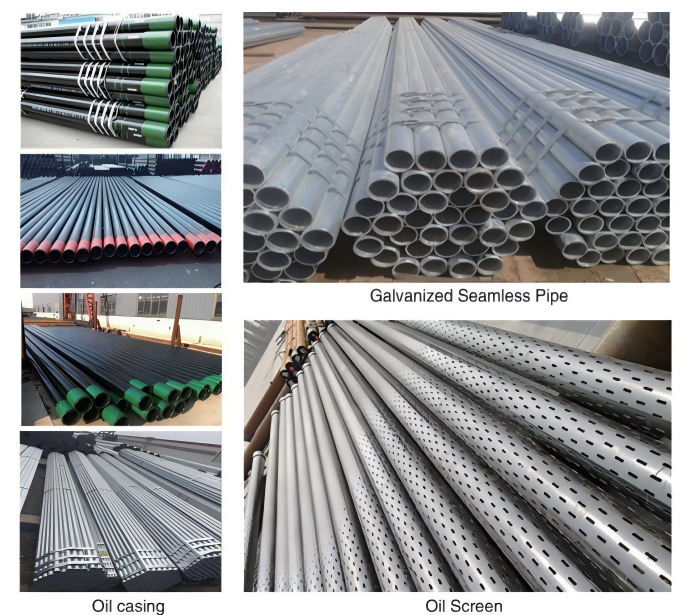
Galvanized Pipes
Galvanized pipes are a simple fit when corrosion-resistant pipe systems matter more than extreme pressure. I use them often in water service, outdoor runs, and light structural work where durability and lower maintenance are important.
- Useful for water distribution and basic utility lines
- Common in outdoor structural pipe applications
- Helps extend service life in wet or exposed environments
- Easy to pair with standard fittings and field installation
For standard utility builds, I also keep mild steel Schedule 40 pipes in mind because they work well in many global construction and industrial piping setups.
Value-Added Services
I see the biggest project gains when pipes come with the right finishing work before they reach site. Coating, threading, cutting, and fabrication save time and reduce mistakes during installation.
| Service | What it helps with | Best fit |
|---|---|---|
| Coating | Corrosion protection | Outdoor and marine and offshore piping |
| Threading | Faster assembly | Water, utility, and service lines |
| Cutting | Exact fit-up | Custom size steel pipes |
| Fabrication | Ready-to-install parts | Complex industrial pipeline solutions |
These services matter because they turn raw pipe into a job-ready product, which is especially useful for B2B steel pipe supplier sourcing and tight project schedules.
How I Combine Them
I usually build complete systems by mixing welded and seamless pipe applications with the right support products.
- ERW steel pipe uses cover many general-purpose and structural jobs
- Galvanized options help in exposed or moisture-prone areas
- Seamless pipe for critical sections handles higher pressure and demanding service
- Coated, cut, and fabricated pipe reduces on-site work and downtime
In practice, this approach helps me match the pipe to the job instead of forcing one product into every line. That is usually the most reliable way to keep industrial steel pipe uses efficient, cost-aware, and ready for long service life.