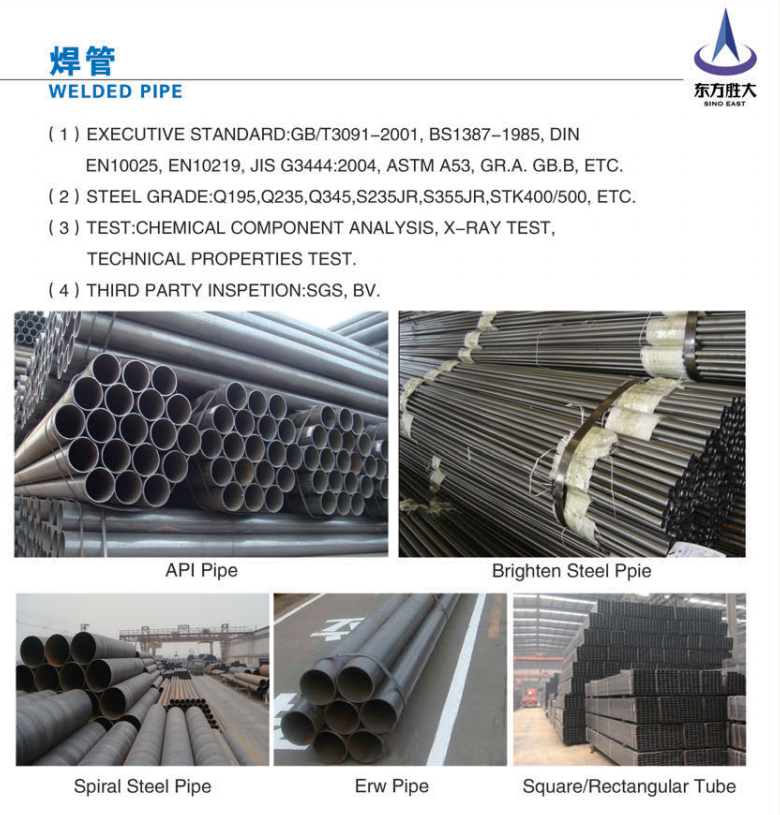
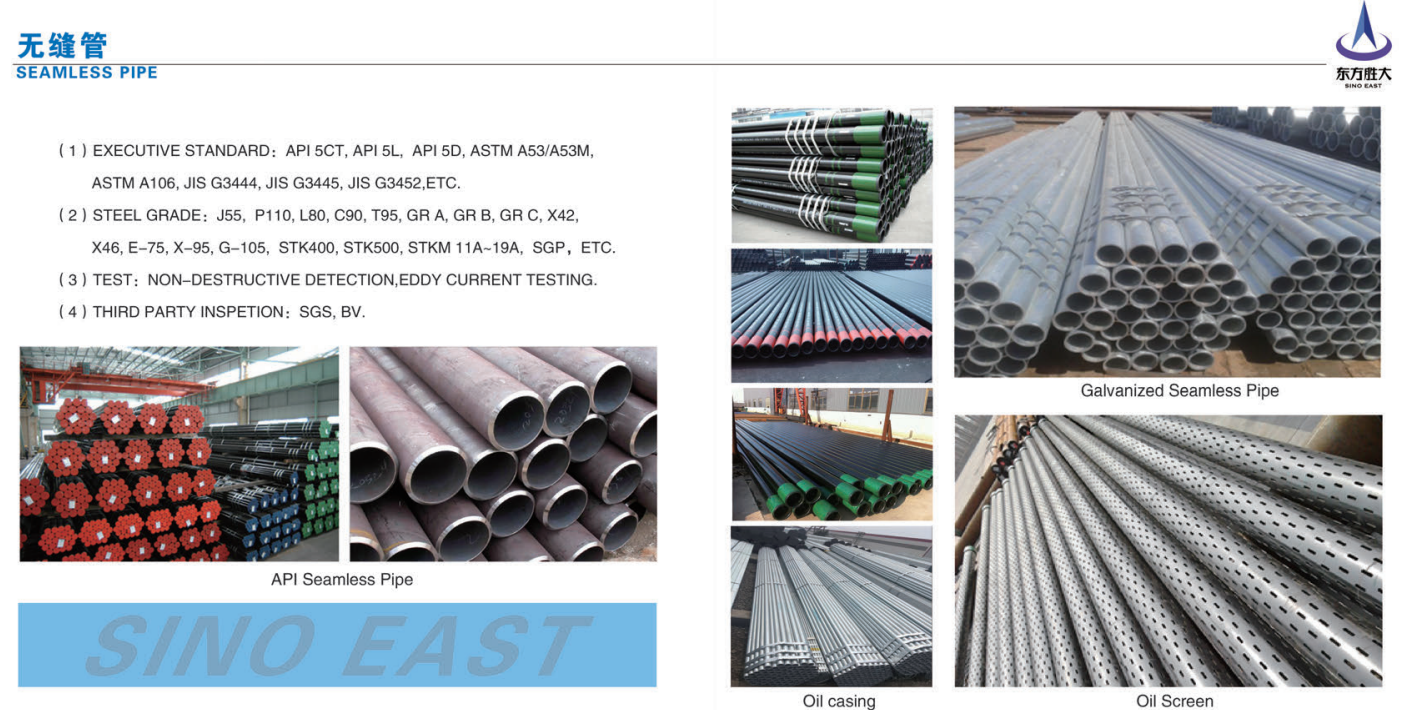
Welded and Seamless Pipe Applications for Industry

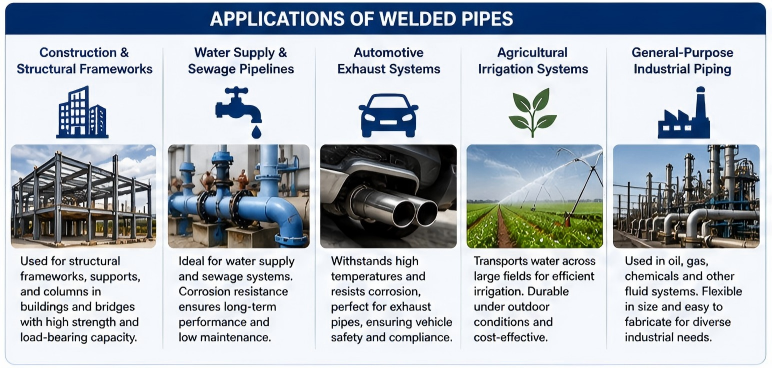
Applications of Welded Pipes
Welded pipes are a versatile choice in many industries due to their cost-effectiveness and ease of manufacturing. They are widely used in various applications where strength, durability, and reliability are essential. Here are some of the most common uses:
Construction and Structural Frameworks
Welded steel pipes are a staple in building construction. They are used for structural frameworks, supports, and columns because of their high strength and ability to handle heavy loads. Whether for commercial buildings or bridges, welded pipes provide a reliable backbone for structural integrity.
Water Supply and Sewage Pipelines
In municipal and industrial settings, welded pipes are popular for water supply and sewage systems. Their corrosion resistance (especially when made from stainless steel or coated steel) ensures long-term performance and minimal maintenance.
Automotive Exhaust Systems
Welded pipes are essential in manufacturing automotive exhaust systems. Their ability to withstand high temperatures and resist corrosion makes them ideal for exhaust pipes, contributing to vehicle safety and environmental standards.
Agricultural Irrigation Systems
Farmers rely on welded pipes for efficient irrigation solutions. These pipes help transport water across large fields, ensuring crops receive consistent water flow. Their durability under outdoor conditions makes them a practical choice.
General-Purpose Industrial Piping
Welded pipes are used extensively in industrial piping systems for oil, gas, chemicals, and other fluids. Their customizable sizes and ease of fabrication allow them to meet diverse industrial needs.
In , welded pipes are integral to construction, water management, automotive, agriculture, and industrial sectors, thanks to their versatility and reliable performance.
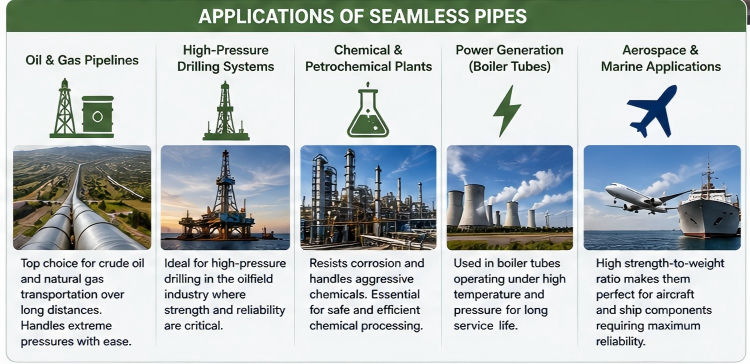
Applications of Seamless Pipes
Seamless pipes are widely used in industries where strength, durability, and high-pressure resistance are critical. They are a top choice for oil and gas pipelines, especially in transporting crude oil and natural gas over long distances. Their ability to withstand extreme pressures makes them ideal for high-pressure drilling systems used in the oilfield industry.
In chemical and petrochemical plants, seamless pipes are essential because they resist corrosion and can handle aggressive chemicals. They are also commonly used in power generation, particularly for boiler tubes that operate under high temperatures and pressures. Their durability ensures long service life in these demanding environments.
Additionally, seamless pipes are favored in aerospace and marine applications due to their high strength-to-weight ratio. They help build lightweight, yet strong, components for aircraft and ships. Overall, seamless pipes offer reliable, high-performance solutions for industries where safety and performance are top priorities.
Welded vs Seamless Pipes
Welded vs seamless pipes is a key choice in industrial pipe applications. I usually compare them by how they are made, how much pressure they need to handle, and how fast I need the material on site.
Manufacturing Process Differences
| Item | Welded Pipes | Seamless Pipes |
|---|---|---|
| Process | Formed from steel strip or plate and welded along the seam | Made from a solid billet with no weld seam |
| Surface | Smooth and stable for many uses | Uniform structure with no welded joint |
| Sizes | Easy to produce in large diameters | Common in smaller to medium sizes, depending on grade |
Welded steel pipes applications are broad because they are easier to make in long lengths and large sizes. Seamless steel pipes uses are more focused on demanding service, where the pipe must perform under higher stress.
Strength and Pressure Resistance
If the system has high pressure, heat, or heavy load, I lean toward seamless pipe manufacturers and their durable seamless pipe solutions. Seamless pipes have no weld defect, so they are often preferred for high-pressure seamless tubing, oil and gas lines, and chemical service.
Welded piping solutions still work very well for many jobs, especially when the pressure is moderate and the cost needs to stay controlled. For construction, water lines, and general steel pipe industry uses, carbon steel welded pipes are often the practical choice.
Cost and Availability
- Welded pipes are usually more cost-effective.
- Seamless pipes cost more because the process is more complex.
- Welded pipes are easier to source in large diameters and long runs.
- Seamless pipes may have longer lead times in certain grades and sizes.
For global buyers, availability matters as much as price. If the project needs fast delivery and standard sizes, welded pipe is often easier to buy. If the job needs strict performance, stainless steel seamless pipes or alloy seamless grades are worth the extra cost.
How I Choose the Right Pipe Type
I keep it simple:
- Choose welded pipes for construction, water transport, structural work, and general industrial pipe applications.
- Choose seamless pipes for high-pressure systems, critical flow lines, and harsh operating conditions.
- Check the material grade, such as carbon steel, stainless steel, or alloy steel.
- Match the pipe to the standard, like ASTM, API 5L, or DIN.
- Confirm the needed size, wall thickness, and testing before ordering.
For most projects, the right choice comes down to budget, pressure rating, and service life. A good welded vs seamless pipes comparison starts with the real working condition, not just the price tag.
Advantages of Welded and Seamless Pipes
Welded pipes are known for their cost-effectiveness and versatility, making them ideal for a wide range of applications. They are easier and quicker to produce, which helps keep prices lower, especially for large-diameter pipes used in construction and industrial piping. Their ability to be customized in length and diameter makes them a popular choice for many projects, including water supply systems and structural frameworks. For example, welded steel pipes are often used in construction due to their large sizes and affordability.
Seamless pipes, on the other hand, are prized for their strength and durability. Since they are made without welds, they don’t have weld defects that can compromise performance. This makes seamless pipes suitable for high-pressure systems like oil and gas pipelines or chemical processing plants. They are also preferred in applications where safety and long-term reliability are critical, such as in power generation or aerospace uses. Their ability to withstand extreme conditions and high pressures is a key advantage that sets them apart from welded pipes.
Choosing between welded and seamless pipes depends on your specific needs. For large-scale, cost-sensitive projects, welded pipes are often the best fit. But for high-pressure, high-stress environments, seamless pipes tend to be the more reliable choice. Understanding these differences helps ensure you select the right pipe type for your application.
Technical Specifications and Standards of Welded and Seamless Pipes
When choosing between welded pipes and seamless pipes, understanding their technical specifications and standards is key. Here’s a quick overview:
Material Grades
- Carbon Steel: Common for general industrial use, construction, and water pipelines.
- Stainless Steel: Ideal for corrosion-resistant applications like water supply and chemical processing.
- Alloy Steel: Used in high-temperature and high-pressure environments, such as power plants and oil & gas.
Industry Standards
- ASTM: Widely adopted for various steel pipe specifications.
- API 5L: Standard for line pipes used in oil and gas transportation.
- DIN: European standards covering dimensions and quality.
Size Ranges & Custom Options
| Diameter | Wall Thickness | Customization Options |
|---|---|---|
| From small diameters for plumbing to large industrial pipes | From thin-walled to thick-walled pipes | Custom lengths, coatings, and surface finishes |
Testing Methods
- Hydrostatic Testing: Checks pipe strength by filling with water under pressure.
- Ultrasonic Testing: Detects internal flaws or defects without damaging the pipe.
These specifications ensure that welded and seamless pipes meet industry requirements for strength, durability, and safety. For example, stainless steel seamless pipes are often tested with ultrasonic methods to guarantee quality for critical applications.
Quality Assurance and Certifications
When it comes to welded pipes and seamless pipes, quality assurance is crucial. Reputable manufacturers like Sino East Steel Group prioritize obtaining ISO and API certifications, which ensure their products meet strict international standards. These certifications verify that the pipes are manufactured with consistent quality and safety in mind, making them reliable for various applications.
The inspection and testing process involves multiple steps to confirm the pipes’ strength, durability, and pressure resistance. Common testing methods include hydrostatic testing, where the pipe is filled with water under pressure, and ultrasonic testing, which checks for internal flaws. These procedures help detect any defects early, ensuring only high-quality pipes reach the market.
Compliance checks are also vital. They verify that each batch of pipes adheres to industry standards like ASTM, DIN, or API 5L. This consistency is essential, especially for high-pressure applications such as oil and gas pipelines or boiler tubes, where failure is not an option. Regular quality audits and strict adherence to standards help maintain product reliability, giving customers peace of mind when choosing welded or seamless pipes for their projects.
Why Choose Sino East Steel Group
At Sino East Steel Group, we bring extensive expertise in steel pipe manufacturing, ensuring you get high-quality welded and seamless pipes for any application. Our team offers custom pipe solutions tailored to meet your specific needs, whether for construction, industrial, or high-pressure systems.
We have a global supply network that guarantees fast delivery and competitive pricing, making us a reliable partner worldwide. Our focus is on providing consistent quality and excellent customer service, so you can trust us for all your steel pipe requirements.
| Key Benefits | Details |
|---|---|
| Expertise | Years of experience in welded and seamless pipe production |
| Customization | Tailored solutions for unique project needs |
| Global Reach | Wide distribution network for quick delivery |
| Pricing | Competitive rates without compromising quality |
| Quality Assurance | Strict standards and certifications |
Choosing Sino East Steel Group means partnering with a trusted steel pipe supplier committed to delivering durable, reliable, and cost-effective piping solutions for your business.
FAQs on Welded and Seamless Pipes
Main differences between welded and seamless pipes
Welded pipes are made by rolling steel sheets and welding the edges together, which makes them more cost-effective and available in larger diameters. Seamless pipes, on the other hand, are produced by piercing a solid billet to create a pipe without any welds, offering higher strength and durability. The manufacturing process significantly impacts their performance, especially under high pressure or stress.
Industries that use welded pipes the most
Welded steel pipes are widely used in construction, water supply systems, and general industrial piping. They are popular because of their affordability and versatility. You’ll often find welded pipes in structural frameworks, water pipelines, and agricultural irrigation systems, where large diameters and quick installation are needed.
Why seamless pipes are preferred for high-pressure systems
Seamless pipes are favored in high-pressure applications like oil and gas pipelines, chemical plants, and power generation because they have no welds, which can be weak points. Their strength, durability, and ability to withstand extreme pressure make them ideal for these demanding environments. For more details on high-pressure seamless tubing, check out seamless steel pipes uses.
How product reliability is ensured
Reliability for both welded and seamless pipes is maintained through strict manufacturing standards, such as ASTM and API certifications. Regular testing methods like hydrostatic and ultrasonic testing help verify the pipes’ integrity. Additionally, quality assurance processes include inspection and compliance checks, ensuring consistent, reliable products for all applications.