
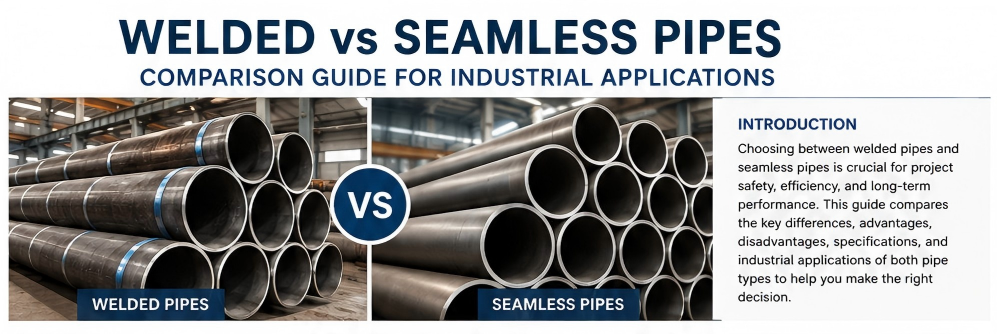
Welded vs Seamless Pipes Comparison Guide for Industrial Applications
Introduction
Choosing between welded pipes and seamless pipes is one of the most important decisions in industrial piping projects. Whether you are working in oil and gas, construction, water transportation, HVAC systems, or heavy industrial manufacturing, selecting the right steel pipe directly affects project safety, operational efficiency, maintenance costs, and long-term performance.
Both welded steel pipes and seamless steel pipes are widely used across global industries, but they differ significantly in manufacturing methods, structural characteristics, pressure resistance, cost, and application suitability.
This comprehensive welded vs seamless pipes comparison guide explains the key differences, advantages, disadvantages, specifications, and industrial applications of both pipe types to help buyers, engineers, contractors, and distributors make informed purchasing decisions.
What Is a Welded Pipe?
A welded pipe is manufactured by rolling steel plate, strip, or coil into a tubular shape and then welding the seam together. Modern welding technology allows welded steel pipes to achieve high dimensional accuracy and reliable structural performance.
The most common welded pipe types include:
- ERW Pipe (Electric Resistance Welded Pipe)
- LSAW Pipe (Longitudinal Submerged Arc Welded Pipe)
- SSAW Pipe (Spiral Submerged Arc Welded Pipe)
Welded pipes are commonly used in:
- Construction structures
- Scaffolding systems
- Water transportation
- HVAC systems
- Oil and gas pipelines
- Agricultural irrigation
- Structural engineering
Because of their cost efficiency and wide size availability, welded pipes dominate many industrial sectors worldwide.
What Is a Seamless Pipe?
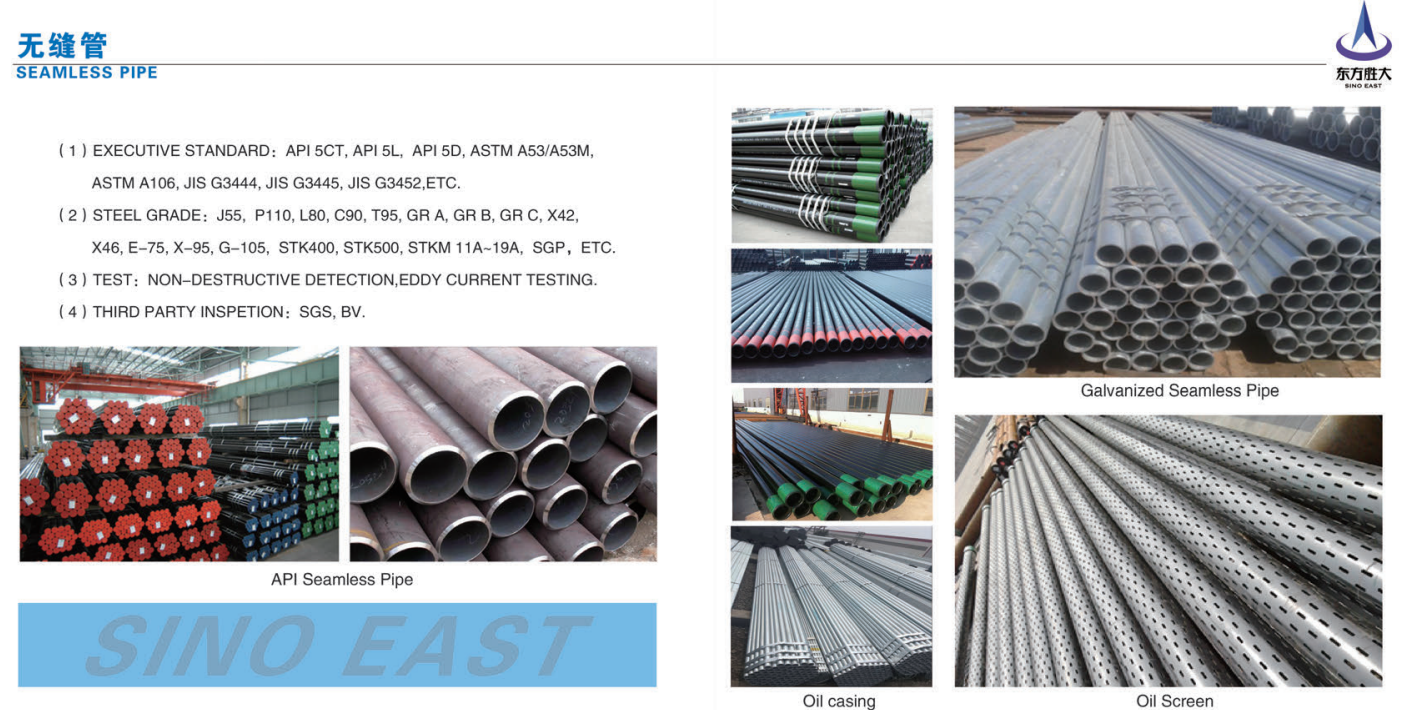
A seamless pipe is produced from a solid steel billet that is heated and pierced to form a hollow tube without any welded seam. The manufacturing process involves hot rolling, cold drawing, sizing, and heat treatment.
Since seamless pipes do not contain a weld seam, they are preferred for applications involving:
- High pressure
- High temperature
- Critical fluid transportation
- Chemical processing
- Power generation
- Boiler systems
- Precision engineering
Seamless steel pipes generally provide better structural uniformity and superior pressure resistance.
Manufacturing Process Comparison
Welded Pipe Manufacturing
The welded pipe manufacturing process includes:
- Steel strip or plate preparation
- Forming into tubular shape
- Welding the seam
- Weld bead removal
- Sizing and straightening
- Surface treatment and inspection
Modern automated welding systems significantly improve weld quality and production efficiency.
Advantages of Welded Pipe Production
- Faster production speed
- Lower manufacturing cost
- Large diameter capability
- Flexible custom lengths
- Easier mass production
Seamless Pipe Manufacturing
The seamless pipe manufacturing process involves:
- Heating steel billet
- Piercing the billet
- Rolling and elongation
- Heat treatment
- Sizing and straightening
- Surface finishing and testing
Because the pipe body is formed from solid steel, no welding process is required.
Advantages of Seamless Pipe Production
- No weld seam
- Higher pressure resistance
- Better structural integrity
- Improved reliability in critical applications
Key Differences Between Welded and Seamless Pipes
| Item | Welded Pipe | Seamless Pipe |
|---|---|---|
| Manufacturing Method | Steel plate or coil welded into shape | Solid billet pierced and rolled |
| Weld Seam | Yes | No |
| Production Cost | Lower | Higher |
| Pressure Resistance | Moderate to high | Very high |
| Diameter Range | Excellent for large diameters | Limited for very large sizes |
| Delivery Time | Faster | Slower |
| Surface Finish | Good | Usually smoother internally |
| Application Range | General industrial use | Critical industrial use |
| Cost Efficiency | Excellent | Moderate |
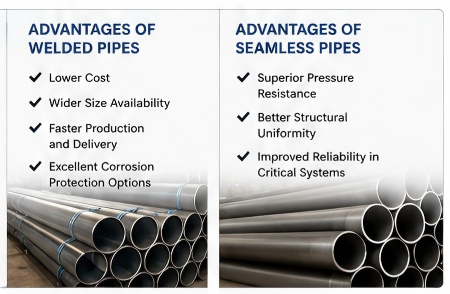
Advantages of Welded Pipes
1. Lower Cost
Welded steel pipes are generally more economical than seamless pipes because the manufacturing process is simpler and faster.
This makes welded pipes ideal for:
- Structural applications
- Municipal projects
- Water transportation
- Construction systems
- Agricultural pipelines
For large-volume industrial projects, welded pipes can significantly reduce total procurement costs.
2. Wider Size Availability
Welded pipes are easier to manufacture in large diameters and custom lengths.
LSAW and SSAW pipes are especially suitable for:
- Long-distance transmission pipelines
- Large infrastructure projects
- Water treatment plants
- Oil transportation systems
3. Faster Production and Delivery
Because welded pipe production is highly automated, suppliers can deliver large quantities quickly.
This is particularly important for:
- EPC projects
- Construction deadlines
- International export orders
- Infrastructure expansion projects
4. Excellent Corrosion Protection Options
Welded pipes can be combined with various surface treatments:
- Hot-dip galvanizing
- Epoxy coating
- 3PE coating
- Powder coating
- FBE coating
These coatings improve corrosion resistance and extend service life.
Advantages of Seamless Pipes
1. Superior Pressure Resistance
Seamless pipes are ideal for high-pressure environments because they do not contain a welded seam that could become a weak point under extreme conditions.
Typical applications include:
- Boiler systems
- High-pressure steam lines
- Hydraulic systems
- Petrochemical processing
2. Better Structural Uniformity
The seamless manufacturing process provides consistent wall structure throughout the pipe body.
This is critical for:
- Precision engineering
- Aerospace applications
- High-temperature operations
3. Improved Reliability in Critical Systems
Industries such as oil & gas, chemical processing, and power generation often prefer seamless pipes for safety-critical systems.
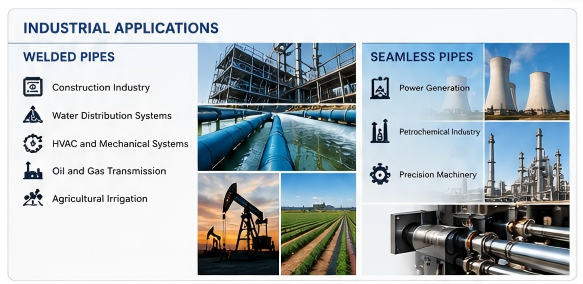
Industrial Applications of Welded Pipes
Construction Industry
Welded steel pipes are extensively used for:
- Structural columns
- Scaffolding systems
- Fence systems
- Building frameworks
- Steel structures
ERW pipes are especially popular in the construction sector.
Water Distribution Systems
Galvanized welded pipes are commonly used in:
- Municipal water supply
- Irrigation systems
- Drainage systems
- Fire protection pipelines
Their corrosion resistance and cost efficiency make them highly practical.
HVAC and Mechanical Systems
Welded pipes are ideal for:
- Heating systems
- Ventilation systems
- Air conditioning systems
- Mechanical piping
Oil and Gas Transmission
LSAW and SSAW pipes are widely used for:
- Long-distance pipelines
- Crude oil transportation
- Natural gas transmission
Industrial Applications of Seamless Pipes
Power Generation
Seamless pipes are critical in:
- Boilers
- Heat exchangers
- Superheaters
- Steam pipelines
Petrochemical Industry
The chemical industry relies on seamless pipes for:
- Corrosive fluid transportation
- High-pressure systems
- Refinery operations
Precision Machinery
Seamless tubes are used in:
- Hydraulic cylinders
- Automotive systems
- Mechanical precision equipment
Welded Pipe vs Seamless Pipe Cost Analysis
Cost is one of the most important factors when selecting industrial pipes.
Welded Pipe Cost Benefits
Welded pipes offer:
- Lower raw material waste
- Faster production
- Reduced labor costs
- Lower transportation cost
- Better availability
For most standard industrial applications, welded pipes provide the best balance between performance and budget.
Seamless Pipe Cost Considerations
Although seamless pipes are more expensive, the added cost is justified in:
- High-risk systems
- Extreme temperature environments
- Critical pressure applications
- Specialized industrial facilities
Choosing seamless pipes can reduce long-term operational risks.
Standards and Certifications
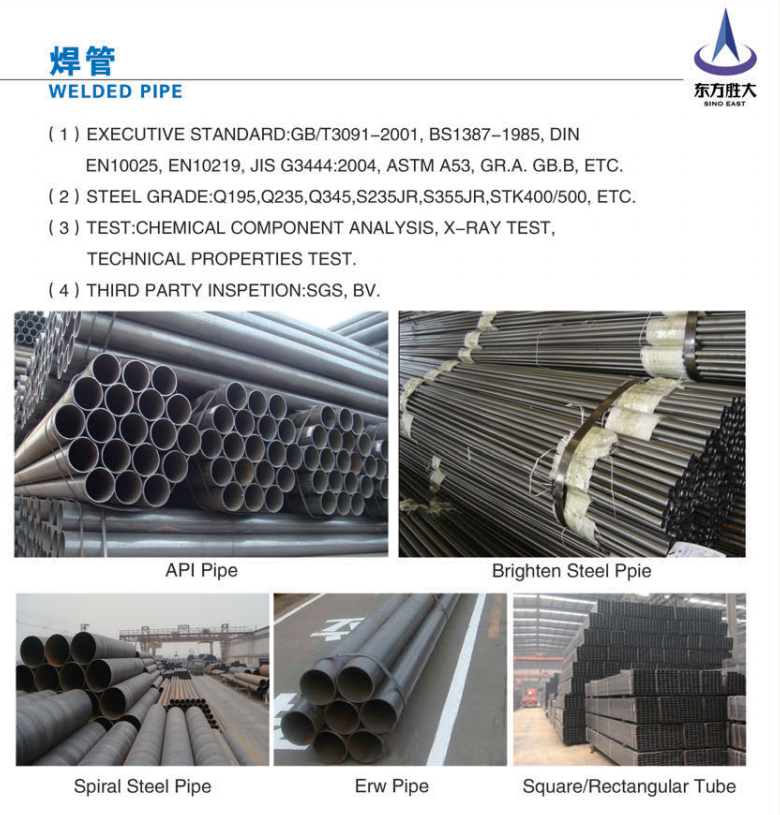
Industrial steel pipes typically follow international standards such as:
Welded Pipe Standards
- ASTM A53
- API 5L
- EN 10219
- GB/T 3091
Seamless Pipe Standards
- ASTM A106
- ASTM A333
- API 5L
- EN 10210
Testing methods may include:
- Hydrostatic testing
- Ultrasonic testing
- Radiographic inspection
- Mechanical testing
Proper certification ensures product quality and compliance.
How to Choose Between Welded and Seamless Pipes
When selecting industrial steel pipes, consider the following:
Choose Welded Pipes When:
- Budget is a priority
- Large diameters are required
- Moderate pressure conditions apply
- Fast delivery is needed
- Structural applications are involved
Choose Seamless Pipes When:
- High pressure exists
- High temperature environments are involved
- Safety-critical systems are used
- Corrosive fluids are transported
- Precision engineering is required
The final choice should always depend on actual operating conditions and project specifications.
Conclusion
Both welded pipes and seamless pipes play essential roles in modern industrial applications. Welded steel pipes provide excellent cost efficiency, flexible sizing, and fast production for general industrial, construction, and infrastructure projects. Seamless steel pipes offer superior pressure resistance and structural integrity for critical environments where safety and performance are paramount.
Understanding the differences between welded and seamless pipes helps engineers, contractors, distributors, and buyers make smarter procurement decisions while balancing performance, safety, and cost.
For most standard industrial applications, welded pipes are often the most practical and economical solution. However, for high-pressure, high-temperature, or highly corrosive environments, seamless pipes remain the preferred option.
Selecting the right steel pipe is not simply about choosing welded or seamless — it is about matching the pipe to the specific demands of the project.
Related: Check our 2×4 galvanized rectangular tubular steel — competitive wholesale pricing for Philippine & international buyers. Available wall thickness 1.5mm–6.0mm, FOB Tianjin $550–750/MT.