
Complete Guide to Galvanized Steel Pipes
Galvanized steel pipes are among the most widely used materials in construction, infrastructure, and industrial applications.Whether you are an engineer specifying materials for a large-scale project, a contractor selecting piping systems, or a facility manager planning maintenance, understanding the specifications, production methods, and appropriate applications of galvanized steel pipes is essential. This comprehensive guide provides everything you need to know.
Table of Contents
What Is Galvanized Steel Pipe?
Production Processes of Galvanized Steel Pipes
Specifications and Standards
Common Dimensions and Sizes
Key Properties and Advantages
Applications of Galvanized Steel Pipes
Limitations and Considerations
What Is Galvanized Steel Pipe?
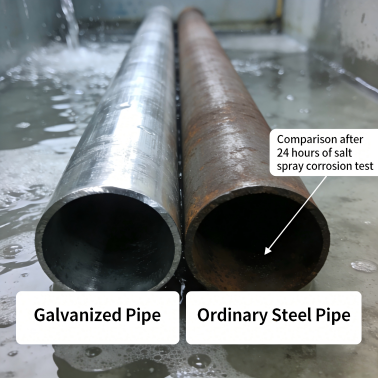
A galvanized steel pipe is a steel pipe that has been coated with a protective layer of zinc. The primary purpose of this zinc coating is to prevent rust and corrosion, significantly extending the lifespan of the steel. Galvanized pipes are classified primarily by their manufacturing method and the type of galvanization process applied.
Production Processes of Galvanized Steel Pipes
1. Base Pipe Manufacturing
Before galvanization, the steel pipe must be formed. There are two primary methods:
- Welded (ERW) Pipes:Electric Resistance Welding (ERW) is the most common method. A flat steel coil is rolled into a cylindrical shape, and the edges are welded together using high-frequency electric current. ERW pipes are cost-effective, dimensionally consistent, and suitable for most general applications.
- Seamless Pipes:These are manufactured by extruding a solid steel billet to create a hollow tube without any seam. Seamless pipes are stronger and can withstand higher pressures, making them ideal for critical applications like oil and gas transmission, though they are more expensive than welded pipes.
2. Galvanization Methods
| Galvanization Method | Process Description | Key Characteristics |
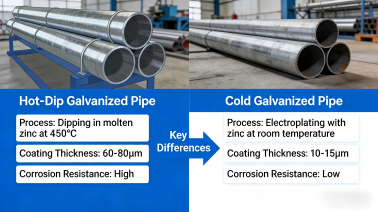
| Hot-Dip Galvanizing (HDG) | The steel pipe is immersed in a bath of molten zinc heated to approximately 449°C (840°F). A metallurgical bond forms between the zinc and the steel, creating a thick, durable alloy layer. | excellent for outdoor or harsh environments. |
| Electro-Galvanizing | The pipe is immersed in an electrolyte solution containing zinc ions, and an electric current is applied to deposit a thin layer of zinc onto the steel surface. | used primarily for automotive components or indoor applications where extreme corrosion resistance is not required. |
Specifications and Standards
The table below outlines the key specifications for galvanized steel pipes:
| Standard | Description | Typical Applications |
| ASTM A53 | Standard specification for pipe, steel, black and hot-dipped, zinc-coated, welded and seamless. | General plumbing, mechanical and pressure applications, steam lines, and structural supports. |
| ASTM A123 | Specification for zinc (hot-dip galvanized) coatings on iron and steel products. Applies to the coating thickness and quality. | Structural steel sections, fabricated parts, and assemblies. |
| ASTM A153 | Specification for zinc coating on iron and steel hardware. | Small hardware components like fittings, fasteners, and chain links. |
| ASTM A795 | Specification for black and hot-dipped galvanized steel pipe intended for fire protection systems. | Fire sprinkler systems; requires stricter testing and labeling than ASTM A53. |
Common Dimensions and Sizes
| Nominal Pipe Size (NPS) | Outside Diameter (inches) | Sch 40 Wall Thickness (inches) | Sch 80 Wall Thickness (inches) | Common Applications |
| ½” | 0.840 | 0.109 | 0.147 | Residential plumbing, handrails |
| ¾” | 1.050 | 0.113 | 0.154 | Water supply lines, gas lines |
| 1” | 1.315 | 0.133 | 0.179 | Main water lines, structural bracing |
| 2” | 2.375 | 0.154 | 0.218 | Industrial piping, fence posts |
| 4” | 4.500 | 0.237 | 0.337 | Fire sprinkler risers, large structural columns |
| 6” | 6.625 | 0.280 | 0.432 | Water mains, heavy-duty scaffolding |
Key Properties and Advantages
| Property | Value / Characteristic | Benefit |
| Corrosion Resistance | Excellent; zinc coating provides sacrificial protection | Extends service life by 2–5x compared to uncoated steel |
| Tensile Strength | 55,000 – 80,000 psi (depending on grade) | High load-bearing capacity for structural use |
| Temperature Range | Suitable for continuous use up to 200°C (392°F) | Viable for steam and hot water applications |
| Coating Thickness (HDG) | Typically 1.5 – 3.5 mils (0.0015 – 0.0035 inches) | Thicker coating provides longer corrosion protection |
| Magnetic Properties | Ferromagnetic | Easily detectable; suitable for magnetic inspection methods |
| Life Expectancy | 40 – 100 years (depending on environment) | Long-term durability reduces replacement costs |
Applications of Galvanized Steel Pipes

1. Plumbing and Water Supply
- Outdoor water lines
- Irrigation systems
- Water well casings
- Service lines from municipal mains
2. Structural and Architectural Uses
- Handrails and Guardrails
- Scaffolding
- Fencing and Gates
- Building Frames
3. Fire Protection Systems
ASTM A795 galvanized steel pipe is the standard material for fire sprinkler systems. The zinc coating provides additional protection against corrosion.
4. Industrial Applications
- Structural support for conveyor belts in warehouses and factories.
- When properly specified, they handle compressed air distribution.
- Suitable for handling non-corrosive fluids and structural supports in mildly corrosive environments.
5. Oil and Gas Transmission
Used in upstream and midstream oil and gas operations for gathering lines, transmission lines, and well casings, particularly in environments where external corrosion is a concern.
Limitations and Considerations
- Not for Potable Water in Older Systems
- At extremely high temperatures (above 200°C), the zinc coating can flake off, exposing the steel to oxidation.
- Galvanized pipes are not recommended for conveying fluids with a pH below 6 or above 12
- When connected directly to dissimilar metals like copper or stainless steel without proper dielectric unions, galvanic corrosion can occur, leading to premature failure.