
A Comprehensive Analysis of Square Steel Tubes
Across various industries—including construction, machinery manufacturing, and infrastructure development—square steel tubes have become a top choice for global buyers and engineering projects. As a metal material that combines structural strength with practical performance, they are valued for their exceptional stability and high adaptability.
Whether for small-scale decorative projects or large-scale industrial and structural projects, a thorough understanding of their performance characteristics, product classifications, and specific application scenarios can effectively enhance overall project quality, optimize material utilization efficiency, and significantly reduce procurement costs. At the same time, scientific selection can help avoid construction risks and post-construction maintenance issues caused by mismatched specifications or materials, thereby ensuring safer and more efficient project implementation.
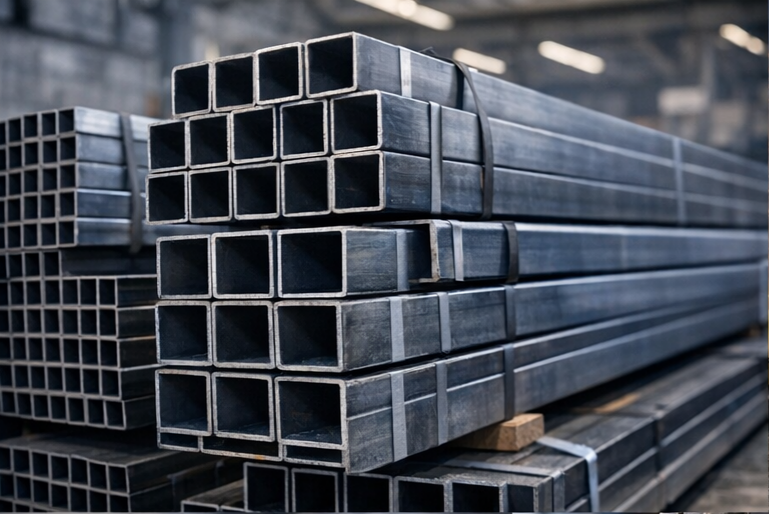
Square steel tubes
1. What Are Square Steel Tubes?
Square steel tubes, also commonly referred to as square tubes or rectangular steel tubes, are hollow steel structural materials with a square or rectangular cross-section. They are typically formed through hot-rolling or cold-bending processes and are available in welded or seamless varieties to meet different requirements. They are widely used in various fields, including construction, machinery manufacturing, infrastructure, and home decoration.
Compared to traditional round steel tubes, square steel tubes offer distinct advantages in terms of structural performance and application flexibility. Because their quadrilateral structure distributes stress more evenly under load, effectively dispersing pressure and bending stress, they are preferred in engineering projects requiring high stability and load-bearing capacity.
2. Key Features of Square Steel Tubes
A. High Structural Stability
The quadrilateral cross-section design of square steel tubes ensures a more uniform distribution of stress when subjected to external pressure and bending loads. Compared to round tubes, they offer superior resistance to bending and torsion, making them widely used in critical applications such as building frames, steel structure supports, and heavy equipment bases.

Square steel tubes for construction
B. Superior Work-ability
Square steel tubes offer excellent work-ability and can be easily welded, cut, punched, and surface-treated. This flexibility makes them particularly suitable for custom engineering projects, such as mechanical equipment frames, metal furniture, and decorative structures. The flat profile of square steel tubes facilitates connection and installation, making them more efficient than round tubes during construction and helping to shorten project timelines.
C. Wide Range of Material Options
To meet the demands of various application environments, square steel tubes are available in multiple materials, including:
Carbon steel square tubes: High strength and lower cost, suitable for general construction and structural applications
Galvanized square tubes: Enhanced corrosion resistance through hot-dip galvanizing, suitable for outdoor environments
Stainless steel square tubes: Highly corrosion-resistant, suitable for humid or chemical environments
The choice of material directly impacts the service life and maintenance costs of square tubes; therefore, selection should be based on the specific application scenario.
D. Durability and Long Service Life
Square tubes possess excellent wear resistance and corrosion resistance. Especially when hot-dip galvanized or made of stainless steel, they can withstand long-term use in harsh environments without rusting or deforming.
Under normal use and proper maintenance, galvanized square steel tubes typically have a service life of 20–50 years, significantly reducing long-term maintenance and replacement costs.
E. Sleek Appearance, Suitable for Decorative Applications
In addition to their structural functions, square steel tubes offer an aesthetically pleasing appearance. With clean lines and sharp edges, they are particularly well-suited for modern architectural design and industrial-style home decor, such as table and chair frames, stair railings, and display racks.
3. Core Classifications of Square Steel Tubes
To meet the needs of various engineering projects, square steel tubes can be classified in multiple dimensions based on cross-sectional shape, welding process, application, and surface treatment.
A. Classification by Cross-Sectional Shape
This is the most fundamental and common classification method, which directly determines the load-bearing performance and application scenarios of square steel tubes.
Square Tubes
The length and width of the cross-section are equal, resulting in a highly symmetrical structure, uniform stress distribution, and excellent stability.
Common specifications are denoted as: side length × side length × wall thickness (e.g., 50×50×3 mm).
Applications: Building frames, guardrail systems, mechanical support structures, etc.
Rectangular Tubes
The length and width of the cross-section are unequal, making them more suitable for narrow, elongated, or specific structural spaces, with superior bending resistance.
Specifications are denoted as: length × width × wall thickness (e.g., 100×50×3 mm).
Widely used in: curtain wall studs, door and window frames, conveyor equipment rails, and similar applications.
B. Classification by Welding Process
The welding process directly affects strength, leak-tightness, and scope of application.
High-Frequency Resistance Welded Square Tubes
The mainstream product in the market, suitable for thin-walled and small-to-medium diameter square tubes (side length ≤200mm, wall thickness 1.0–6.0mm).
Advantages: High production efficiency, low cost, smooth surface, suitable for bulk procurement.
Submerged Arc Welded Square Tubes
Suitable for thick-walled, large-diameter square tubes (side length ≥100 mm, wall thickness ≥6 mm).
Features: Consistent weld quality and high pressure-bearing capacity, suitable for industrial structures and heavy machinery applications.
TIG Welded Square Tubes
Primarily used for stainless steel square tubes or applications requiring high cleanliness, such as food processing machinery and medical equipment.
Advantages: Smooth welds and excellent sealing, but relatively higher cost.
C. Classification by Application
Different applications determine the performance requirements and standard specifications for square steel tubes.
Structural Square Tubes
Typically comply with standards such as GB/T 6728 and are the most common type.
Main Applications: Building structures, mechanical supports, guardrail systems, etc.
Fluid Conveyance Square Tubes
Although less commonly used, they can be employed in low-pressure environments to convey media such as water and air, such as in internal piping systems of equipment.
Square Tubes for Decorative Use
Emphasis is placed on surface quality and aesthetic appeal; commonly used for curtain walls, doors and windows, furniture, and advertising structures.
Special-Purpose Square Tubes
Customized for specific industries, such as automotive chassis, container frames, and agricultural machinery components, requiring compliance with specific mechanical properties or standards.
D. Classification by Surface Treatment
Surface treatment directly affects the corrosion resistance, aesthetics, and service life of square steel tubes.
Hot-Dip Galvanized Square Tubes
Offers excellent corrosion resistance and weather resistance, suitable for outdoor and humid environments.
Common applications: construction scaffolding, outdoor fencing, and infrastructure projects.
Coated Square Tubes
Surfaces are coated with anti-rust paint, powder coatings, or fluorocarbon paint, combining corrosion protection with decorative effects.
Suitable for building facades, interior furniture, and similar applications.
Pickled and Passivized Square Tubes
Corrosion resistance is enhanced through chemical treatment, making them suitable for chemical processing or special environments.
Brushed/Polished Square Tubing
Features a high-gloss finish and attractive visual appeal, widely used in decorative projects and appliance exterior components.
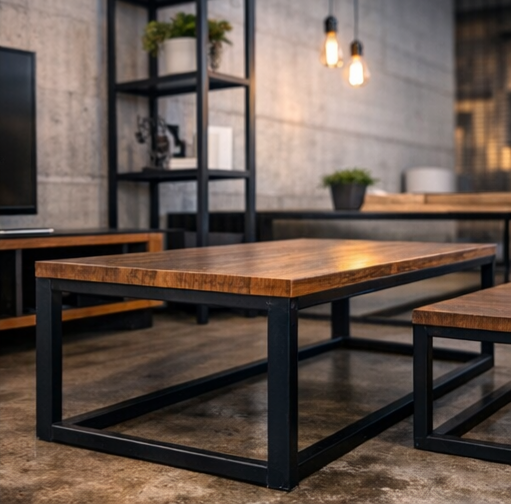
Application of Square Steel Pipe
4. Why Choose Square Tubing?
With core advantages of “superior structure, ease of processing, versatility, and high cost-effectiveness,” square tubing has become a key material in industries such as construction, machinery, and transportation. It meets the basic needs of general applications while also fulfilling the specialized requirements of high-end sectors like new energy and marine engineering. As industries transition toward greener and higher-strength solutions, selecting square steel tubes that meet environmental standards and offer stable performance not only enhances project quality but also reduces long-term maintenance costs and carbon compliance risks.
For a more detailed breakdown, see our article on [Square Steel Tubes Classification].