
What are the advantages of galvanized pipes?
What are the advantages of galvanized pipesIn construction, interior finishing, fire protection projects, or electrical wiring, we often hear the term “galvanized pipe.” Simply put, a galvanized pipe is a standard steel pipe that has undergone a galvanizing process to enhance its performance. Many people ask: What are the advantages of galvanized pipes?
Table of Contents
01. Corrosion Resistance
02. Durable and Robust
03. Excellent Construction and Processing Properties
04. Surface Quality and Coating Uniformity
05. Applications
06. The Difference Between Hot-Dip Galvanizing and Cold galvanizing
01. Corrosion Resistance
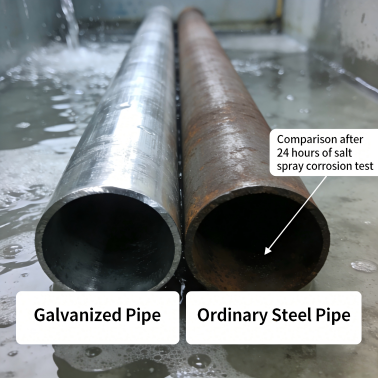
The greatest advantage of galvanized steel pipes lies in their outstanding corrosion resistance. Steel pipes are prone to rusting when exposed to water or humid air, but the galvanized coating acts as a protective layer.
In particular, the hot-dip galvanizing process uses high temperatures to cause zinc to react with the steel substrate, forming a dense zinc-iron alloy layer. This layer not only adheres firmly but also, even if the surface is slightly scratched, the surrounding zinc layer acts as a “sacrificial anode” to protect the exposed steel from rusting.
According to industry standards, high-quality hot-dip galvanized pipes can have a zinc coating weight of 300 g/m² or more; in some demanding applications, the average zinc coating weight is required to be no less than 500 g/m². This is more than four times thicker than a typical electrogalvanized coating, significantly extending the service life of the pipes.

02. Durable and Robust
Galvanized steel pipes inherit the high strength characteristics of steel pipes and offer excellent resistance to compression and impact.
High tensile strength: Common grades of galvanized steel pipes, such as Q235, feature high tensile strength and yield points, enabling them to withstand significant external pressure and loads without deformation or fracture.
Strong impact resistance: In complex construction environments, such as underground installation or exposed wiring, galvanized steel pipes effectively prevent damage caused by impacts from heavy objects—an advantage that many plastic pipes cannot match.
Therefore, in applications requiring high structural strength (such as highway guardrails and large-scale building support frames), galvanized steel pipes are the material of choice.
03. Excellent Construction and Processing Properties
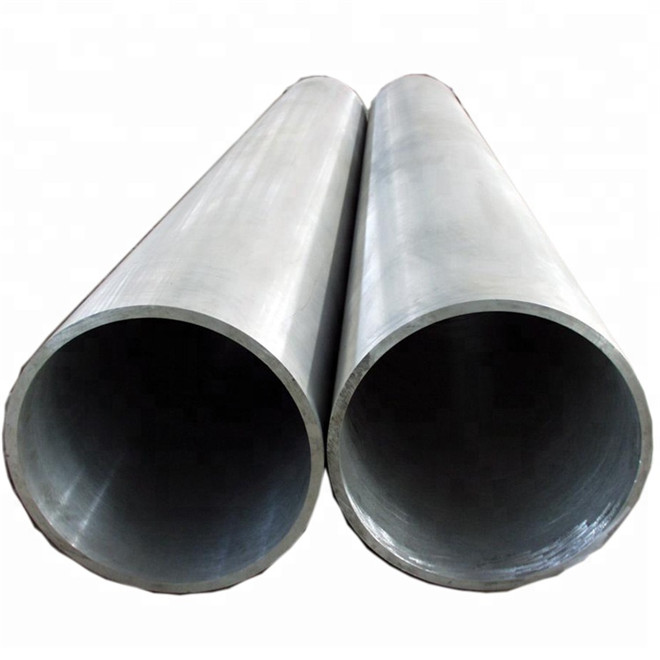
Easy to cold-bend without cracking: Galvanized pipes with a nominal diameter of 50 mm or less can undergo cold-bending tests. Even when bent 90 degrees with a bending radius of eight times the outer diameter, no cracks or peeling of the zinc coating will occur. This allows for flexible bending during installation to accommodate on-site conditions and avoid obstacles.
Smooth Inner Wall: High-quality galvanized pipes (such as Liansu Heavy-Duty Galvanized Conduit) undergo special treatment to ensure a smooth inner wall free of zinc residue. This feature is particularly important when pulling wires—it prevents damage to the wire insulation and allows for smoother wire pulling and replacement.
04. Surface Quality and Coating Uniformity
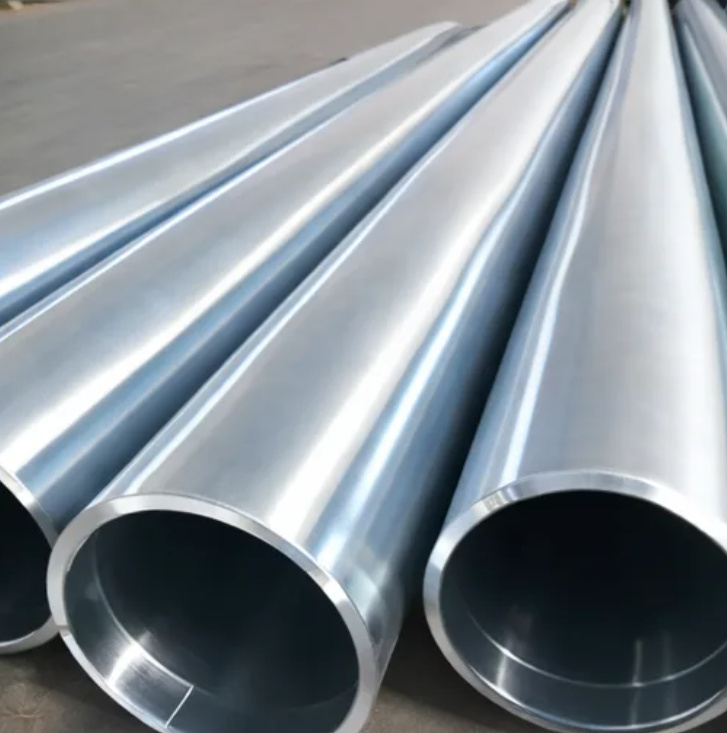
In properly manufactured galvanized steel pipes, surface quality is strictly controlled. According to national standards, the surface of galvanized steel pipes must have a complete zinc coating, free of uncoated black spots and bubbles. Although a small amount of roughness or localized zinc nodules is permitted, this does not affect the pipe’s protective performance. Passing the copper sulfate immersion test (no red discoloration after five consecutive immersions) is a key criterion for verifying coating uniformity, ensuring that every part of the pipe is effectively protected.

05. Applications
Thanks to the advantages mentioned above, galvanized pipes have a very broad range of applications. It should be noted that, due to the risk of “yellow water” contamination, galvanized pipes are currently not recommended for potable water systems; however, they remain the primary choice in the following areas:
Fire protection systems: As main supply pipes for sprinkler systems and fire water supply.
Power and Telecommunications: Protecting cables and optical fibers, particularly in applications requiring shielding against interference or explosion-proofing.
Industry and Agriculture: Transporting low-pressure fluids (such as oil and natural gas), greenhouse construction, and mine support.
Municipal Infrastructure: Highway guardrails, streetlight poles, and bridge construction.
06. The Difference Between Hot-Dip Galvanizing and Cold galvanizing
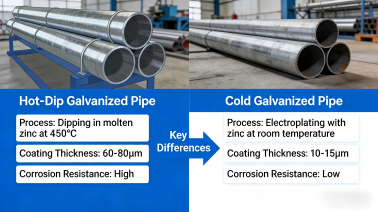
| Comparison criteria | Hot-dip galvanized pipe (hot-dip galvanizing)
|
Cold-galvanized pipes (electrogalvanized) |
| Zinc coating thickness
|
Thick (zinc coating weight of 500 g/m² or more)
|
Thin (only 10–50 g/m²) |
| Coating Structure | Forms a zinc-iron alloy layer that fuses with the substrate, creating a strong bond
|
Pure zinc coating; prone to delamination and peeling |
| Corrosion Resistance | Durable, suitable for outdoor and humid environments
|
Poor; rusts quickly |
| Appearance | The surface is somewhat rough and may have zinc nodules, but the overall coating is intact.
|
Smooth surface, but prone to black spots |
| Current Status | Recommended by the government, widely used in fire protection, electrical systems, and structural support
|
Has been banned; strictly prohibited for use as water or gas pipes |
When selecting galvanized pipes, be sure to choose those produced using the hot-dip galvanizing process, and verify that the zinc coating thickness meets the relevant standards based on the intended application environment.