Mobile Scaffolding — A Core Equipment Guide for Construction Safety and Efficiency

Mobile scaffolding serves as essential equipment in modern construction, equipment maintenance, and renovation projects. It provides stable, movable work platforms for personnel at heights, significantly reducing risks associated with elevated operations while enhancing construction efficiency. Unlike fixed scaffolding, mobile scaffolding features swivel casters or directional wheels at its base, enabling flexible relocation across construction sites without disassembly. Proper selection, strict adherence to safety standards, and regular maintenance are critical prerequisites for ensuring construction safety and shortening project timelines.
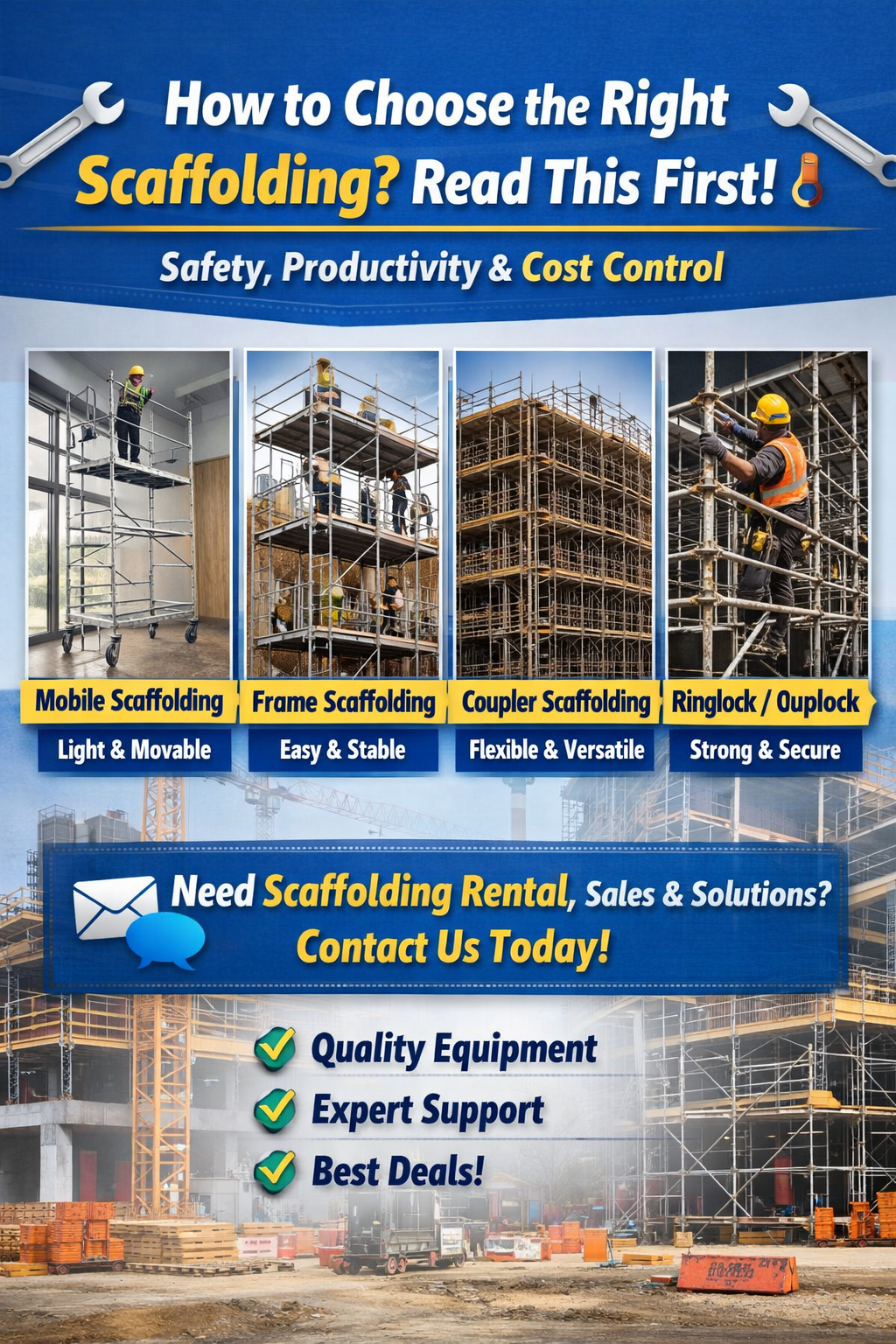
1. Definition and Core Functions

Mobile scaffolding, also known as rolling scaffolding, is a temporary work support structure. It supports workers, construction tools, and building materials, with core functions including:

Safe Elevated Work: Provides a stable operating surface, significantly reducing fall hazards for personnel and material drop risks compared to ladders or makeshift platforms.

Flexible Site Relocation: Equipped with lockable casters, it can be secured during operations and easily moved by unlocking for position changes, eliminating time wasted on repeated disassembly and reassembly.

Efficient Material Handling: Features robust load-bearing capacity, accommodating multiple workers simultaneously while allowing storage of small building materials and tools, reducing the frequency of transport trips.

Versatile Application: Suitable for diverse high-altitude and low-altitude tasks including interior wall painting, electrical wiring, exterior wall cleaning/repair, and equipment installation/commissioning.

2. Primary Types of Mobile Scaffolding

Type

Product Description

Construction Considerations

Gate-Type Mobile Scaffolding

Assembled from prefabricated steel or aluminum gate-shaped frames, cross braces, and scaffolding boards. Lightweight structure with quick assembly/disassembly.

Suitable for small-to-medium projects like residential renovations or shop refurbishments. Recommended maximum height: 8 meters.

Tower-Type Mobile Scaffolding

Modular design allows layer-by-layer vertical assembly into independent tower structures for enhanced stability.

Suitable for high-rise exterior wall construction and large-scale factory equipment maintenance. Diagonal braces and guy wires must be installed when exceeding 10 meters in height.

Folding Mobile Scaffolding

Features a built-in folding storage mechanism for rapid tool-free deployment or collapse. Compact in size.

Ideal for temporary or emergency maintenance tasks like light fixture replacement or pipe repairs. Avoid use under heavy-load conditions.

3. Core Components of Mobile Scaffolding

A. Main Support Structure

Frame Components

Available in aluminum alloy or steel. Aluminum alloy frames are lightweight and corrosion-resistant, suitable for indoor use; steel frames offer high load-bearing capacity and rigidity, ideal for outdoor heavy-duty applications.

Frame dimensions are customizable; select specifications based on required working height and load capacity.

Cross Braces

Diagonal members connecting adjacent portal frames enhance overall stability and prevent lateral sway.

Typically designed with telescoping mechanisms to accommodate varying frame widths. Ensure all locking clips are fully engaged during installation.

Working Platform Decking

Load-bearing panels installed between frame levels. Common materials include:

– Anti-slip patterned steel plates

– Solid wood scaffolding boards

– Fiberglass anti-slip panels

Toe boards must be installed on both sides of the platform boards to prevent tools and materials from falling. The connection between the boards and the frames must be secure with no looseness.

B. Mobile and Fixed Components

Caster Assemblies

Categorized into swivel casters and fixed casters, the core requirement is the inclusion of reliable braking mechanisms. Brakes must be locked during operation to prevent accidental movement of the scaffolding.

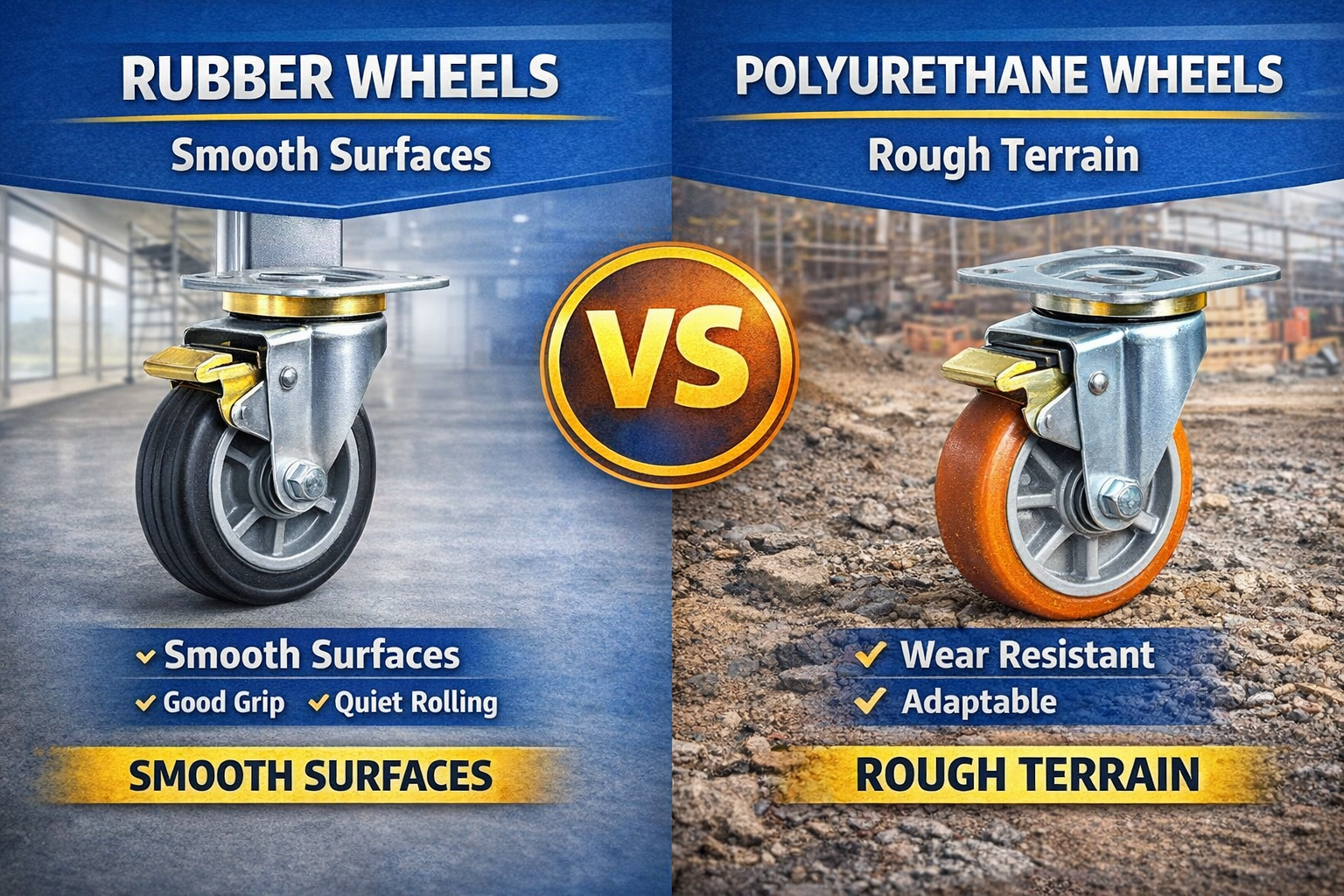
Wheel material selection depends on ground conditions: rubber wheels suit smooth surfaces, while polyurethane wheels offer wear resistance and adaptability to rough construction terrain.

Base Plates

These components, installed between casters and the ground, are made of thickened steel plates or anti-slip rubber plates.

Their function is to distribute scaffold pressure, prevent sinking on soft ground, and enhance overall stability.

C. Safety Protection Accessories

Guardrails and toe boards

Guardrails must be installed around the work platform with a minimum height of 1.2 meters. Toe boards should be no less than 18 centimeters high to prevent personnel falls and material drops.

Outriggers

Extend the work platform area to expand operational space. Ensure rigid connection between outriggers and the main frame during use. Overloading is strictly prohibited.

Ladders

Integrated or externally mounted on the scaffolding side for personnel access. Steps must feature anti-slip treads.

4. Selection and Usage Guidelines for Mobile Scaffolding

Select by Work Environment:

– For indoor light-duty tasks, prioritize aluminum alloy portal scaffolding.

– For outdoor heavy-duty or elevated work, choose steel tower scaffolding.

– For temporary maintenance, opt for folding scaffolding.

Select by Load Capacity:

Determine the number of workers and material weight, then select products with corresponding load ratings. Overloading is strictly prohibited.

Select by Ground Conditions:

Use scaffolding with rubber wheels on smooth surfaces. For rough or soft ground, use base pads and install outrigger supports when necessary.

Mobile Scaffolding Project Acceptance

Confirm the scaffolding selection matches the working height, load requirements, and ground conditions.

Inspect whether frame connections, cross braces, and platform boards are secure with no loosening or deformation.

Verify that casters’ brake functions operate normally and base pads are laid as required.

Confirm safety accessories like guardrails and toe boards are complete and installed per specifications.

Check overall vertical and horizontal alignment of the scaffold, ensuring deviations remain within permissible limits.