Scaffolding Maintenance Guide | Store & Extend Service Life | Sino East Steel Group
How to Store and Maintain Scaffolding for Longer Service Life
Introduction
Scaffolding is an essential component of construction, maintenance, and industrial projects. Whether you use steel scaffolding, aluminum scaffolding, frame scaffolding, ringlock scaffolding, or cuplock systems, proper storage and maintenance are critical for maximizing service life and ensuring workplace safety.
Many construction companies invest heavily in scaffolding systems, but improper handling, storage, and maintenance can significantly shorten their lifespan. Corrosion, deformation, loose connections, and damaged components not only increase replacement costs but also create safety hazards on job sites.
In this guide, we will explore the best practices for storing and maintaining scaffolding to extend its service life, reduce operational costs, and ensure compliance with safety standards.
Why Proper Scaffolding Storage and Maintenance Matter
Scaffolding systems are exposed to harsh environmental conditions, including:
- Rain and humidity
- UV radiation
- Dust and debris
- Cement and chemical residues
- Frequent assembly and dismantling
Without regular care, these factors can cause:
- Rust and corrosion
- Structural weakening
- Reduced load-bearing capacity
- Increased maintenance expenses
- Higher accident risks
Proper storage and maintenance can extend scaffolding lifespan by several years while maintaining optimal performance and safety.
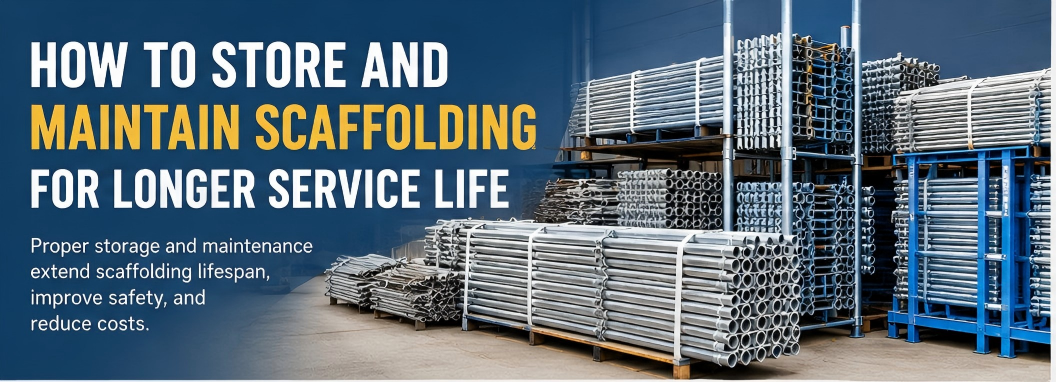
Best Practices for Scaffolding Storage
1. Store Scaffolding in a Dry and Covered Area
Moisture is one of the biggest threats to scaffolding materials, especially steel components.
To prevent corrosion:
- Use indoor storage facilities whenever possible.
- Install weatherproof shelters for outdoor storage.
- Ensure adequate ventilation to reduce condensation.
- Avoid direct exposure to rain, snow, and standing water.
If indoor storage is unavailable, cover scaffolding materials with waterproof tarpaulins while allowing airflow to prevent moisture buildup.
2. Keep Components Off the Ground
Direct contact with soil can expose scaffolding to moisture and contaminants.
Recommended storage methods include:
- Steel racks
- Wooden pallets
- Elevated storage platforms
- Specialized scaffolding storage systems
Keeping components elevated prevents rust formation and makes inventory management easier.
3. Organize Components Systematically
Well-organized storage reduces handling damage and improves operational efficiency.
Separate and label:
- Standards
- Ledgers
- Diagonal braces
- Base jacks
- Steel planks
- Couplers
- Guardrails
- Toe boards
Using designated storage zones helps workers quickly identify components and minimizes unnecessary movement.
4. Avoid Overstacking
Improper stacking can cause:
- Bent tubes
- Warped planks
- Damaged connectors
- Structural deformation
Follow manufacturer recommendations regarding stacking height and load limits.
Heavy components should always be stored at lower levels, while lighter components can be stacked above.
5. Protect Galvanized Surfaces
Galvanized scaffolding offers excellent corrosion resistance, but improper storage can still damage protective zinc coatings.
Avoid:
- Scraping components against rough surfaces
- Dropping materials during handling
- Storing corrosive chemicals nearby
Damaged galvanized coatings should be repaired promptly to prevent rust development.
Essential Scaffolding Maintenance Practices
1. Conduct Regular Inspections
Routine inspections are the foundation of effective scaffolding maintenance.
Inspect scaffolding before and after each project for:
- Rust and corrosion
- Bent tubes
- Cracks
- Weld failures
- Loose fittings
- Missing components
Create a documented inspection checklist to ensure consistency across all projects.
2. Clean Scaffolding After Every Use
Construction sites expose scaffolding to concrete, paint, dirt, grease, and chemicals.
Cleaning procedures should include:
- Removing loose debris with brushes
- Washing surfaces with water
- Using mild detergents when necessary
- Drying components thoroughly before storage
Regular cleaning helps identify hidden defects and prevents corrosive substances from damaging surfaces.
3. Remove Rust Immediately
Even small rust spots can spread rapidly if left untreated.
Recommended rust treatment process:
- Inspect affected areas.
- Remove rust using wire brushes or abrasive tools.
- Apply rust inhibitors.
- Repaint or recoat the surface as needed.
Early intervention significantly extends equipment lifespan.
4. Lubricate Moving Components
Certain scaffolding components contain moving parts that require lubrication.
These may include:
- Adjustable base jacks
- Screw jacks
- Locking mechanisms
- Couplers
Proper lubrication:
- Reduces wear
- Prevents seizing
- Improves operational efficiency
- Extends component life
Always use manufacturer-approved lubricants.
5. Repair or Replace Damaged Components
Damaged scaffolding parts should never remain in active service.
Replace components showing:
- Significant corrosion
- Structural cracks
- Severe bending
- Excessive wear
Using compromised components can lead to system failure and workplace accidents.
Maintenance Tips for Different Types of Scaffolding
Steel Scaffolding
Steel scaffolding is durable but vulnerable to corrosion.
Maintenance recommendations:
- Inspect for rust regularly.
- Touch up damaged coatings.
- Keep surfaces clean and dry.
- Store in moisture-controlled environments.
Aluminum Scaffolding
Aluminum scaffolding is lightweight and corrosion-resistant.
Key maintenance practices:
- Check for dents and deformation.
- Avoid contact with highly alkaline substances.
- Clean oxidation buildup periodically.
- Store carefully to prevent mechanical damage.
Ringlock Scaffolding
Ringlock systems feature multiple connection points that require close inspection.
Focus on:
- Rosette integrity
- Wedge connections
- Ledger ends
- Locking mechanisms
Ensure all connection points remain clean and functional.
Cuplock Scaffolding
For cuplock systems:
- Inspect top and bottom cups.
- Remove debris from locking areas.
- Verify smooth engagement and release.
- Replace worn locking components immediately.
Common Scaffolding Storage Mistakes to Avoid
Many companies unintentionally shorten scaffolding lifespan through poor storage practices.
Avoid these common mistakes:
Leaving Equipment Outdoors Unprotected
Continuous exposure to weather accelerates corrosion and deterioration.
Mixing Damaged and Serviceable Components
Damaged parts should be isolated and clearly marked for repair or disposal.
Ignoring Small Defects
Minor issues often develop into major structural problems when left unaddressed.
Using Improper Handling Equipment
Forklifts, cranes, and lifting equipment should be used correctly to prevent impact damage.
Failing to Maintain Records
Maintenance logs help track inspections, repairs, and replacement schedules.
Creating a Preventive Maintenance Program
A structured preventive maintenance program can significantly improve scaffolding performance.
Key elements include:
Daily Checks
- Visual inspections
- Damage identification
- Cleaning of heavily used components
Monthly Inspections
- Detailed structural assessments
- Connection point evaluations
- Inventory verification
Annual Audits
- Comprehensive equipment reviews
- Load-bearing assessments
- Replacement planning
Documenting maintenance activities improves accountability and supports regulatory compliance.
Benefits of Proper Scaffolding Maintenance
Implementing effective storage and maintenance procedures offers several advantages:
Enhanced Safety
Well-maintained scaffolding reduces the likelihood of structural failures and workplace accidents.
Lower Operating Costs
Preventive maintenance minimizes repair expenses and delays costly replacements.
Longer Equipment Lifespan
Proper care can extend the useful life of scaffolding systems by many years.
Improved Project Efficiency
Reliable equipment reduces downtime and keeps projects on schedule.
Better Return on Investment
Maximizing equipment longevity increases overall profitability.
Conclusion
Scaffolding represents a significant investment for construction companies, contractors, and rental providers. Proper storage and maintenance are essential for protecting that investment and ensuring safe operations.
By storing scaffolding in dry, organized environments, conducting regular inspections, cleaning components after use, addressing corrosion promptly, and replacing damaged parts when necessary, companies can dramatically extend the service life of their scaffolding systems.
A proactive maintenance strategy not only improves safety and reliability but also reduces long-term ownership costs. Investing time in proper scaffolding care today will deliver substantial operational and financial benefits for years to come.